
THE dream of peace by Christmas lies shattered across two capitals this week, as a car bomb that killed a Russian general in Moscow and a massive Russian aerial assault on Ukraine laid bare the brutal reality: after nearly four years of war, the road to any settlement remains treacherous and distant.
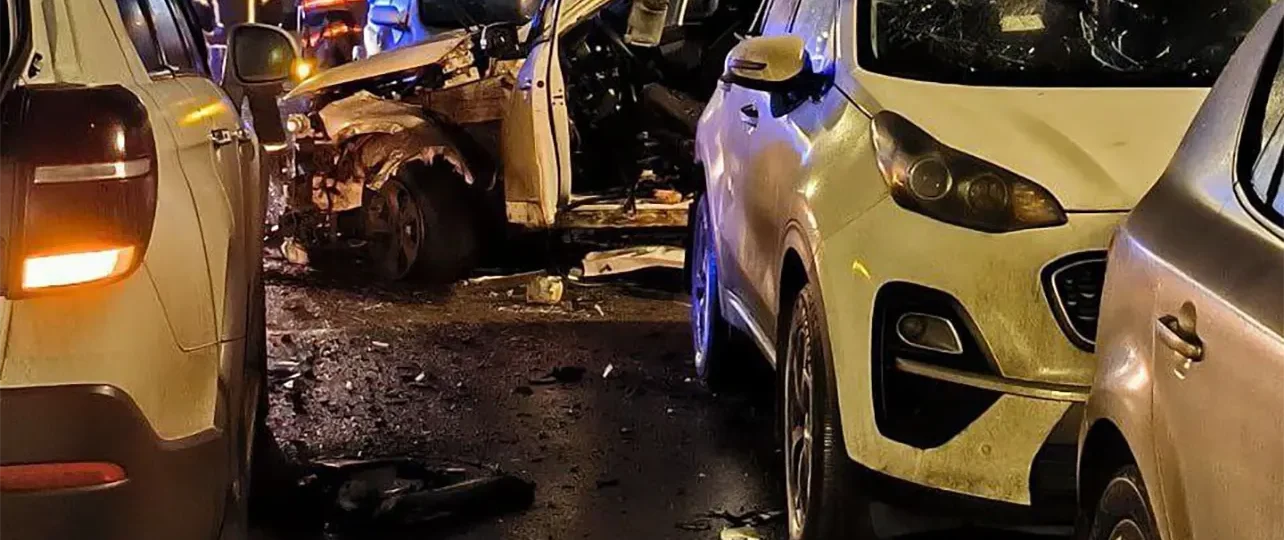
Russia hammered Ukraine with missiles and drones on Tuesday, killing at least three people, including a four-year-old child and triggering emergency blackouts nationwide. Just hours earlier, a sophisticated assassination in central Moscow claimed Lt. Gen. Igor Kirillov, head of Russia’s radiation, chemical and biological protection forces, sending shockwaves through the Russian military establishment.
The twin events – one a brazen strike at the heart of Russian power, the other a calculated assault on Ukrainian civilians before Christmas – underscore a harsh truth emerging from recent diplomatic efforts: neither side appears ready to stop fighting, and the gap between their positions remains a chasm that weekend peace talks in Miami could barely begin to bridge.
The Illusion of Diplomatic Progress
Those Miami discussions brought together U.S. officials with Ukrainian and European delegations, alongside separate contacts with Russian representatives, as Washington tested whether any common ground exists. The answer, written in fire and blood this week, appears to be no—not yet, and perhaps not for a long time.
Moscow’s latest combined strike hit energy facilities in western regions the hardest, said Ukrainian Prime Minister Yulia Svyrydenko, deliberately targeting civilian infrastructure as temperatures drop and families prepare for Christmas celebrations. President Volodymyr Zelenskiy reported more than 30 missiles and 650 drones across at least 13 regions.
“This Russian strike sends an extremely clear signal about Russia’s priorities,” Zelenskiy wrote on X. “An attack ahead of Christmas, when people simply want to be with their families, at home, and safe.”
The attack forced Poland, a NATO member bordering western Ukraine, to scramble Polish and allied aircraft to protect its airspace—a reminder that this conflict perpetually threatens to expand beyond Ukraine’s borders.
Escalation as Negotiating Strategy
Russia has systematically stepped up strikes on Ukrainian energy and logistics infrastructure, seeking to boost pressure on Kyiv as it attempts to soften the terms of any U.S.-backed deal. Moscow’s calculus is transparent: maximise Ukrainian suffering to force painful concessions at the negotiating table.
Russia’s demands remain maximalist and, to Kyiv, non-negotiable: Ukraine must cede its entire eastern Donbas region and accept severe restrictions on its military capabilities before Moscow stops fighting. These terms would effectively neuter Ukraine as a sovereign state—something no Ukrainian government could accept and survive.
The assassination in Moscow adds another volatile element. While Ukrainian officials have not officially claimed responsibility for killing Gen. Kirillov—a figure Ukraine accuses of war crimes related to chemical weapons use—the operation demonstrates Kyiv’s capacity to strike deep inside Russia. It signals that Ukraine, too, can escalate when it chooses.
The Architecture of Impasse
What makes peace so elusive isn’t merely the gap between negotiating positions. It’s the fundamental incompatibility of war aims and the domestic political realities constraining both leaders.
For Zelenskiy, accepting Russian territorial demands would likely collapse his government and betray the hundreds of thousands who have died defending Ukrainian sovereignty. For Putin, withdrawing without securing his core objectives—territorial gains and Ukrainian military neutering—would represent an unacceptable defeat after investing so much blood and treasure.
Meanwhile, both sides retain the capacity and will to inflict pain on each other. Russia’s superior firepower allows it to terrorise Ukrainian cities and destroy critical infrastructure. Ukraine’s intelligence services and long-range capabilities enable it to strike Russian military and economic targets, including assassinations in the Russian capital.
The Human Cost of Deadlock
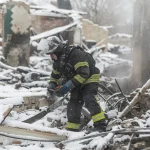
Tuesday’s attack killed two people, including a four-year-old in the central Zhytomyr region and one person outside Kyiv, where at least five others were wounded. Ukraine’s grid operator reported emergency power outages across most regions as winter cold settles in. Critical infrastructure was damaged in northern Chernihiv, western Lviv, and southern Odesa regions.
These aren’t just statistics—they represent families torn apart, children growing up amid sirens and blackouts, elderly Ukrainians freezing in their homes, and an entire nation living under perpetual threat.
“Putin still cannot accept that he must stop killing,” Zelenskiy wrote. “And that means that the world is not putting enough pressure on Russia. Now is the time to respond.”
What Peace Would Require
Any genuine settlement would demand what neither side appears willing to offer: compromise on core interests, mutual security guarantees that both sides trust, and enforcement mechanisms that could prevent renewed conflict.
It would require Russia to accept that it cannot simply absorb Ukrainian territory through force, and Ukraine to accept some painful realities about what it can realistically recover through continued fighting. It would demand that external powers—the United States, European nations, perhaps China—commit to long-term security arrangements and reconstruction support.
Most critically, it would require both Putin and Zelenskiy to conclude that continued war serves neither nation’s interests—a calculation that this week’s violence suggests neither leader has made.
The Long Road Ahead
As Ukrainians prepare for Christmas celebrations amid blackouts and air raid sirens, and as Russians absorb the shock of a general assassinated in their capital, the prospect of peace seems more distant than ever. The Miami talks may represent diplomatic engagement, but they appear insufficient to bridge the chasm between a Russia determined to win through attrition and a Ukraine equally determined never to surrender.
The war grinds on—not because peace is impossible in theory, but because both sides still believe they can achieve more through violence than through compromise. Until that calculus changes, the casualties will continue to mount, the infrastructure will keep burning, and families on both sides will bury their dead.
There will be no peace by Christmas 2024. Based on the events of this week, there appears to be no peace on the horizon at all.
We’re just passing through, Chris Rea once sang—a reminder that nothing, not even wars, lasts forever. But for those living through this one, forever is exactly how long it feels.