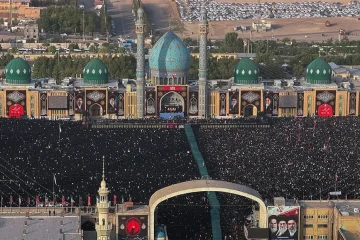
OVER the last month, hundreds of thousands of Iranians have taken to the streets in cities across the country to protest rising costs, plummeting currency values, and high inflation.
As the demonstrations grew, they were appropriated by the Islamic Republic’s opponents in the United States, Europe, and Israel, who rushed to cast the gatherings as a mass uprising against the theocratic government in Tehran.
A statement run by Iranian state media on 21 January put the death toll at 3,117, but a US-based rights watchdog says it has confirmed almost double that number, while other reports put the real fatality figure higher still. With Iran’s government enforcing a communications blackout, it is impossible to verify the toll.
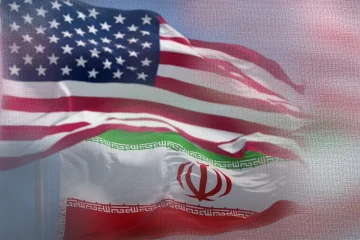
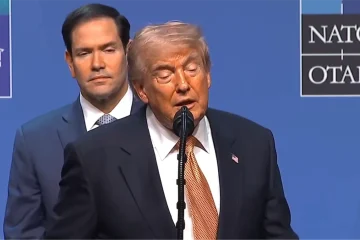
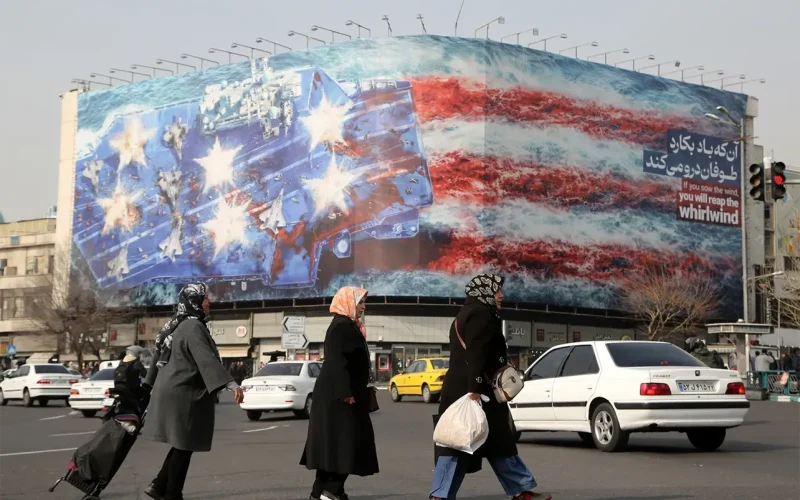
US President Donald Trump continues to threaten the Islamic Republic with retaliation if their crackdown is deemed to be too violent, and the aircraft carrier USS Abraham Lincoln is reported to now be within striking distance of Iran.
With tensions high and misinformation rife, The New Humanitarian spoke to Iranian-Canadian journalist Samira Mohyeddin to find out more about what started these protests, what the people inside Iran actually want, and what the threats of US military action could mean for millions of Iranians in the country.
This interview has been edited for length and clarity.
The New Humanitarian: These protests started out as a reaction to the economic issues in Iran, the currency issues, issues with inflation. How would you explain the economic situation in Iran to an outsider, because lots of countries are facing massive economic problems; what makes the situation in Iran so bad at this moment?
Samira Mohyeddin: It’s sanctions, really; sanctions, mismanagement, and corruption. Iran has been under horrible sanctions for the past two decades.
Yesterday [21 January], you had the United States Secretary of the Treasury in Davos giving an interview to Fox News where he said that a couple of months ago he was ordered by President Trump to cut off Iran from the entire banking system, as a way to put extra pressure. And he realised that Iran’s economy would just collapse. He said himself, this is economic statecraft, that we haven’t fired a single shot, and people are protesting. This is exactly how we [the US] wanted things to go.
So, this was all planned in terms of Iran’s economy falling apart.
These protests started on 28 December in Tehran’s Grand Bazaar because the merchants were no longer able to be importing things. That’s really where it started.
And then it escalated, but that’s not new either. Iranians have been calling for the end of this system of governance for decades.
It’s not new. What is new is the violence that we’re seeing, not just on the part of the state, in the brutal way that they’ve been killing people, but also on the part of we don’t know who. Are they protesters? What are they? This is not usually how Iranians protest.
The New Humanitarian: You mean like the burning of the buildings and so on?
Mohyeddin: Not just that, we’ve seen horrific, horrific footage of security personnel being hacked to death. We’ve seen images of people beheaded, their limbs cut off. I mean, this is not normal by any stretch of the imagination. This is not how Iranians protest.
The New Humanitarian: Do you think that lends credence to the government’s claims that they are infiltrators or quote unquote ’enemies’ involved in these protests? Do you think that helps their case?
Mohyeddin: Look, Iran has always said that there is a foreign hand whenever there’s protests happening. However, they have a partner in that messaging this time, and that’s because Israel itself has said we are on the ground.
Israel’s Heritage Minister Amichai Eliyahu last week gave an interview to Israel Hayom. This is Israel’s most-read digital news outlet, and he said, our men are on the ground. We are working. We have a hand in these protests. And he’s not the only one.
You had [Israel’s science minister] Gila Gamliel saying, We are with you. We are helping you.
These sorts of statements only provide fodder to the Iranian government to just mow everybody down who’s in the streets because they think everyone is a Mossad agent.
And then you had Mike Pompeo [the former US secretary of state and CIA director) on New Year’s Day tweeting Happy New Year to the Iranians in the streets and the Mossad agents walking beside them.
These sorts of statements only provide fodder to the Iranian government to just mow everybody down who’s in the streets because they think everyone is a Mossad agent.
The New Humanitarian: Going back to the sanctions for a minute, how much can the policies of the Islamic Republic actually affect the economy, and do the people realise what the balance in terms of the pressure from the sanctions versus the government’s policies are, and the way it affects their economy?
Mohyeddin: What they understand is that they have no purchase power. They have no ability to get certain medicines. They watch their social security just evaporate. These are the things that Iranians understand, and they wholeheartedly, the majority of Iranians, blame their own government for this.
And the reason for that is because they see this three to five percent upper-echelon of the population driving around in Lamborghinis, Porsches, doing whatever they want, and these are the children of the clerics. The children of the people running the government.
So, that level of hypocrisy is what Iranians really focus on.
People who talk about wanting to do away with this regime, etc, they don’t understand that sanctions hurt Iran’s civil society. They don’t just hurt people’s pockets.
So, all of this sort of duplicitous hypocritical behaviour on the part of the West, it doesn’t help because at some point you have to take a look at what the West is actually doing with these sanctions.
It’s not helping, and Iranians are used as these political pawns between their own government and the West.
The New Humanitarian: You mentioned the internet blackouts earlier, but you also said that the Iranian people have wanted the end of this government for a long time, so what would you say the average Iranian on the street wants? And how does that differ from the messages coming from the diaspora, if at all?
Mohyeddin: I think you know diasporas are very out of touch with what is happening in the country on a day-to-day basis, myself included. I haven’t been back to Iran since 1999.
Inside the country, people want an end to this system of governance. They want to be able to join the international community. They want to be able to travel without having this useless passport that I have behind me [not] be accepted in other countries.
Iranians are tired of clerical rule. They effectively live under a totalitarian theocracy.
And so, it’s this weird schizophrenic society that’s developed where you live one way in your home and you live another way in society because there are morality police on the street.
And people are just tired of it. They’re just tired. This is now 50 years.
Iranians have tried many different ways to reform this system of governance. In 2009, they went to the ballot boxes. In millions, they voted for reform. We know that those elections were fraudulent. And they’ve tried in many other ways. They’ve tried civil disobedience. They’ve tried other things, and now it’s just really gotten to this boiling point of a level of violence and frustration that we’ve never seen before.
So, you know, people are afraid of three things. This is what I’ve heard from most people.
They’re afraid of civil war. They’re afraid of outside intervention, war from without.
And they’re also afraid of the country being split into pieces.
Iran is a very big country, it’s the size of Western Europe, and there have been many Israeli ministers and officials and others who have said Iran is too big.
The New Humanitarian: How big were these pro-government protests? Because on my timelines online, they were all over, and they showed what looked like massive crowds. How real are those gatherings and how much power do they have?
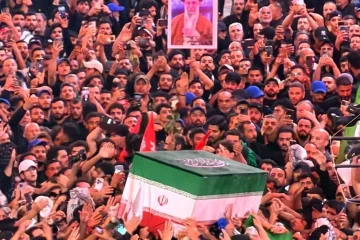
Mohyeddin: I mean they’re real because they’re people out on the streets. They’re not fake. I know I’ve seen all of this misinformation about them being AI or being footage from [the past]. Now if you look at the demographic also of those protesters, you would see that most of those people who support the government are of a certain age, maybe over 60, 65. Clerics are a huge part of these protests too. You’ll see them mixed in with the people.
The younger generation today had no hand in choosing their system of governance, and if you talk to many Iranians now, what they’re asking for is a referendum.
And when you look at the protesters and the people killed, you’ll see that many of them are teenagers. Many of them are young people. There is a real generational divide here that not many people focus on. The younger generation in Iran wants nothing to do with this system of governance. Nothing.
The younger generation today had no hand in choosing their system of governance, and if you talk to many Iranians now, what they’re asking for is a referendum. They want a referendum on the type of government they have, and this government that is currently in power is afraid to have such a referendum.
They talk a big talk about we have elections and all this stuff, but they won’t have a referendum based on this system of governance. That is what they’re afraid of.
The New Humanitarian: Earlier, you had brought up the fear of outside intervention, and obviously Donald Trump has made a lot of threats. There are reports that he’s currently moving ships in that direction. What do you think, could a US attack achieve anything? And how do you think the people inside the country would respond to that, because we know how people outside talk about it, but how would people inside the country be affected by it?
Mohyeddin: Look, there are people inside Iran who are also welcoming this. I don’t know what the numbers are, but I’m not gonna sit here and say that some people wouldn’t want outside intervention.
But what those figures are, I don’t know. What do I think will happen?
A lot of Iranians will get killed.
What I do know is that outside intervention will do nothing but continue this cycle of violence and continue the idea that Iranians are helpless creatures and that they just need outside forces to come in.
And the other thing is that we’re not under any illusions. We understand that having the world’s third-largest oil reserves would be lovely for America to come in and say, ’We liberated you, now give us all that oil.’
That is something that is very plausible and that many Iranians talk about. So, it’s very hard to say what 92 million people want definitively.
The New Humanitarian: Going back to the figures of killed and injured. Thousands amongst the protesters reported and hundreds amongst the security forces, a lot of these numbers come from outside groups, and obviously, there’s been an internet blackout, so how reliable are these figures and how brutal has the government been in their response?
Mohyeddin: We’ve seen these images of the morgue. The Karizak mortuary in Tehran. Hundreds and hundreds of body bags, people inside them, bodies kept in trucks because the morgues are overflowing.
There’s no doubt that the government has used brutal, brutal force, and as you pointed out, it’s very difficult to get a real understanding of the numbers because there has been this internet blackout that the government has imposed.
Having said that, you’re getting numbers fluctuating between 5000 and 30,000, and everybody is jockeying for their numbers to be the dominant numbers. And of course, you had President Trump come out and say if they can kill a lot of peopl,e we’re going to come in.
So, there is this real push to inflate the numbers killed. Even one person killed is a problem, but when you have this discrepancy in numbers, what it does is create this sort of doubt, which is exactly what the government wants, in how many people were actually killed now.
So these are the problematic things when we see who is sort of peddling these numbers of 15,000, 30,000, 20,000. We just don’t know. What we do know is that the government used brutal force. And we also know that there were groups among these protesters who were also killing people. That has been verified. So, we don’t know what these numbers are.
We also don’t know who was doing all of the killing, but we do know that the government was involved. So it’s a very, very muddied right now, very muddied, and that’s also something that the government benefits from.
The New Humanitarian: And ultimately, these protests started over the economy, so, to an outsider, how would you describe the economy? Because Pakistan has massive economic issues at the moment, Lebanon, Türkiye, a lot of countries are going through this. What makes Iran different, and how is it really felt by the people?
Mohyeddin: Iran, unlike the countries that you mentioned, Türkiye, Pakistan, etc, which, you know, deal with inflation, they don’t have sanctions on them. They don’t deal with brutal, brutal sanctions. And they’re not targeted sanctions. They’re not targeting certain individuals, people who are members of the government. These are wholesale sanctions that prevent Iran’s merchants from importing.
Things that don’t allow the import of certain medications and that really reduce the purchasing power of Iranians themselves. I always say this to people who are pro-sanctions and want more sanctions. I always ask them, we’ve had these sanctions for more than 20 years, and what’s happened? Has it changed the behaviour of the government? No.
What it has done is hurt the people of Iran, and, in fact, what it’s done is decimate Iran’s civil society. It cuts Iranians off from the rest of the world. It prevents them from travelling. It prevents them from doing so many things that, in many ways, could have already brought this government down if society weren’t so closed off from the rest of the world.
The New Humanitarian: So, is there much that the government, I mean, the president, did say that in the beginning that he’s open to talks, that he understands the economy is an issue, but is there very much the Islamic Republic can do to fix the economic issues if the sanctions continue?
Mohyeddin: You know, Iran has made quite [a lot of] inroads with joining BRICS. They are doing a lot of trade with other countries in the Global South, particularly with Brazil. So they’re trying to find ways. However, not just the sanctions, I should point this out, there is severe corruption and mismanagement in Iran, severe corruption, where you have this upper echelon of people who are benefiting from these sanctions. They’ve created this black market for themselves.
And as I said before, these sanctions aren’t hurting the Islamic Revolutionary Guard Corps, which basically controls Iran’s economy. They fully control it. You cannot do business in Iran without doing business with the Islamic Revolutionary Guard Corps.
They run factories, the food factories. They run the sugar industry. They run everything from the petrochemical plants to everything. They run Iran’s economy, and it’s not just as simple as, you know, let’s lift some sanctions.
There is major corruption and mismanagement in the government.
Watch the full interview below for more insights:
Edited by Andrew Gully.
–––––
The New Humanitarian puts quality, independent journalism at the service of the millions of people affected by humanitarian crises around the world. Find out more at www.thenewhumanitarian.org.