TUESDAY night’s electoral sweep represents far more than three Democratic victories – it marks a potential inflexion point in American democracy’s struggle against authoritarian drift. In New York City, Virginia, and New Jersey, voters delivered a resounding rebuke to nine months of Donald Trump’s tumultuous return to power, offering a glimpse of what resistance looks like when it transforms from protest into political power.
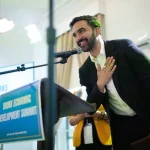
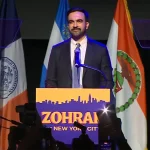
The symbolism alone is staggering. Zohran Mamdani, a 34-year-old Muslim democratic socialist, will now govern the city that birthed Donald Trump’s political mythology. His victory speech crystallised the stakes: “If anyone can show a nation betrayed by Donald Trump how to defeat him, it is the city that gave rise to him.” This wasn’t just campaign rhetoric – it was a declaration that the very ground Trump claims as his origin story now belongs to a movement dedicated to dismantling everything he represents.
These victories signal something that has eluded Democrats since Trump’s shocking 2024 return: a coherent counter-narrative that bridges the party’s fractured wings. In Virginia and New Jersey, moderate governors Abigail Spanberger and Mikie Sherrill won commanding victories by championing pragmatism and economic security. Meanwhile, Mamdani’s viral-fueled insurgency proved that bold progressive politics can triumph even in the financial capital of the world, where Wall Street executives watched nervously as voters chose frozen rents and free childcare over business-as-usual centrism.
This isn’t an ideological contradiction – strategic sophistication. Democrats have finally discovered that different regions demand different messengers, but all share a hunger for leaders who will confront rather than accommodate Trump’s assault on democratic norms. The record turnout in New York City’s mayoral race, the highest since 1969, suggests that after years of despair, the opposition has found its voice.
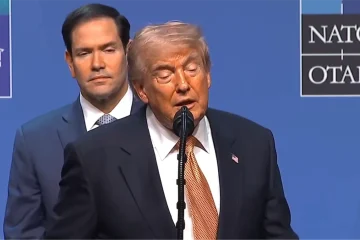
What makes Tuesday’s results historically significant is their context. These elections occurred amid a federal government shutdown that Trump callously blamed for Republican losses, even as his administration threatened to fire thousands of federal workers and freeze critical infrastructure funding. His vindictive response – vowing to cut funding for New York City and incorrectly labelling Mamdani a “communist” – reveals the authoritarian playbook: punish dissent, delegitimise opposition, and govern through intimidation.
For communities anxious about America’s democratic backsliding, these victories represent more than political wins – they’re proof that electoral resistance remains viable. The coalitions that emerged on Tuesday united voters alarmed by Trump’s immigration crackdowns, his economically destructive tariff policies, and his casual dismantling of federal institutions. Juan Benitez, a 25-year-old first-time Virginia voter, captured the sentiment: he supported Democrats entirely because of opposition to Trump’s policies and the shutdown chaos.
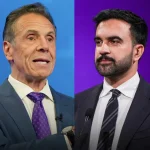
Mamdani’s victory carries particular weight for those who have watched with horror as white nationalist rhetoric has migrated from the margins to the mainstream of American politics. His rise from anonymous state lawmaker to mayor of America’s largest city, defeating former Governor Andrew Cuomo in the process, represents a direct challenge to the politics of racial resentment and religious bigotry that have defined the Trump era.
That the first Muslim mayor of New York City explicitly positions himself as Trump’s nemesis – “turn the volume up,” he taunted – is not incidental. It’s a statement that America’s diversity is not a weakness to be exploited but a strength to be celebrated, that the “other” Trump has demonised can claim leadership of the nation’s most iconic city.
Reclaiming the American Dream
All three victorious candidates centred their campaigns on economic issues and affordability – the fundamental promise of the American dream that has become increasingly hollow for millions. But they did so while explicitly connecting economic anxiety to Trump’s chaos and corruption. This represents a crucial evolution in Democratic messaging: acknowledgement that pocketbook issues matter most, but that those issues cannot be separated from questions of governance, integrity, and inclusion.
Mamdani’s ambitious platform – raising taxes on corporations and the wealthy to fund social programs – directly challenges the decades-long assumption that progressive economic policy is politically toxic. Spanberger’s call for “pragmatism over partisanship” and Sherrill’s focus on infrastructure investment offer different paths to the same destination: an economy that works for working people, not just the wealthy and connected.
America’s global standing has been in freefall since Trump’s return, as allies watch with growing alarm while adversaries celebrate the chaos. Tuesday’s results may not immediately reverse that decline, but they send a critical signal: American democracy retains the capacity for self-correction. The world is watching to see whether the country that long proclaimed itself democracy’s champion can still embody those values when tested.
Spanberger framed her victory as Virginia choosing “pragmatism over partisanship” and “our Commonwealth over chaos” – language that resonates beyond state borders. It speaks to international audiences wondering whether America can recover its moral authority, and to domestic audiences exhausted by manufactured crises and perpetual conflict.
The Road Ahead: Midterms and Beyond
These victories provide Democrats with something they’ve desperately needed: proof of concept. Different candidates with different styles can win by staying focused on what matters to voters while refusing to normalise Trump’s authoritarianism. The party now has fresh faces who inspire engagement rather than resignation, leaders who can energise rather than demoralise.
Yet reality demands humility. These races occurred in Democratic-leaning regions. Opinion polls still show the Democratic brand struggling nationally. The midterm elections remain a year away – an eternity in the Trump era, where each week brings new outrages and opportunities for either side to gain advantage. California’s approval of Democratic-friendly redistricting helps, but the battle for the House of Representatives will be fought on less favourable terrain.
Republicans have already telegraphed their strategy: make Mamdani the face of the Democratic Party, paint all Democrats as radical socialists, and hope Trump’s base turns out despite his absence from the ballot. It’s a tested playbook that has worked before.
What Tuesday’s elections ultimately represent is possibility. The possibility that democratic resistance can be channelled into a democratic victory. The possibility that diverse coalitions united by shared values can overcome tribal partisan loyalty. The possibility that even in polarised America, voters still reward candidates who speak to their real concerns rather than their worst fears.
For movements that have spent Trump’s second term in anguish – watching democratic norms erode, white nationalist rhetoric flourish, immigrant communities terrorised, and America’s global reputation crumble – these victories offer something precious: hope grounded in tangible achievement.
The question now is whether Democrats can build on this momentum or whether Tuesday represents an isolated bright spot in an otherwise dark era. The answer will determine not just the 2026 midterms but the trajectory of American democracy itself.
As Mamdani told his supporters, in words that could serve as a rallying cry for the entire opposition: the way to defeat a despot is by “dismantling the very conditions that allowed him to accumulate power.” Tuesday showed that dismantling can begin at the ballot box. Whether it continues depends on what comes next.