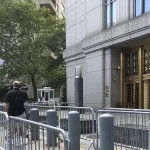
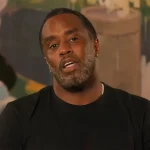
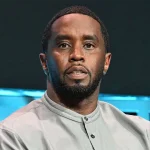
THE fluorescent lights of the Manhattan federal courthouse hummed with an electric tension that had nothing to do with the building’s ageing electrical system. For six weeks, the world had watched as one of hip-hop’s most towering figures sat at the defendant’s table, his empire of music, fashion, and influence crumbling like ancient stone under the weight of testimony that would have been unthinkable just years before.
Sean “Diddy” Combs – the man who had once commanded stages from New York to London to Lagos, whose beats had soundtracked a generation’s dreams – now faced a jury of twelve strangers who held his fate in their hands. The transformation was as stunning as it was complete: from the billionaire mogul who had shaped the very DNA of modern hip-hop to a federal prisoner awaiting what could be a life sentence.
The Empire’s Dark Foundation
The prosecution had spent weeks methodically dismantling the carefully constructed mythology of Sean Combs. What emerged was not the rags-to-riches story of a Harlem visionary, but the alleged blueprint of a criminal enterprise that had operated in plain sight for two decades. Assistant U.S. Attorney Christy Slavik’s words echoed through the packed courtroom: “The entire objective was to dominate… instilling fear to reject the defendant’s advances. And it succeeded.”
The five felony counts – racketeering conspiracy, two counts of sex trafficking, and two counts of transportation to engage in prostitution – read like the charges against a mob boss, not a music icon. Yet prosecutors argued that Combs had wielded his influence with the precision of a crime syndicate, using Bad Boy Records as both shield and sword in what they described as a systematic campaign of sexual exploitation and violence.
Voices from the Shadows
The courtroom had become a theatre of broken dreams and shattered illusions. Casandra “Cassie” Ventura, once the R&B starlet who had graced red carpets at Combs’ side, now stood as the prosecution’s star witness. Her testimony painted a picture of a relationship that had devolved into something unrecognisable – a twisted dynamic where love had been weaponised and intimacy had become a form of control.
The so-called “Freak Offs” – drug-fueled sexual encounters that prosecutors alleged Combs orchestrated and filmed – became the dark centrepiece of the case. These weren’t the consensual adult relationships the defence claimed, but rather a systematic exploitation of women who had found themselves trapped in Combs’ orbit of power and fear.
The 2016 hotel surveillance footage that jurors viewed in stunned silence became the trial’s most damning piece of evidence. In grainy black and white, the world watched as one of music’s most celebrated figures allegedly assaulted the woman who had once been his muse. The footage stripped away decades of carefully crafted public relations, revealing something raw and violent beneath the polished exterior.
Male escorts, former employees, and a personal assistant known only as “Mia” had taken the stand, each adding brushstrokes to a portrait of an organisation where intimidation was policy and exploitation was business as usual. Their testimonies suggested that the Bad Boy Records empire had been built not just on talent and ambition, but on a foundation of fear and control that extended far beyond the recording studio.
The Defence’s Last Stand
Marc Agnifilo, Combs’ lead defence attorney, faced an almost impossible task: how do you defend a man whose alleged crimes had been documented in video and corroborated by multiple witnesses? His strategy was bold and desperate – to reframe the entire case as a prosecution overreach that had criminalised a celebrity’s “private sex life.”
“If he was charged with domestic violence, we wouldn’t all be here,” Agnifilo argued, suggesting that the government had inflated consensual adult activities into federal crimes. He called the proceedings a “fake trial” and accused prosecutors of confusing “threesomes with racketeering” – a line that would have been laughable if the stakes weren’t so devastatingly high.
The defence pointed to financial settlements – Ventura’s $20 million payout from Combs and a separate $10 million settlement from a hotel – as evidence that the allegations were motivated by money rather than justice. It was a risky gambit that essentially argued that his client’s wealth had made him a target rather than an enabler of the alleged crimes.
A Global Reckoning
The trial had transcended American borders, becoming a cultural phenomenon that resonated from the streets of Brooklyn to the clubs of Lagos to the concert halls of London. Combs’ influence had been truly global – his music had provided the soundtrack for countless lives across continents, his business acumen had inspired entrepreneurs worldwide, and his fall from grace had sent shockwaves through communities that had once claimed him as their own.
The case represented something larger than one man’s alleged crimes. It had become a referendum on power, celebrity, and accountability in the digital age. The same social media platforms that had once amplified Combs’ brand now dissected every moment of his trial, creating a real-time global conversation about consent, exploitation, and the price of unchecked influence.
The Moment of Truth
As the jury prepared to begin deliberations, the atmosphere in the courthouse was suffocating with anticipation. Twelve ordinary citizens – retail workers, teachers, retirees – now held the power to render judgment on one of the most extraordinary figures of the modern era. The judge’s instructions would guide them through the complex web of racketeering law and federal statutes, but ultimately their decision would rest on a simple question: had Sean Combs used his power to commit the crimes alleged against him?
The man who had once declared himself “King of New York” sat silently at the defence table, his fate no longer in his own hands. He had chosen not to testify in his own defence—a decision that spoke volumes about the strength of the prosecution’s case and the precarious nature of his position.
For six weeks, the world had watched as the mythology of Sean “Diddy” Combs had been systematically deconstructed. The beats that had once moved millions had been replaced by the sombre rhythm of legal proceedings. The man who had built an empire on the power of his voice had been rendered mute by the weight of the evidence against him.
The Verdict’s Shadow
Whatever the jury decided, the trial itself had already delivered its own verdict on the culture that had enabled such alleged behaviour to flourish for so long. It had exposed the dark underbelly of an industry that had long protected its most powerful figures while silencing their accusers. It had demonstrated that no amount of wealth, influence, or cultural significance could indefinitely shield someone from the consequences of their actions.
The twelve jurors who would soon retire to consider their verdict carried with them not just the responsibility of determining one man’s guilt or innocence, but the weight of a moment that would define how seriously society takes allegations of sexual exploitation and abuse of power. Their decision would reverberate far beyond the walls of the Manhattan courthouse, sending a message about accountability in an age where celebrity and criminality had become increasingly intertwined.
As the courtroom emptied and the jury began their deliberations, one thing was certain: regardless of the verdict, the Sean “Diddy” Combs who had entered that courthouse six weeks earlier would never emerge unchanged. The trial had already written the final chapter of one of hip-hop’s most influential careers, replacing a legacy of musical innovation with a cautionary tale about the corrupting nature of unchecked power.
The empire he had built over decades was crumbling in real-time, and no amount of legal manoeuvring could restore what had been lost in those six weeks of devastating testimony. The king was dead; all that remained was to determine whether he would spend the rest of his life paying the price for his reign.