
UKRAINE’s war is morphing into a systematic assault on civilian life, with UN human rights officials warning that urban neighbourhoods, farmers’ fields, public transport and even family outings to the seaside are now within range of increasingly deadly long‑ and short‑range weapons. Their message is stark: the war’s “deepening impact” on ordinary Ukrainians is not only worsening, but it is also evolving into a pattern that risks becoming normalised.
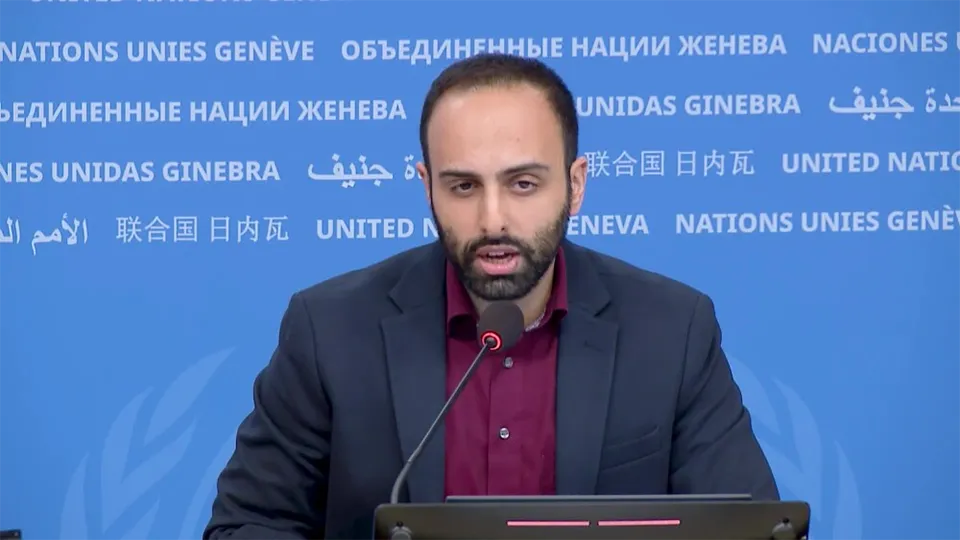
Speaking at a press briefing in Geneva, UN Human Rights spokesperson Thameen Al‑Kheetan described a civilian landscape under relentless fire from long‑range missiles that are striking homes and essential infrastructure far from the frontline. “The war in Ukraine is having a deepening impact on civilians by the day,” he said, warning that “the scale and intensity of long‑range attacks impacting residential buildings and critical civilian infrastructure are shocking. These attacks must stop.”
Al‑Kheetan underscored that the recent surge in strikes has killed and injured civilians not only across Ukraine but also inside the Russian Federation. “Civilians and civilian infrastructure are strictly protected under international humanitarian law, and any such deliberate attack is a war crime,” he said, framing the bombardment not as collateral damage but as potential criminal conduct under international law.
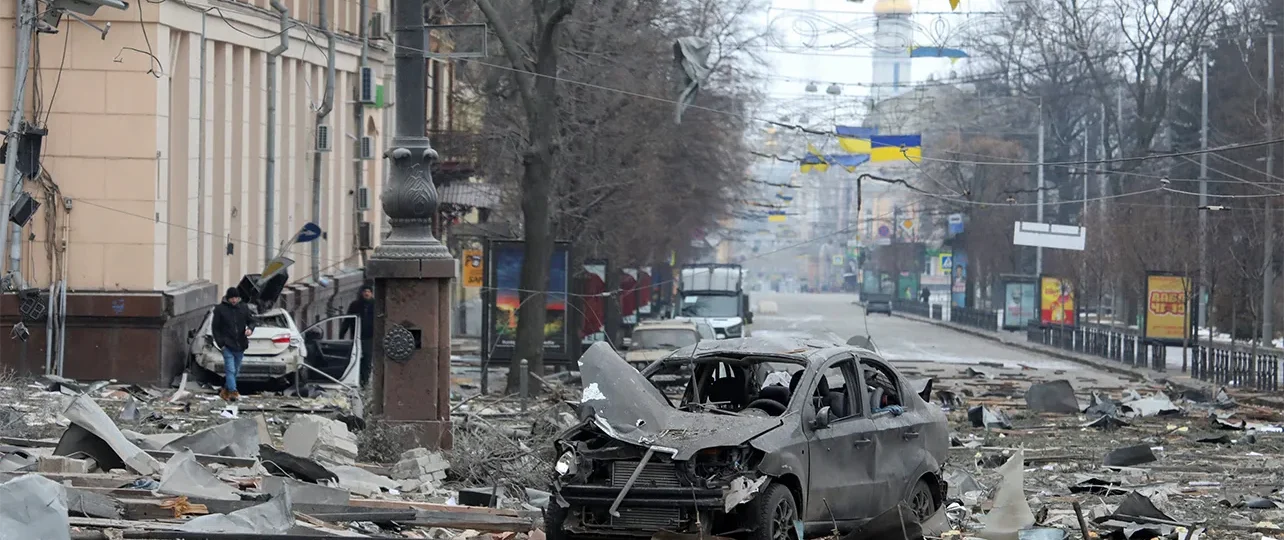
Kyiv, a city that once symbolised the country’s relative safety compared to the eastern frontlines, is now experiencing the heaviest missile barrages since the full‑scale invasion began. “On Sunday, Kyiv was hit for the seventh time this month,” Al‑Kheetan reported. “In the largest reported missile attack on the capital since the start of the full‑scale invasion, at least 35 ballistic and hypersonic cruise missiles targeted the city.”
Authorities recorded one civilian death and 20 people injured, with damage across five districts of the capital. For Al‑Kheetan, these figures speak to a deliberate strategy of striking urban centres. “These attacks must stop,” he repeated, insisting that the law is clear and that intentional targeting of civilians and their infrastructure crosses the line into war crimes.
Casualties surging, war entering deadlier phase
From Kyiv, Danielle Bell, head of the UN Human Rights mission in Ukraine, painted a statistical picture that captures the war’s accelerated lethality for civilians. “In the first six months of 2026, civilian casualties increased by 37 percent compared with the same period last year – 1,396 civilians killed and 7,978 injured – almost double what we documented in 2024,” she said.
Bell stressed that long‑range attacks are increasingly hitting densely populated urban areas far from the front line, shattering the notion that distance offers protection. “Long‑range attacks are increasingly affecting densely populated urban areas that are far away from the front line,” she said, adding that the trends show “the situation has demonstrably worsened” and that more people are being killed and injured each year.
To illustrate how the war has penetrated everyday life, Bell recounted a recent visit by her team to Odessa and nearby Chornomorsk. “Yesterday, our team in Odessa visited several incident sites in residential areas that had been impacted, including a recreational area near Chornomorsk, in which a 16‑year‑old boy was killed as he and his family were just spending time together,” she said.
Such attacks, she argued, show that nowhere is truly safe for civilians anymore. Humanitarian workers now document parks, beaches and residential courtyards as crime scenes, while families face the reality that a simple day out can end in tragedy.
Public services and aid networks breaking down
Beyond the casualty figures, Bell warned of a quieter collapse that is undermining Ukraine’s ability to function as a society. Public transport has repeatedly come under attack, forcing services to be suspended in many areas and making it harder for people to reach work, school or medical care.
“Humanitarian assistance can no longer safely reach some communities,” she said, noting that schools and medical facilities have ceased functioning in multiple locations. Electricity, water and mobile communications are “frequently disrupted,” stripping communities of the basic systems that sustain life and leaving hundreds of thousands facing freezing temperatures and blackouts.
Bell identified a second, rapidly evolving driver of civilian harm: the widespread use of short‑range First Person View (FPV) drones. “The second driver of civilian casualties is the widespread use of short‑range drones, or First Person View drones (FPVs). This is where the drone operator can see the target in real time,” she explained.
“I have seen the impact of drones firsthand during my recent visits to Zaporizhzhia, Kherson, Kharkiv and Dnipro regions,” Bell said. “I saw how these drones are transforming civilian life. People told us that they no longer decide whether they want to go to the market, visit friends, go outside, work in their fields. They must first decide whether or not it’s safe enough to leave their homes.”
Across her visits, civilians described a new choreography of fear. “People describe measures to me that they’ve been taking to protect themselves while walking outside, like darting between buildings, leaving their homes at different times of the day,” Bell said. “Across these visits, civilians consistently described feeling tracked by FPV drones while carrying out ordinary daily activities – gardening, walking their dogs, feeding their animals outside, going to the store, driving or simply walking or cycling outdoors.”
This lived experience is reflected in UN data. “In the first six months of this year, civilian casualties from short‑range drones increased by 65 per cent,” Bell said, underscoring how a relatively new technology has rapidly become a central threat to civilians.
The war’s impact on Ukraine’s role as a global breadbasket is now directly tied to the drone threat. Bell recalled her recent mission to Dnipro and Zaporizhzhia, where local authorities are improvising protection for vital workers and farmers.
“Last week when I was visiting Dnipro and Zaporizhzhia, authorities described to me establishing anti‑drone police units which are deployed to protect civilians carrying out ordinary yet fundamental work such as the repair of public works or other essential services, and allow farmers, for example, to safely harvest their fields,” she said.
On the ground, the numbers are stark. “When I visited Kushuhum in Zaporizhzhia, repeated attacks on fields, combines and grain trucks, as well as farmers themselves, fearing being targeted by drones, have slowed the harvest from 30 hectares a day to as little as 3 to 5 hectares per day,” Bell reported. “These attacks are gradually destroying the system that sustains civilian lives and allows communities to function. These trends show that danger to civilians is not only increasing. It is evolving.”
In frontline and near‑frontline cities, authorities are taking increasingly unconventional steps to shield civilians and infrastructure. “Another thing that we’re seeing in these frontline areas is an increase in the use of fishing nets, or these nets, anti‑drone nets being put up in the city,” Bell said.
“So, I was in Kharkiv, you know, a week ago, and it’s the first time that I’ve seen anti‑drone nets being put up in different parts of the city,” she added. “So, lots of new measures as these weapon systems quickly evolve. You see the authorities trying to find new ways to intercept and protect communities.”
Legal red lines and future accountability
For both Al‑Kheetan and Bell, the intensifying civilian toll is not just a humanitarian crisis but a legal and accountability issue. They emphasise that under international humanitarian law, civilians and civilian infrastructure must be protected, and that “any such deliberate attack is a war crime.”
Bell’s team continues to document patterns of violence and alleged violations, including torture, ill‑treatment, and conflict‑related sexual violence, with a view to future prosecutions. “We speak with prisoners of war, civilian detainees and we document torture, ill‑treatment, enforced disappearances, conflict‑related sexual violence — daily realities of this awful, awful war in Ukraine,” she has said in earlier briefings, stressing that the growing body of evidence is intended to ensure that “future accountability” will be grounded in meticulously verified facts.
Together, their warnings amount to a clear assessment: four years into the full‑scale invasion, the war is increasingly fought in and against civilian spaces, turning homes, roads, markets and fields into targets, and forcing Ukrainians to live every moment as a calculation of survival.