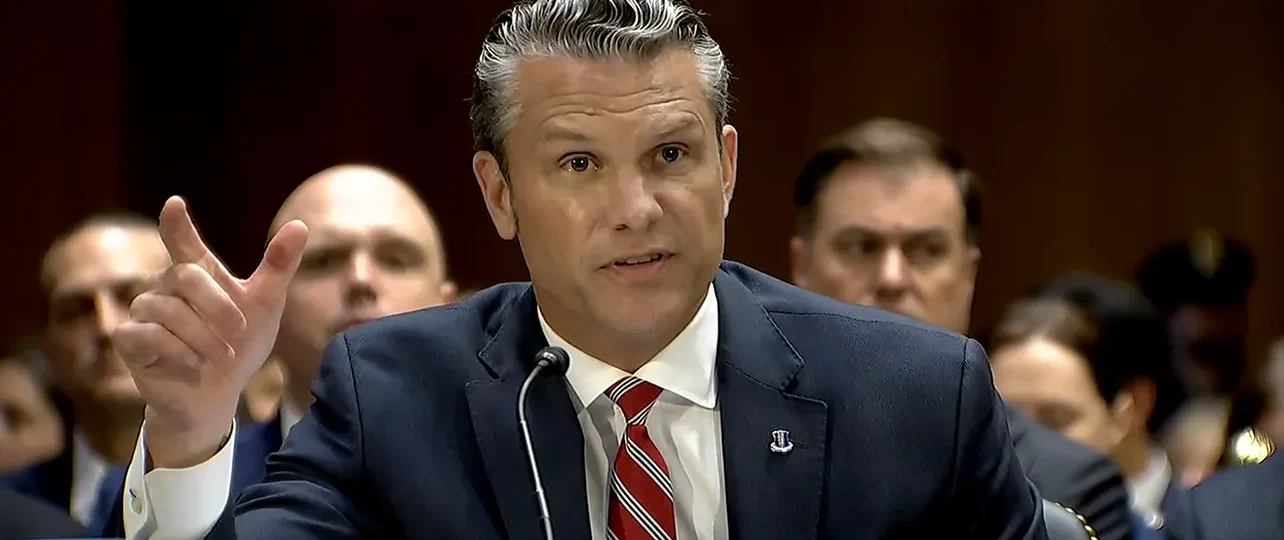

US Defence Secretary Pete Hegseth has told a Senate hearing that the war on Iran has now cost the United States $37.5 billion – a $7.5 billion jump on the estimate given barely two months ago, and a figure Hegseth himself conceded was a floor, not a ceiling. He used the number to justify a request for a further $67.1 billion in emergency Pentagon funding, even as Democratic senators noted the department is still sitting on $75 billion in unspent war money.
But the American ledger, however staggering, is the smallest part of this story. Nearly five months after Washington and Tel Aviv launched Operation Epic Fury on 28 February, the true cost of the war is being paid overwhelmingly by people who never voted for it – in Tehran, in Beirut, and across a Gulf that has spent decades selling itself to the world as an island of stability.
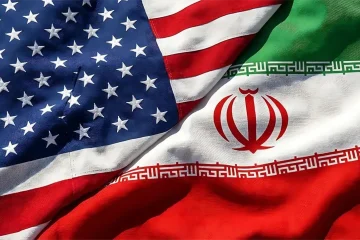
There is no ceasefire to speak of. US Central Command confirmed its eleventh consecutive night of strikes on Iranian targets this week, and President Donald Trump has signalled the United States will likely soon strike Pickaxe Mountain, a fortified underground facility Washington links to Iran’s nuclear programme – a move Tehran has warned it will treat as a deliberate expansion of the war. A June ceasefire deal, a 14-point memorandum signed in Switzerland, collapsed within weeks amid renewed fighting over the Strait of Hormuz.
American losses have climbed steadily. At least 18 US service members have now been confirmed killed, including Sergeant Angel Rampersad, killed at Jordan’s Muwaffaq Salti Air Base and only this week formally identified after being listed as missing. More than 550 US personnel have been wounded. At least 14 merchant mariners have also died in attacks in the Strait of Hormuz, according to shipping industry monitors.
IRAN’S TOLL: THOUSANDS DEAD, A NATION FLATTENED
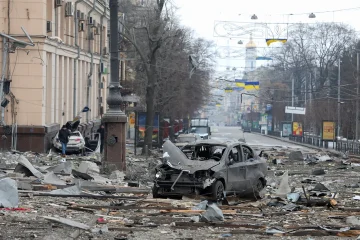
Iran’s own casualties dwarf America’s. State media and independent monitors, including Iran’s Human Rights Activists News Agency, put the Iranian death toll above 3,600, with Lebanon — drawn into the war through its own front against Hezbollah — recording more than 4,300 deaths of its own. Among the documented strikes was one on a girls’ elementary school that a Pentagon investigation has since indicated US forces may bear responsibility for, killing at least 175 children, teachers and staff.
The scale of destruction inside Iran is such that the collapsed June peace framework included a US commitment of $300 billion toward Iranian reconstruction — an extraordinary figure that, whatever becomes of the wider deal, is itself a rough admission of how much of the country has been reduced to rubble. The World Bank has declined to even issue a 2026 growth forecast for Iran, citing what it called “exceptionally high uncertainty.”
THE GULF: PAYING FOR A WAR IT DID NOT START
Nowhere is the collateral damage clearer than in the Gulf Cooperation Council states, whose economies have been battered even though not one of them is a belligerent. The World Bank has slashed its 2026 GCC growth forecast from 4.4% to just 1.3%. The IMF’s country-level breakdown is starker still: Qatar’s economy is projected to contract by 14.7%, Kuwait’s by 4.2%, Bahrain’s by 3.8%, the UAE’s by 1.9%, Saudi Arabia’s by 1.4% and Oman’s by 0.05% — with the Fund estimating a cumulative 7% output loss across the Gulf over five years, and negative effects still detectable a decade out.
The physical damage is concrete and expensive. Around 80 energy facilities across the Arab Gulf states — production plants, refineries, pipelines — have been struck by Iranian missiles and drones, with the International Energy Agency and Rystad Energy putting repair costs at roughly $58 billion. Qatar’s Ras Laffan industrial complex, one of the world’s largest gas facilities, has been significantly damaged. When Iran moved to close the Strait of Hormuz in early March, roughly 13 million barrels a day of Gulf oil exports were stranded overnight, in what the International Energy Agency called the greatest energy security disruption on record. Saudi Arabia and the UAE managed to reroute a combined seven million barrels daily through overland pipelines to the Red Sea and Gulf of Oman; Iraq, Kuwait, Qatar and Bahrain had no such alternative and simply lost the trade.
The knock-on effects have reached deep into sectors the Gulf spent a generation building as insurance against oil dependency. Dubai hotel occupancy has collapsed from around 80% before the war to a projected 10% in the second quarter, according to Moody’s. More than 30,000 flights to the Middle East have been cancelled, hammering Gulf carriers Emirates, Etihad and Qatar Airways. The UAE has had to extend a $5.4 billion currency swap facility to stabilise Bahrain’s economy, while Dubai rolled out a $272 million package to prop up local businesses. Saudi Arabia, mid-way through a review of its Vision 2030 agenda, has begun shedding stakes in assets like LIV Golf and New York’s Metropolitan Opera to redirect capital inward, as bankruptcy filings — two-thirds of them in retail and construction — rose sharply in the first quarter.
Even the region’s push into artificial intelligence, built on roughly $2.5 trillion in Gulf commitments to US-linked technology partnerships involving Amazon, Nvidia and OpenAI’s Stargate project, is now under strain, with analysts at the Centre for Strategic and International Studies noting that Gulf governments are increasingly asking whether their alignment with Washington caused the threat rather than curing it.
Not every Gulf state has suffered equally. Saudi Aramco posted a 26% jump in first-quarter profit, riding a Brent crude spike that touched $110 a barrel — a reminder that in the Gulf, war can be simultaneously catastrophic and, for a fortunate few with export alternatives, lucrative. But the fear that has spread across the region is harder to price: a United Nations assessment has warned that the Gulf’s decades-long branding as a safe, luxurious hub for global investors and tourists may take years to repair, regardless of how the war ends.
A GLOBAL BILL, UNEVENLY SHARED
The World Bank has cut its global 2026 growth forecast to 2.5%, its lowest since the pandemic. Research modelling from the Institute for Economics and Peace estimates global GDP losses of roughly $1.3 trillion under the current trajectory — a figure that could balloon to $3.5 trillion, larger than the first-year shock of the Russia-Ukraine war, should the conflict escalate further. Fertiliser and cooking gas shortages have hit India; food distribution costs in import-dependent economies have risen sharply on the back of higher fuel prices, a burden the researchers note falls hardest on households that already spend 50 to 70% of their income on food — a pattern with direct relevance across import-reliant African economies watching oil prices and shipping costs climb from the sidelines of a war fought thousands of kilometres away.
Israel, for its part, faces what analysts at the Al Habtoor Research Centre describe as a sharp but recoverable shock of $135 billion by 2030 — roughly a quarter of a year’s GDP — concentrated less in physical destruction, thanks to its air defences, and more in reserve mobilisation costs, interception economics and a temporary hit to output.
THE ACCOUNTING FIGHT IN WASHINGTON
Even the American number remains contested. The Pentagon’s own comptroller told Congress in May the cost stood near $29 billion; some independent estimates put the true figure, once veteran care and long-term munitions replenishment are included, closer to $1 trillion over time. Of the $67.1 billion Hegseth is now requesting, $21 billion is earmarked for munitions, $17.3 billion for operations, $12.1 billion for classified programmes, $5.1 billion for cybersecurity and $2.4 billion for drones — a budget breakdown that senators on both sides of the aisle have questioned, given the Pentagon has not disclosed a clear objective, an exit strategy, or Congressional authorisation for the war in the first place.
THE RECKONING AHEAD
Five months in, the numbers tell two different wars. In Washington, the war is a line item — contested, growing, but ultimately absorbable inside a $1.5 trillion defence budget request already the largest since the Second World War. In Tehran, Beirut, Doha, Manama and Kuwait City, it is something closer to an economic and human haemorrhage: thousands of dead, a $58 billion repair bill for energy infrastructure alone, and a reputation for stability that Gulf governments spent a generation building now in question. The bombing continues. So, by every measure available, does the bill.