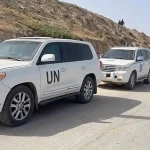
UN peacekeepers are keeping their positions in South Lebanon despite heavy shelling and targeted attacks; their commitment to bringing back stability to the region is unwavering, the UN said on Friday.
Speaking from Beirut, UN Interim Force in Lebanon (UNIFIL) spokesperson Andrea Tenenti said that the role of UNIFIL at the moment is “more important than ever”.
“We need to be here, we need to try to bring back stability and peace to this region,” he told journalists in Geneva.
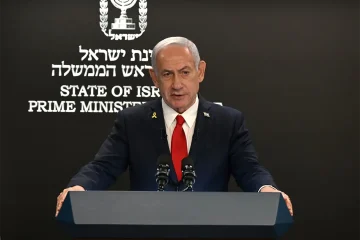
Although in recent days, the Israel Defense Forces (IDF) and Israeli Prime Minister Benjamin Netanyahu had called on UNIFIL to move from its positions close to the Blue Line, Mr. Tenenti said that “there was a unanimous decision” from the more than 50 troop-contributing countries “asking us to stay”. He insisted that the force remains deployed “because the Security Council wants us to be here” and that it is particularly important at this moment to monitor and report back on the situation on the ground.
While the mission currently has “limited capabilities” in terms of patrolling, “we are still doing it”, he said.
Established by the UN Security Council, UNIFIL is tasked with monitoring the cessation of hostilities following the 2006 war between Israel and Hezbollah, confirming the withdrawal of Israeli forces from southern Lebanon, and assisting the Lebanese government in restoring its authority in the area. It counts over 10,000 peacekeepers.
The mission has reported intense exchanges of fire along the “Blue Line” of separation between Israel and Lebanon. UNIFIL noted on Friday that “daily heavy shelling has worsened due to Israel Defense Forces incursions into Lebanese territory in the proximity of the Blue Line and in both UNIFIL Sectors (East and West), which constitute a violation of Lebanese sovereignty and also a violation of UN Security Council resolution 1701”.
Mr. Tenenti stressed that UNIFIL is “seeing hundreds of trajectories, and sometimes more, crossing the Blue Line each day,” forcing peacekeepers to spend “extended hours in shelters to ensure their safety”.
The UNIFIL spokesperson maintained that several incidents in recent days involving the Israeli military that had injured peacekeepers, surveillance cameras and perimeter walls were “of course” a violation of the 2006 Security Council resolution and that deliberate attacks on the force ran counter to international humanitarian law.
Asked about the possibility for peacekeepers to defend themselves when under attack, Mr Tenenti said that under chapter six of the UN Charter, “self-defence can be used, but we also have to be very pragmatic on when to use it and how to use it, because we don’t want to become part of the conflict and use force that would trigger more violence”.
“We’re trying to decrease the tensions, and it’s up to the commanders on the ground to decide when is the time to use self-defence,” he explained.
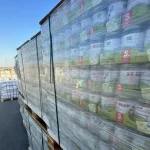
The UNIFIL spokesperson also said that the mission is “working hard behind the scenes” to coordinate the safe passage of essential humanitarian aid to civilians in south Lebanon, brought in by UN agencies and partners.
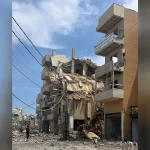
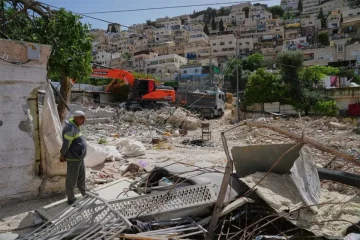
Most villages along the Blue Line are “completely destroyed and damaged”, he said, underscoring that the situation in the area is “very dramatic” and it was important to bring assistance to the local population. While most of the residents, some 450,000 people, have left the area due to the hostilities, the thousands who remain are in desperate need of aid.
“It’s been challenging because most of the time we have not been given the guarantees for safety, for humanitarian convoys,” Mr. Tenenti said, which limits the capabilities of the mission to coordinate with humanitarian agencies.
Jens Laerke of the UN Humanitarian Affairs Coordination Office (OCHA) explained that a humanitarian notification system is “up and running” and that in the south of the country where there is heavy fighting, the system includes informing the Lebanese armed forces and the IDF of convoy movements.
“That’s where we rely on UNIFIL and their contacts in the area, to make it smooth,” he said.
The UN is delivering aid to Lebanon in the framework of its flash appeal for $426 million launched earlier this month.
In a region which has long been a “powder keg”, Mr. Laerke deplored a further “descent into Dante’s hell” with civilian suffering at a long-time high, including in the occupied West Bank.
He said that from 8 to 14 October, Israeli forces there killed nine Palestinians, including a child, and injured 104 people, including nine children.
“Israeli forces accused most of those fatalities of being involved in attacking Israelis,” he added.
The olive harvest which takes place during October and November and is “an economic lifeline for tens of thousands of Palestinian families in the West Bank” is also being targeted, Mr. Laerke warned, with hundreds of olive trees and saplings “vandalized, sawed off, or stolen”.
The OCHA spokesperson said that on Thursday a Palestinian woman was reportedly killed while she was harvesting olives in Jenin. “This follows 32 attacks by Israeli settlers this month on Palestinians engaged in the ongoing olive harvest happening right now,” he added.
While there has been settler violence for “a very long time,” Mr. Laerke said, “this year is extraordinary”.
Turning to the desperate humanitarian situation in Gaza, UN Children’s Fund (UNICEF) spokesperson James Elder told journalists that “just 80 trucks carrying food and water assistance have been permitted into northern Gaza since 2 October”.
He warned that one year on from the first forced evacuations in the Strip, the international community is “watching history repeat itself” and warned against a “déjà vu, with even darker shadows”.
Mr. Elder said that displaced families are being forced into “so-called humanitarian zones” which in reality do not provide safety as they are also being bombed. One of these zones, Al-Mawasi in the south of the enclave, now has a population of 730,000, up from 9,000 before the war.
With a surface of around three per cent of the Gaza Strip, it “would be the most densely populated city on the planet”, were it a city and not sand hills. With no capacity to host a population this size, Al-Mawasi has suffered “multiple mass casualty events”, Mr. Elder said.
“Today, in the south, where families are forced to flee, it’s desperately overcrowded,” the UNICEF spokesperson warned – with a “lethal” lack of access to sanitation, water and shelter.
With each repetition of last year’s events, “the situation for children in Gaza is at rock bottom”, he concluded. – UNNewsroom