THE United Nations refugee agency is deploying emergency staff across the Middle East in response to a rapidly intensifying regional conflict, warning that countries already hosting millions of displaced people face the prospect of catastrophic humanitarian collapse if fighting continues to spread.
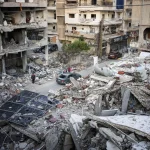
UNHCR said personnel are being mobilised from Iran and Afghanistan to Lebanon and Syria as the crisis deepens. In Lebanon, agency teams are distributing emergency relief supplies to displaced families sheltering in government-designated centres following Israeli military strikes and evacuation orders covering 53 villages across the south of the country, the Bekaa Valley and Beirut’s southern suburbs.
More than 30,000 people have sought shelter in Lebanon alone since the latest round of strikes, according to reports, with many others sleeping in their vehicles or stuck in gridlocked traffic fleeing the affected areas.
Cross-border movement has surged in tandem. Syrian authorities reported approximately 11,000 people crossed from Lebanon into Syria on Monday — above the recent daily average — following Israeli evacuation orders. UNHCR said its staff are present at Syrian border crossings and that pre-positioned supplies are in place inside the country to handle larger influxes.
“UNHCR is deeply concerned about the escalation of conflict in the Middle East and its impact on civilians and further displacement in the region,” the agency said in a statement. “Further violence risks overwhelming humanitarian capacities and placing additional pressure on host communities.”
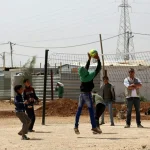
The warning carries particular weight given the scale of pre-existing displacement in affected countries. Iran currently hosts 1.65 million refugees and others in need of international protection — the majority of them Afghans — already strained by inflation, mass deportations and restrictions on employment. UNHCR has maintained a presence in Iran since 1984 and is the largest UN agency in the country, with offices in Tehran and five field locations.
Iraq is also being closely watched. UNHCR said it is monitoring the situation at Iraqi border crossings in coordination with local authorities, though no unusual movements have been observed so far.
The agency called on all countries in the region to keep borders open, warning that turning back people fleeing conflict zones would constitute refoulement — the forcible return of refugees to places where they face persecution — a violation of international law. Türkiye, which shares a 560-kilometre border with Iran and has reinforced frontier security with walls, barriers and drone surveillance, saw crossings on Monday within the usual range, UNHCR said. Crossings at Afghanistan’s Islam Qala border with Iran and along the Armenian border also remained limited.
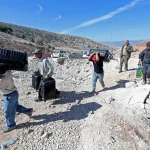
The crisis compounds a large-scale return movement already underway in Afghanistan. Since October 2023, roughly 5.4 million Afghans have returned from Iran and Pakistan — many not voluntarily — driven by tightening residency rules and deteriorating economic conditions. More than 232,500 have returned so far in 2026, including over 86,000 from Iran. UNHCR said mass and hasty returns heighten protection needs and risk further regional instability, including onward movement toward Europe.
Those concerns appear to be registering in Europe. The EU Agency for Asylum warned this week that if Iran is significantly destabilised, refugee movements could reach an “unprecedented magnitude” given the country’s population of around 90 million — even as it reported that EU asylum applications dropped nearly 20 percent in 2025.
UNHCR echoed the UN Secretary-General’s call for immediate dialogue, de-escalation, and full compliance with international humanitarian law. The Secretary-General has been in direct contact with regional leaders since the weekend, including the Amir of Qatar and Oman’s Foreign Minister, to press for an end to the military escalation and a return to negotiations.