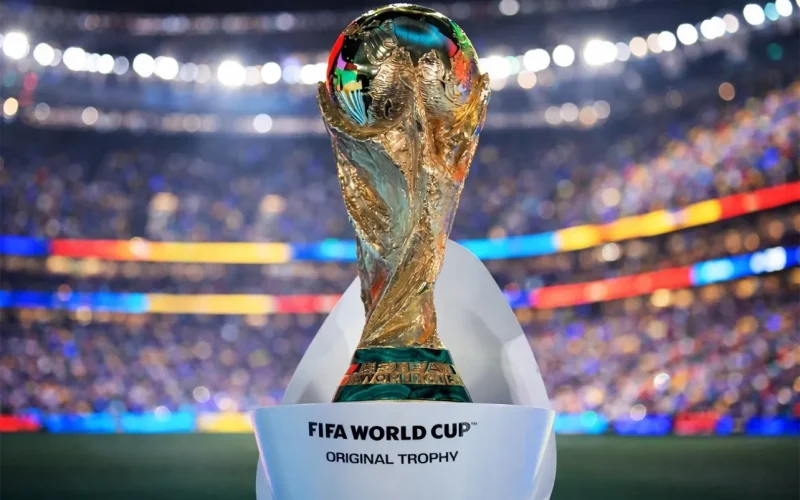
FORTY-five days before the world’s biggest football tournament kicks off on American soil, a damning new report has cast a long shadow over what was meant to be football’s most inclusive World Cup in history.
Human Rights Watch released a 79-page guide on Monday, warning journalists, fans, players, and workers that the 2026 FIFA Men’s World Cup is unfolding against a backdrop of abusive immigration enforcement in the United States, new threats to media freedom, discrimination, and unmet human rights commitments by FIFA and host cities.
The tournament – the first to span three countries, opening on June 11 across 16 host cities in Canada, Mexico, and the US – was conceived as a global celebration of football. Instead, it is shaping up as the most politically charged World Cup since Qatar 2022.
From January 20, 2025, to March 10, 2026, US Immigration and Customs Enforcement arrested at least 167,000 people in and around the 11 US cities where games will be played, based on ICE data analyzed by Human Rights Watch.
New US visa bans are blocking fans from qualified teams from attending the tournament. For African teams – whose fans may already face significant visa barriers – the implications are serious. With 75 percent of the matches taking place on US soil, fans may face a range of human rights risks, from abusive immigration raids and arbitrary detention to racial profiling and discriminatory visa bans for dozens of countries.
Already in 2026, 11 people have died in US immigration detention.
FIFA’s Complicity
The most pointed criticism in the HRW report is directed not just at Washington, but at football’s own governing body. FIFA has not made meaningful efforts to use its leverage to push the Trump administration to roll back or pause abusive policies. Instead, in December 2025, it awarded Trump the first FIFA Peace Prize.
“Since awarding Trump the ‘FIFA Peace Prize’ in December, FIFA has gone silent on every concrete human rights promise it said it would stand up for,” said Minky Worden, director of global initiatives at Human Rights Watch.
All but one of the host city committees have either failed to present the human rights action plans required by FIFA or produced plans that ignore or fail to adequately address risks, including those faced by immigrants, LGBT people, and journalists.
“The 2026 World Cup risks becoming a sportswashing bonanza for the Trump administration,” Worden said. “FIFA needs to take more effective steps to protect athletes, fans, and workers from the US government’s abusive policies.”
Journalists in the Crosshairs
For African and Global South journalists planning to cover the tournament, the press freedom picture is alarming.
Media freedom in the US is under intense new pressure. Among the cases documented is the arrest and detention of Mario Guevara, an Emmy-winning journalist, in Atlanta — a World Cup city — in June 2025. He was reportedly arrested for filming a political protest, transferred to ICE custody, and deported to El Salvador. In March 2026, Estefany Rodríguez, a journalist covering ICE immigration raids, was reportedly arrested without a warrant being presented.
FIFA has not addressed direct risks to journalists working in Mexico’s World Cup host cities, including reporters covering possible intersections between football and organised crime. Mexico, where press freedom organisation Article 19 reported that seven journalists were killed in 2025 and where impunity for such killings remains the norm, hosts several matches.
HRW pressed FIFA directly. FIFA responded that it “has in place mechanisms and procedures to respond to any human rights or safeguarding-related incident, including those involving journalists.” Critics called the response inadequate given the scale of documented abuses.
What FIFA and Host Cities Must Do
Human Rights Watch has called on FIFA to demand that the Trump administration establish what it describes as an “ICE Truce” — a public guarantee from federal authorities to refrain from immigration enforcement operations at games and venues.
FIFA should insist that all 16 host committees work with local stakeholders to publish and implement full Human Rights Action Plans before May 11. Every plan should explicitly address immigration enforcement risks, including the possibility that ICE could target World Cup venues, fan festivals, and surrounding areas.
A coalition of civil society organisations — including the Sport & Rights Alliance, Amnesty International, the ACLU, NAACP, and Reporters Without Borders — has united behind the same demands.
For African football fans and the continent’s growing cohort of international journalists, the 2026 World Cup raises a fundamental question: is this tournament truly for the world, or only for a privileged slice of it?
FIFA anticipates that as many as 6.5 million people could attend the 2026 tournament across the host countries. How many will be turned away, detained, or deterred before they reach a stadium remains an open and troubling question.
Football brings the world together — but not if US visa bans and mass deportation raids keep immigrants, workers, journalists, communities, and fans away.
The whistle blows in 45 days. The world is watching — if it can get in.