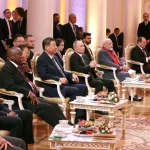
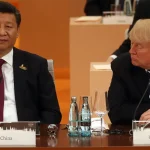
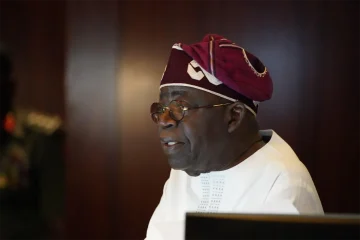
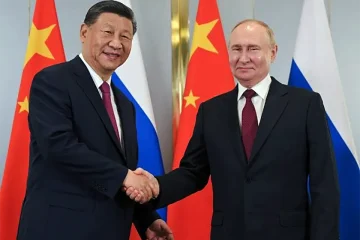
AT the recent Forum on China-Africa Cooperation (FOCAC) summit held in Beijing, 51 African heads of state or their delegations attended in person, signifying the importance of the occasion amidst the rapidly changing international world order. Also present were the African Union Commission Chairperson Moussa Faki Mahamat and the United Nations Secretary-General Antonio Guterres.
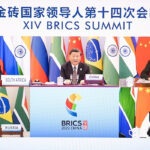
FOCAC is one of the few geopolitical platforms that symbolize the changing landscape of global affairs, alongside BRICS. South-South relations have finally awakened from a long slumber. United in purpose, the Global South has begun to speak in unison without fear of reprisals, recognizing the strength in unity. This is a significant development. For over three centuries of Western slavery, colonialism, and apartheid, the art of successful subjugation of the indigenous majority by a foreign minority was based on the principle of “divide and rule.” In 2024, forums such as FOCAC and BRICS have declared that the era of freedom and development based on the notions of a “shared future” and “win-win” principles has arrived.
Given this context, it was noteworthy to observe the absent African nations at FOCAC, an event that attracted global media coverage due to its importance as a perceived antithesis to lingering Western hegemony. The absence of the Kingdom of Eswatini was particularly notable. All FOCAC participants are bound by their unwavering recognition of the One-China principle, “that the People’s Republic of China is the sole legitimate government of China, and that Taiwan is an inseparable part of China.”
This principle lies at the heart of UN Resolution 2758, adopted on October 25, 1971, and recognized by the overwhelming majority of UN member states, including the US, UK, Germany, France, Canada, Latin and South America, the Caribbean, Asia, Russia, and most EU member states.
Eswatini remains the only African state that maintains diplomatic relations with Taipei. As someone with a deep-seated interest in and love for the Kingdom of Eswatini, I argue that adhering to an obsolete foreign policy position that clearly swims against the tide is shortsighted and potentially detrimental.
Consider China’s Belt and Road Initiative, an economic program spearheaded by President Xi Jinping’s office, where Beijing is determined to assist Africa with technological development projects and investments. China’s top envoy to South Africa, Ambassador Wu Peng, recently held a briefing to elaborate on the FOCAC resolutions aimed at empowering the continent as a whole.
Ambassador Wu stated that Beijing regards relations with Africa as of utmost importance in its foreign policy. During FOCAC, President Xi Jinping announced that relations between China and Africa had been elevated to “an All-Weather China-Africa Community with shared future for the New Era.”
Wu’s approach to African cooperation seeks to embrace all states, including Eswatini, should the Kingdom’s foreign policy toward the One-China Principle change. The economic and geopolitical benefits are substantial. China is a permanent member of the UN Security Council with veto power that it can use to benefit strategic allies on the continent and elsewhere. Additionally, China’s economy is the second-largest in the world, trailing only the US but growing at a much higher rate.
Ambassador Wu, who has worked on Africa-related affairs for nearly a decade, emphasized that “FOCAC has become a guiding force in international cooperation with Africa.” He summarized the spirit and outcomes of FOCAC using five C’s:
1. Community: Building a high-level community with a shared future.
2. Consensus: Sharing a vision for modernization.
3. Commitment: Creating a roadmap for the next phase of China-Africa cooperation.
4. Creativity: Hosting four high-level meetings during the Summit for the first time.
5. Coordination: Enhancing cooperation in international affairs.
To support these initiatives, China has allocated 210 billion yuan in credit lines, including 70 billion yuan for investment by Chinese enterprises in Africa.
I contend that it is time for Eswatini’s international relations scholars and government geopolitical advisers to revise their foreign policy and align it with the rapidly changing world order. The Kingdom is strategically intertwined with South Africa and the SADC region, where regional foreign policy regarding China is aligned and in sync. For the past 14 consecutive years, China has been South Africa’s biggest trading partner, ensuring that Pretoria’s economy remains number one on the continent.
There is no reason why the people of Eswatini and their majestic Kingdom should not benefit from the reconfiguration of the global world order currently underway. It is never too late to make amends and correct a position that brings no greater joy. The benefits of bilateral relations between Eswatini and China could trigger an unprecedented economic boom.
As Wu told GSMN in an interview: “All of our friends present with us today represent the bridges that will bring hope to China-Africa people-to-people exchanges.”
*Abbey Makoe is Founder and Editor-in-Chief of Global South Media Network*