THE UN humanitarian and human rights community reacted forcefully on Tuesday to the vote by the Israeli Knesset banning the UN Relief and Works Agency (UNRWA), warning of the devastating impact on millions of Palestinians who depend on it.
They joined their voices to UN chief António Guterres who said after the vote on Monday that if implemented, the two new Israeli laws impacting the agency “would likely prevent UNRWA from continuing its essential work” in the Occupied Palestinian Territory as mandated by the UN General Assembly. He insisted that “there is no alternative to UNRWA”.
UN Migration Agency (IOM) Director-General Amy Pope told journalists in Geneva that UNRWA has provided “the backbone of infrastructure within places like Gaza”, including education and health care for people who have been living there for decades. “That’s not something that IOM does,” she stressed, explaining that instead, with adequate support, the UN migration agency can help the displaced, “those who need shelter, those who need hygiene kits, those who do not have sufficient access to protection”.
“There’s no way for IOM to step in to do what UNRWA has done,” she concluded. “UNRWA is absolutely essential.”
Humanitarian Affairs Coordination Office (OCHA) spokesperson Jens Laerke insisted that the UN is trying to “not have an implementation” of the Knesset decision. He highlighted the outpouring of protest not only from the UN, but also from “prominent government officials… and heads of State”, against a decision which is “wrong” for the millions of Palestinians who require UNRWA’s help.
“If implemented, this would add to the acts of collective punishment that we have seen imposed on Gaza,” he added.
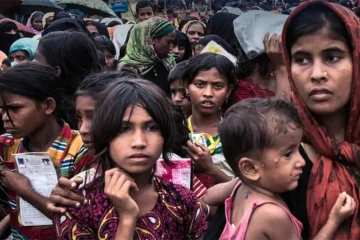
UN Children’s Fund (UNICEF) spokesperson James Elder warned that if UNRWA was unable to operate, “[we] would likely see the collapse of the humanitarian system in Gaza”.
He stressed that UNICEF distributes aid within the Gaza Strip with the support of UNRWA and would become unable to reach people in desperate need throughout the enclave with lifesaving supplies if the Israeli Knesset votes became law after 90 days.
“I’m talking vaccines. I’m talking about winter clothes. I’m talking hygiene kits, health kits, water and sanitation” as well as nutrition supplies, he said, in a situation where “we’re knocking on the door of famine”.
“A decision such as this suddenly means that a new way has been found to kill children,” he insisted.
Mr Elder said that with the Strip’s population “physically… on death’s door and psychologically in uncharted territory,” taking away healthcare workers and nutritionists would be lethal for Gaza’s youngsters.
Wider healthcare provision across Gaza is also at risk from the Knesset vote, with some 3,000 out of 13,000 UNRWA staff in Gaza medical workers, said World Health Organization (WHO) spokesperson Tarik Jašarević. This service “couldn’t be matched by any agency, including WHO”, he added. Last year, UNRWA provided more than six million medical consultations in health centres run by the agency, with consultations “for more than half of [the] Gaza population,” the WHO spokesperson said, in addition to disease surveillance, malnutrition screening and child immunization services. Notably, UNRWA provided one-third of the health workers involved in the polio vaccination campaign which has been rolled out in Gaza since September, Mr. Jašarević said.
A second round of the campaign in the north of the Strip is on hold due to the lack of humanitarian pauses as relentless Israeli bombardments continue. In the current context it is “difficult to imagine” that it could go forward, the WHO spokesperson said. He highlighted that out of 25 requests for humanitarian missions this month, “only seven managed to take place – others were either denied or were impeded”.
Jeremy Laurence of the UN Human Rights Office (OHCHR) said that High Commissioner Volker Türk had pointed to the “potential dire impact” on the rights of all those who depend on UNRWA.
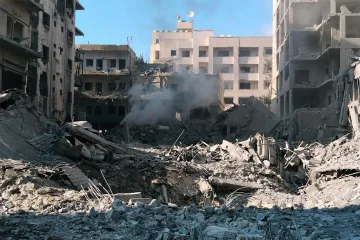
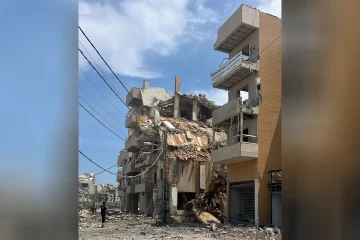
Mr. Laurence reiterated OHCHR’s previous concerns “about Israel’s compliance with international law” with regard to its intense bombardment of Gaza, where tens of thousands of civilians have been killed, according to the local authorities. Mr. Laurence also highlighted that Israel remained bound by its obligations “under a range of human rights treaties”, including the International Covenant on Economic and Social Rights, which enshrines rights to adequate food, housing, education, health, social security, water and sanitation, and work.
“Without UNRWA, the delivery of food, healthcare, education, among other things, to most of Gaza’s population, would grind to a halt,” he said.
“Civilians have already paid the heaviest price of this conflict over the past year. Truly, this decision will only make matters worse for them, far worse.” – UN Multimedia Newsroom