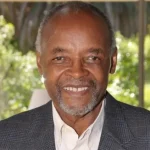
PROFESSOR Chabani Manganyi’s last days were filled with virtual silence. Silence because he suffered from a form of dementia and had lost the ability to both recognise a lot of people and things, and also, at times, the ability to speak.
Visiting him, which I did religiously every two months or so, took an effort. The recognition that I had to make, that the brain that gave South Africa such a rich heritage in terms of writings, academic work and leadership, was withering infront of our eyes, was hard to accept.
Many of his colleagues simply stopped going to see him, because it was not easy. But, of course, that is not the way to treat a brother, a friend, a colleague in his time of most need. We must be there for each other at the most difficult of times. That is encapsulated in the one most abused word in this country, ubuntu.
I knew Manganyi when he went to school with my late elder brother at Mphaphuli High School in Sibasa, Venda. Born of Mozambican immigrant parents, Manganyi was a bright student even during that time, as my very competitive brother used to confess.
I later met him in the early 1970’s when I was working for the South African Students Organisation (SASO). Manganyi was researching on Black Consciousness and wanted to understand from the source, typical of a good academic. We were mostly students in SASO and his interest in Black Consciousness was welcomed. It resulted in his book, Being Black in the World.
It was a deep reflection and exposition of the black condition and added to the then burgeoning literature around the black identity both her and abroad. Manganyi’s book was both timely and defining. Timely because the SASO position of rejecting being defined in the negative as Non Whites, was condemned by amongst others liberal editors, one of whom told me it was too emotive and would make people angry.
Defining because at that point, here was an academic, not a student, nailing his colours to the mast of Black Consciousness, and defining himself as black. We interacted a lot during that time until I was banned and later went into exile.
When I returned from exile we met and our relationship continued. An affable man, he accommodated Professor Kader Asmal when the latter returned from Ireland after the unbanning of the ANC. Asmal was to later become his Minister when he was the Director General of the Department of Education.
It was in this role that our paths crossed again because I had been seconded to Limpopo to rescue the crisis ridden education department there. Manganyi held regular meetings with all senior administrators in both his office and in the provinces. He so much wanted to change the condition within black education in particular.
It was during this time that we developed the idea of meeting every second Thursday to discuss issues of concern and share experiences. One of the innovations that arose from these meetings concerned the reshaping of the curriculum to ensure the syllabus was completed by the end of the third quarter. This left teachers with the last quarter used for revision and trial exams. In Limpopo I had ensured that teachers would also teach on Saturdays. This was treated as overtime and they were paid by the department for this.
The first year we did this the matric results improved from 30 to 37 percent. Manganyi started introducing this nationally but was met with ministerial resistance. He immediately left and joined the University of Pretoria.
Despite this, our Thursday meetings continued, morphing into a bi-monthly arrangement where we discussed political developments and the deteriorating situation in the country. A very honest man with extremely critical views, it would be wrong to describe him as militant, but his views, expressed in his slow and soft voice, were definitely so. In his writings that produced 10 books, he looked into the psychological situation of people, offering views on mental health and related subjects.
It was because of these meetings that I saw the onset of his disease, with him initially complaining that he was becoming too forgetful. We dismissed it as the impact of age but it was more serious. Until he passed on last Friday aged 84. With his death, which, coming after high profiles ones such as Tito Mboweni and Membathisi Mdladlana that got saturated media coverage, Manganyi went as he lived, in the shadows, with no fanfare.
It is perhaps an indication of our attitude to knowledge and how we don’t prioritise it that such a luminary, prolific writer and immense contributor to the national memory bank, goes unheralded, when three song sensations are given official funerals.
This is the man about whom the University of Pretoria, where he was once Vice Principal, said the following about tributes paid to Manganyi: “These accolades reflect only part of an extraordinary tapestry of career achievements by a man who led a life dedicated to the pursuit of knowledge, critical thought and the transformation of education in South Africa.
“As the first qualified black psychologist in South Africa, he was an intellectual activist who contributed to black consciousness philosophy and who cared deeply about the mental liberation of black people in the face of colonialism and apartheid. His memoir, Apartheid and the Making of a Black Psychologist, stands as a powerful narrative of resilience, reflection and purpose.”
Manganyi was buried in Johannesburg on Friday, and leaves behind his wife and children.
- Professor Ranwedzi Harry Nengwekhulu is the former head of the Unisa School of Governance.