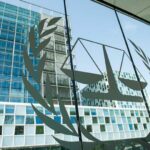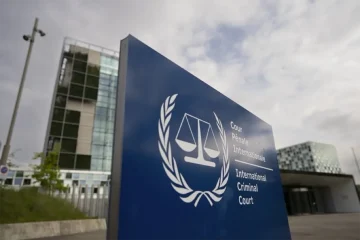
THE decision by the judges at the International Criminal Court has put the global justice system on trial. These arrest warrants against Israeli Prime Minister Benjamin Netanyahu, his former defence minister Yoav Gallant and Ibrahim Al-Masri, a Hamas leader, glitter with moral righteousness but are, in reality, nothing more than phantoms – paper tigers with no teeth.
The ICC stands exposed: a judicial body without muscles, without a police force, without real authority. Its pronouncements are mere whispers in the wind of international politics, powerless to compel action. While 124 member states are technically obliged to arrest these individuals, the practical reality is brutally simple: these warrants are symbolic gestures, not instruments of genuine accountability.
The global justice system reveals its most profound weakness: inconsistency. True justice cannot exist when the application is selective when powerful nations can sidestep accountability, and when international law becomes a tool more of diplomacy than of genuine reckoning.
Israel is not even an ICC member state. The United States – a global superpower – stands outside this jurisdiction. So who truly faces consequences? The system speaks loudly but carries no stick, its bark far more intimidating than its bite.
These warrants will change nothing on the ground. Netanyahu will continue to lead, the conflict will persist, and the international community will watch, debate, and ultimately do nothing. It is a stark reminder that in the theatre of global politics, justice remains more a performance than a reality.
The ICC’s decision is not a triumph of law, but a testament to its fundamental impotence.
Reaction to the decision has been mixed.
Netanyahu’s office expressed “disgust” at the “absurd and false actions,” while President Isaac Herzog claimed the decision “chose the side of terrorism” over democracy.
International reactions varied significantly. The United States firmly rejected the court’s decision, with the White House expressing deep concern about the process. European countries showed more nuanced responses, with most emphasizing their respect for the ICC’s independence. The Netherlands and Switzerland explicitly stated they would comply with the arrest warrants, while countries like France and Italy suggested they would carefully consider their approach with allies.
Palestinians viewed the warrants more positively. Hamas called for expanded accountability, with a senior official describing it as an “important step on the path to justice,” while the Palestinian Authority welcomed the decision. In the Middle East, Jordan’s Foreign Minister supported the rulings, asserting that “Palestinians deserve justice.”
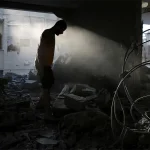
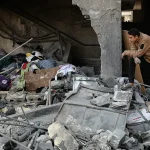
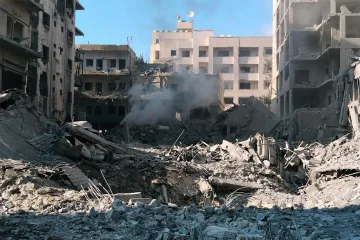
The warrants, which allege war crimes and crimes against humanity during the October 7, 2023 Hamas attack and subsequent Israeli military campaign in Gaza, have clearly touched a nerve across diplomatic circles, revealing deep divisions in how different nations perceive international judicial mechanisms.