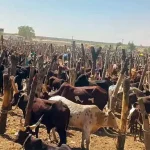
THE mist still clung to the valleys of Bakinjaw when they came. In the pre-dawn darkness, only the soft tinkling of cattle bells betrayed their approach – armed men moving through the shadows, their footfalls muffled by the damp earth. Among them was Ibrahim, a young Fulani herdsman whose heart burned with the previous day’s loss. His uncle had fallen to Cameroonian bullets, and now vengeance drove him forward with his brothers.
Across the border post, Lieutenant Thomas Mbella of the Cameroonian military sipped his morning coffee, his thoughts drifting to his wife and newborn daughter in Yaoundé. Twenty-four hours earlier, his unit had engaged with what they claimed were armed intruders, but the bodies they left behind wore the traditional garb of Fulani herders. The incident had left him uneasy, aware of the delicate balance they walked in this contested region.
The first shot shattered both the morning silence and any hope of peace. The border post erupted in chaos as hundreds of armed men emerged from the mist, their weapons blazing with deadly purpose. Lieutenant Mbella never finished his coffee. He fell defending his post, one of five soldiers who would not live to see the sun rise over the mountains that had long served as a peaceful boundary between nations.
In the village, Chief Agwa Linus watched helplessly as flames consumed his ancestral home. The wooden beams that had sheltered three generations of his family collapsed into ash, a symbolic pyre for the death of tranquillity in this border region. The smoke rose like a signal fire, visible for miles on both sides of the border – a warning of how quickly peace could unravel.
By nightfall, the news had reached both capitals. In Abuja, Nigerian security officials huddled in emergency meetings, while in Yaoundé, Cameroonian military commanders pored over maps and satellite images. What had begun as a localized conflict over grazing rights now threatened to escalate into a diplomatic crisis between two of West Africa’s most powerful nations.
In the aftermath, Bakinjaw fell silent, its streets empty save for the occasional military patrol. The village that had once been a symbol of cross-border commerce and cooperation now stood as a testament to how easily ancient wounds could be reopened, how quickly neighbors could become enemies.
MP Aka Martin Tyoga stood at his office window in Akwaya, watching military reinforcements roll in. His phone hadn’t stopped ringing since dawn – calls from journalists, security officials, and worried constituents. He knew that what happened next would determine more than just the fate of his district. It would test the resilience of decades of peaceful coexistence between two proud nations.
As darkness fell over the borderlands, the cattle bells that had heralded the morning’s violence were silent. In their place, the low rumble of military vehicles and the whispered prayers of villagers filled the night air. Both sides knew that tomorrow would bring either the first steps toward reconciliation or the beginning of a broader conflict that neither nation truly wanted, but both were prepared to wage.