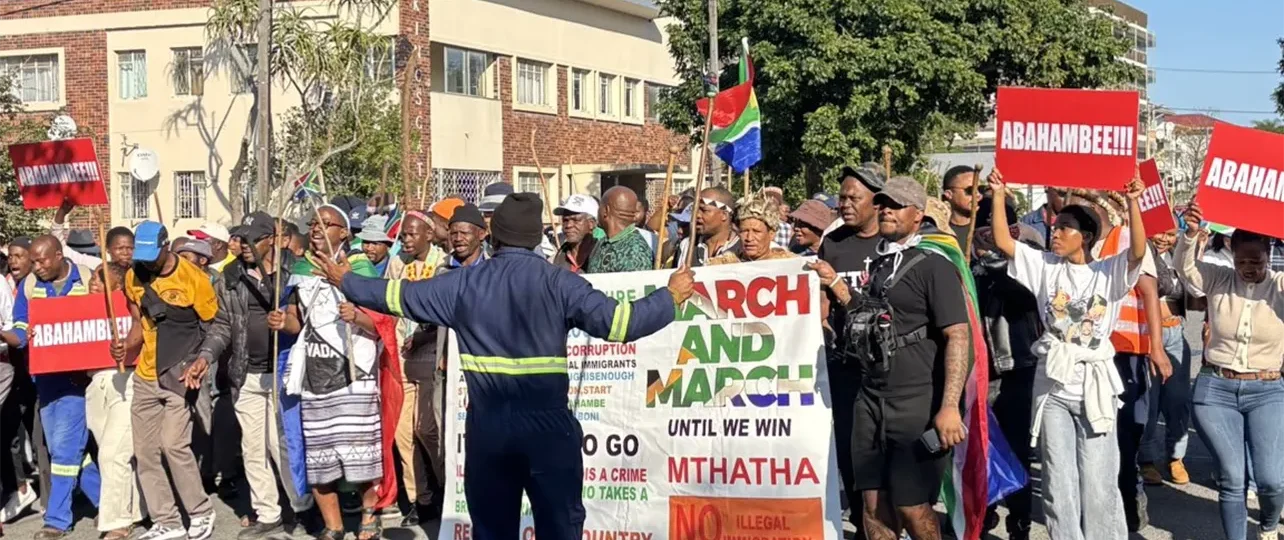

AS marches against undocumented migrants spread and the 30 June deadline set by vigilante-style groups approaches, President Cyril Ramaphosa and Acting Police Minister Firoz Cachalia are insisting that enforcement must stay in state hands and that South Africans must not resort to mob justice. But the government’s hardline migration response now faces a double test: whether it can restore order without inflaming xenophobia, and whether it can deliver real enforcement fast enough to calm public anger.
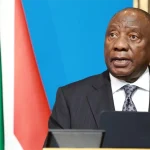
South Africa’s government is trying to project control at a moment of rising public fury over illegal immigration, but the political stakes are growing by the day. Ramaphosa has said the state will not tolerate unlawful migration, yet he has also warned that “the responsibility for enforcing our laws rests with the state, and that no individual may stop another to demand documentation or proof of nationality”. That line is central to the government’s argument: immigration enforcement must be firm, but it cannot be outsourced to citizens or turned into street-level intimidation.
The pressure behind that message is plain on the ground. Anti-immigrant marches have spread across Gauteng, the Western Cape and Limpopo, with groups such as March and March insisting that undocumented foreigners leave by 30 June. In some areas, the protests have remained peaceful, but their language has been openly exclusionary and, at times, threatening. The danger for the state is that political anger over jobs, crime and service delivery can quickly mutate into vigilantism if it is not contained by credible law enforcement,
Ramaphosa’s response has been to fold immigration into a broader state recovery agenda. He has promised tougher border controls, faster deportations, dedicated immigration courts, stronger workplace inspections and legislative changes to limit illegal hiring and tighten asylum administration. He has also stressed that there will be “security and other measures to deal with any attempts to destabilise our country, whether by citizens or foreign nationals”. The message is meant to reassure a public that feels the system has lost control while also drawing a red line against mob action.
Cachalia, meanwhile, is preparing for the security risk around the 30 June demonstrations. After meeting the private security industry, he said: “criminality, intimidation, violence, the destruction of property and any attempt to undermine public safety will not be tolerated”. His involvement shows how seriously government is treating the possibility of unrest, especially after the July 2021 violence still looms large in state memory. But the very need for private security as a “force multiplier” also hints at a state that remains anxious about whether its own enforcement machinery is strong enough.
The policy challenge is that enforcement alone will not settle the issue. Ramaphosa has acknowledged that migration is driven by broader regional pressures, including conflict, unemployment and economic hardship across the continent. That is why government is also sending special envoys to affected countries and working through SADC and the African Union. Without that regional dimension, South Africa risks being seen as punitive at home and diplomatically heavy-handed abroad.
The hard truth is that the government is now walking a narrow line between urgency and overreach. If it moves too slowly, it will be accused of abandoning law and order. If it moves too aggressively, it could deepen xenophobic tensions, trigger rights abuses and worsen South Africa’s standing in Africa. The coming days, especially the handling of the 30 June protests, will show whether this is a disciplined law-enforcement response or the start of a broader social rupture.