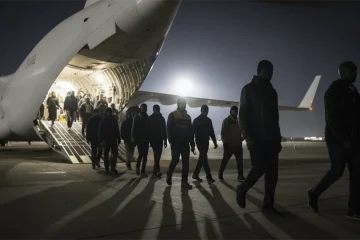
THE issue of migration in South Africa seems to have generated more heat than light. This has occupied public discourse at home and abroad. As a Foundation committed to catalyzing the Renaissance of Africa, we cannot avoid adding our voice to this matter, which threatens to undermine all efforts of building African unity.
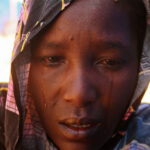
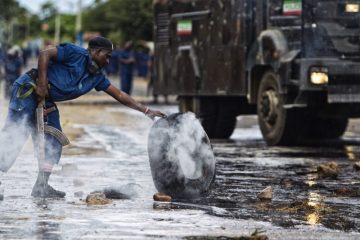
The images of anti-African-immigrant marches in our country reflect images of despair rather than hope in the future of our continent and mothers with crying babies at their backs in cold winter nights and mornings are an affront to our collective humanity. We are deeply concerned about the fracture this creates in our continent, turning a long-held dream of a united, prosperous and peaceful Africa occupying with dignity, its rightful place amongst the nations of the world into an unending nightmare.
The objective of our intervention in this matter is to promote a reasoned, fact-based analysis of the migration issue. We reject inflammatory, emotional, and factually incorrect expositions that have characterized this debate and firmly oppose narratives that seek to degrade the stature and image of our country.
As we have heard, our President Cyril Ramaphosa made the following remarks during his June 7 broadcast, among others:
“Over recent months, South Africans from every walk of life have raised concerns about migration and illegal immigration…”
“Almost all South Africans recognise that illegal immigration is a significant challenge…” (our emphasis)
“Illegal migration, if unchecked, poses a risk to South Africa’s security, stability, as well as our economic progress…”
“We know that illegal migration affects service delivery and places additional burdens on essential services such as health care and education…”
“We know that illegal migration undermines our efforts to create decent work for our people.”
All these comments constitute an agreement by our Head of State and Government with the argument advanced by groups such as Operation Dudula and the more recent creation, March and March, as well as the political parties such as ActionSA and ATM, that such is the level of illegal migration in our country that it results in the negative consequences which President Ramaphosa mentioned.
By the same token, he joined these campaigners against ‘undocumented migrants’ to make the statement that these ‘illegal migrants’ are the cause of such phenomena in our country as the high levels of unemployment, high levels of crime and lack of economic growth.
However, President Ramaphosa and others who claim ‘illegal migrants’ are to blame lack evidence regarding their actual number in South Africa. Their arguments remain speculative, conjecture, undermining informed responses to this societal concern.
This represents a notable shortcoming for the Head of State and Government.
When a serious threat to a country is asserted, any Head of State and Government is obligated to understand this threat as thoroughly as possible. The State has all the tools and resources to understand such a threat. This is the basis for the formulation of an appropriate response.
The simple reason is that such a Head of State & Government would be obligated to lead the country in confronting the threat. Without correct information, such a response is likely to be hit and miss.
In its 14 June 2026 edition, the newspaper, the Sunday Times, publishes in its Q&A column an interview with the leader of Action SA, Mr Herman Mashaba, on the ‘undocumented migrants’.
During this interview, Mr Mashaba is quoted as saying:
“Last week, the statistician general confirmed, scientifically, 3.1 million undocumented (foreign nationals)…” This figure is claimed without clear sourcing or an officially published reference.
The interviewer did not challenge this inaccurate statement.
Instead, strangely, they said:
“That’s 5% of the population, isn’t it?”
And yet in its publication, ‘Mbalo Brief: the missing piece of the puzzle’, Issue 3/2026, published in April 2026, Statistics South Africa said:
“The results indicate that immigrants contributed marginally to the overall population size of South Africa, accounting for 5.1% (just over 3 million people based on official census data, including both documented and undocumented, although official sources note the number of undocumented migrants is not determined).”
Here, Statistics South Africa refers to individuals it actually counted: legal residents living in South Africa who were born elsewhere, not undocumented people.
On 5 August 2021, the same Statistician General mentioned by Mr. Mashaba, Mr. Risenga Maluleke, issued a Statement headed “Erroneous reporting of undocumented migrants in SA”.
In that Statement, the Statistician General said:
“Stats SA wishes to categorically indicate that it has at no point made any estimation or comment on undocumented migrants…
“The census migration module asks the province/country of birth, date moved to South Africa and country of citizenship. It does not ask about an individual’s documented status. It is not the mandate of Stats SA to determine the documented/undocumented status of persons born outside SA.”
We cannot locate the statement Mr Mashaba claims was made by ‘the statistician general last week’.
And neither has StatsSA changed its policy in this regard from the one explained in clear terms in 2021 by Statistician-General Risenga Maluleke.
When President Ramaphosa claims that “Almost all South Africans recognize that illegal immigration is a significant challenge…” as he did in his June 7, 2026, Address to the Nation, he must answer the question – what numbers are we talking about here to measure the size of the challenge objectively?
Another question the President must answer is – how was this assertion, “Almost all South Africans…,” factually determined?
Further clarification is needed: are these ‘illegal migrants’ in our country 50 thousand, 500 thousand, 5 million, or otherwise? Is there an official or approximate figure supporting these numbers?
What is the size of the problem that must be solved?
Neither President Ramaphosa nor the ‘almost all South Africans’ he cites can provide the figure we are requesting.
Incidentally, logically, “undocumented” means “not counted”!
There is no doubt that there are illegal, undocumented migrants in our country.
Relevant institutions of the democratic State must ensure observance of all South African laws, including those related to immigration.
There should be no dispute, let alone a prominent discussion, about these common-sense propositions. Similar to the economic issues, there seems to be a law enforcement crisis.
The claim that undocumented migrants cause unemployment and poor service delivery must be rigorously examined. Only through thorough debate and honest interrogation can the true causes of these problems be understood. This is important in that even if the undocumented migrant problem is solved by deporting all of them, we will still have a challenge as to what happens the day after.
One item on the political agenda of the Counter-Revolution — those who have always been, wittingly or unwittingly, opposed to a free and equal South Africa, including their agents within the liberation movement — is to eliminate the Government’s foreign policy focus on African unity and Renaissance.
The reason for this is obvious.
The Counter-Revolution recalls that an important factor in its failure to defend the apartheid system successfully was:
- The United African support for our liberation struggle, and,
- The support for the liberation movement by the overwhelming majority of the African States and peoples.
As it now works to defeat and destroy both the ANC and the NDR, it is natural that the Counter-Revolution would seek to undermine the relationship between South Africa and the rest of Africa. This relationship was built on the historic united African struggle against apartheid and colonial domination, and on the understanding that South Africa is understood as a dependable African state whose mis/fortunes are intertwined with those of the rest of the continent.
Others around the world support this approach of undermining South Africa’s relationship with the rest of Africa. This is because they are very concerned that, as liberated South Africa interacts with the rest of the Continent, based on positions inherent in the ANC’s long-held foreign policy, these ideas and practices will spread throughout Africa in favor of fundamental socio-economic transformation, including the defeat of neo-colonialism.
This would be against the direct interests of several major powers.
It should therefore come as no surprise that over the years, the Counter-Revolution has deliberately encouraged Afrophobia in our country, knowing that this xenophobia would undermine solidarity between democratic South Africa and the rest of our Continent, and weaken the shared African commitment to a national democratic revolution.
The Counter-Revolution also wants this outcome, convinced that it will be easier for it to destroy an ANC that is isolated from its historic allies, the masses of the peoples of Africa and the African Diaspora.
It should therefore not surprise anyone among us that some of the campaigners against ‘the undocumented migrants’, who are exclusively African, resulting in increasing hostility towards all African foreign nationals in our country, are obviously well funded.
This, the Counter-Revolution would have applauded: the statement that “Almost all South Africans recognize that illegal immigration is a significant challenge…”!
We have, on various occasions, referred to the comments by the eminent South Africans, Dr John Endres, CEO of the South African Institute of Race Relations, and Dr Frans Cronje, of the Social Research Foundation, who have been making observations about our socio-economic situation.
Both have said, in their own words and with facts, that democratic South Africa made remarkable progress during its first 15 years, confirming that it was on the road to eradicating the legacy of colonialism and apartheid.
They then go on to say that, however, there was a sharp change in this regard, resulting in South Africa going down over the next 15 years, exactly in the opposite direction to its first 15 years.
To illustrate what we have lost as a result of the change of direction over the last 15-plus years, Dr Cronje has even projected that if South Africa had sustained the economic growth rate it achieved by 2008, unemployment today would be 10% rather than the current 32.5%!
Unfortunately, neither of these learned Doctors, Endres and Cronje, poses or answers the question – what caused the sudden and dramatic change of direction they speak about! Neither is it clear why the same organization, the ANC in power, behaves differently from the way it had done immediately after the collapse of Apartheid.
The person who does this is Dr Roy Havemann of the Stellenbosch University Bureau for Economic Research (BER), in a September 2025 article entitled “Accounting for South Africa’s remarkable growth deterioration. And how can growth be restored?”
Among others, Havemann says:
“South Africa’s economic growth slowed significantly from 2010…The first place to look in explaining this dramatic fall-off in productivity growth (from 2010 onwards) might be to ask whether there was a reversal of the things that supported the initial strong performance.”
He then says:
“Indeed, the most significant change was not the (2008/9) global financial crisis (which South Africa weathered remarkably well), but a change in the country’s president.”
In this context, he refers to the period of ‘State Capture’, among others.
We all know as a fact that our own argument about what happened, which Dr Havemann explains as “a change in the country’s president”, is that the ANC leadership changed during the 2007 52nd ANC National Conference.
We have said in this regard that the change and subsequent changes were brought about through the direct and purposeful intervention of the Counter-Revolution to undermine the economic, developmental, and political progress that South Africa was making and its positive impact on the rest of the continent!
Again, as we have said, the central, strategic objective of the Counter-Revolution’s intervention, which continues, is to defeat and destroy both the ANC and its program of fundamental change, the NDR.
One of the tasks it set to achieve this objective, another item on its Political Agenda, was to reverse the socio-economic progress achieved under ANC leadership during the first 15 years of our democracy.
The Counter-Revolution itself described this objective as “eradicating the ANC legacy” established between 1994 and 2007.
Described by Dr Havemann as “a change in the country’s president”, this change deliberately produced the general political and socio-economic crisis gripping our country today, seemingly with no end in sight!
This is what caused the high unemployment rate and challenges in social service delivery, along with related problems. This is what afflicts the poor in our country who are at the receiving end of a failing economy, social ills like drug abuse and alcoholism, insecurity and violence, and general despondency.
We know this as a matter of provable fact that none of these major social ills was caused by ‘undocumented migrants’ or migrants as a whole!
What has been happening, as some people have been mobilizing to lay the blame for the said wrongs in our country on the so-called undocumented migrants, is that they have been shielding the Counter-Revolution, their agents, the corrupt and the lazy, those who seek wealth without work – the real and deliberate architects of these wrongs!
Accordingly, what the campaigners against the ‘undocumented foreign nationals’ have been doing is three things. These are:
- They are succeeding in driving a wedge between liberated South Africa and the rest of Africa to help contribute to sabotaging Africa’s efforts to achieve fundamental socio-economic transformation.
- They are helping to create the conditions for the defeat and destruction of the ANC and what it represents; and,
- They are protecting the Counter-Revolution and failing leadership from a sustained offensive by the masses of our people to stop it from continuing its criminal process of striving to ensure the preservation and perpetuation of the criminal legacy of colonialism and apartheid.
This illustrates the gravity of the error President Ramaphosa made when, in his 7 June 2026 Address to the Nation, he effectively endorsed the false claim made by some people in our country that our country’s general crisis has been caused by illegal and therefore undocumented migrants! This, therefore, would take away our focus from the urgency of the task ahead, which is to rescue millions of our people from poverty and to guarantee them safety and security.
From all this must arise the question – what are the tasks of the Broad National Democratic Movement in the face of the well-funded and sustained offensive, effectively to fan a repugnant Afrophobia?
I. It is imperative that the Movement publicly present a broad view of its Immigration Policy, emphasizing its commitment to the cultivation of relations of friendship and mutually beneficial cooperation with all countries and peoples, starting with Africa. It must underline that it fully accepts the African Union’s aspiration to achieve the free movement of people throughout Africa, including in the context of the implementation of the African Continental Free Trade Area (AfCFTA) agreement.
For well over a century, the indigenous majority in our country has recognized that it shares a common destiny with the rest of the African peoples. This remains true to this day, and it will for many years to come. The Movement must therefore ensure that the population as a whole is educated to understand this and therefore act accordingly. The Movement must unequivocally kill the impression that our government has created that the principal objective of South African Immigration Policy is to keep out of the country as many people from the rest of Africa as possible!
II. The Movement must tell the story of the First and Second 15-year Socio-Economic periods in our country, 1994/2009 and 2010/to date. It must be explained that the Counter-Revolution’s intervention caused the sharp break between these two periods. It must therefore give the necessary explanation about this Counter-Revolution. And that the Movement is committed to the defeat of these enemies of progress within and beyond its ranks.
III. In this context, it must be explained that:
- whatever foreign nationals were in our country during the period 1994/2009, they did not obstruct the achievements made during this period; and,
- Whatever foreign nationals were in our country during the period 2010/to date, they played no role in causing the sustained and continuing regression during this period.
The Movement must therefore emphasize that problems such as unemployment, poverty and poor service delivery are our own responsibility and have nothing to do with the presence of foreign nationals, including those who are undocumented.
IV. The Movement must explain the goals pursued by the Counter-Revolution aimed at the isolation of democratic South Africa from the rest of the Continent for the purpose of creating the best conditions for it to initially discredit and later destroy the Pan-African movement in South Africa. It must include the encouragement of Afrophobia by the Counter-Revolution to achieve its objectives. The Movement must therefore be very firm in alerting the country that, whatever the intentions of the organizers of the campaigns to expel so-called undocumented foreigners, these campaigns serve the purposes of the Counter-Revolution. They have absolutely nothing to do with creating jobs for South Africans and will not do so. The Movement must expose the grave harm these ill-informed and fruitless campaigns have caused to South Africa.
V. The South African Government needs to develop a plan to regularize the immigration status of all in the country and do so with dignity and within the parameters of the rule of law. Engagement with the countries of the affected individuals must be undertaken with all seriousness.
VI. The Movement must accept the inclusion of this important matter of immigration in the Agenda of National Dialogue, to discuss the history of immigration in our country, the economic impact of migration, the social impact of migration, and how immigration laws are implemented in the country that we envision. More importantly, how can Africans harness their collective efforts and strengths for the improvement of the lives of the people of the continent?
VII. The Movement must explain what should happen about nation-building and social cohesion as this relates to migrants who have legally settled in our country. In this context, the Movement must recall that there has been serious reflection on this matter in the past. We refer here especially to the “Report of the Special Reference Group on Migration and Community Integration in KwaZulu-Natal”, which was chaired by Judge Navi Pillay. This Report, together with the “Report of the Special Committee on Social Cohesion in KwaZulu-Natal”, was released by the KZN Provincial Government in April 2016. Professor Paulus Zulu chaired the latter Committee.
VIII. In its explanation, the Movement would take fully on board the overall approach indicated by Judge Navi Pillay in her Foreword to the Report, in which she says:
“It is important for all South Africans to take responsibility for the development and growth of their country, and to be prepared to engage and cooperate with all persons regardless of their origins and background. Foreign nationals inside the country must continue their efforts to integrate, respect and appreciate the cultures and customs of the communities in which they settle. It is also important for the South African Government to ensure that all of its policies and civil servants respect the rights and dignity of all human beings.
“The South African Constitution protects the rights and dignity of all persons who reside or are present in the country. To realize these commitments, we must all come together and work towards greater cohesion and collaboration, bearing in mind that its own triple threats of poverty, unemployment and inequality cannot be resolved in the short term.”
IX. Our Courts have similarly fortified the position enunciated by Justice Navi Pillay in matters relating to the marches and threats against foreign immigrants. To this end, the Movement and all our citizens must fully embrace, follow and take on board the decision of Justice Adams in the case of Kopanang Africa Against Xenophobia and Others v Operation Dudula and Others 2026(1) SACR 371 (GJ). This decision is instructive in many ways and in particular that:
- Drawing from the Constitutional Court decision in Residents of Industry House, the rights to privacy and dignity in the Constitution attach to “everyone’ and not just citizens. Human dignity has no nationality. The fact that an individual is a non-citizen or undocumented does not mean that her/his basic rights can be violated without consequences. That flies in the face of the founding provisions and values of our constitution.
- The Court made it clear that no one has a right to intimidate, harass, and/or assault any individuals whom they identify as being foreign nationals. And that no one must make public statements that constitute hate speech on the grounds of nationality, social origin, or ethnicity at public gatherings and social media platforms.
- And more importantly, South Africa was a host to the 2001 World Conference Against Racism, Racial Discrimination, Xenophobia and Related Intolerances and an author of the National Action Plan that emanated therefrom. Wherefore, South Africa is expected and enjoined to take reasonable steps to implement this National Action Plan, including by:
- taking steps to establish an early warning and rapid response mechanism regarding threats of xenophobic hate speech and hate crimes,
- collating and publishing disaggregated data in respect of xenophobic hate speech and hate crimes, including the prosecution and conviction of persons who commit such offences.
This is the clearest demonstration that South Africans and its institutions have always been clear about the nature of the challenge and what needs to be done. The Movement’s own history is the best indication of how to respond to the African Immigration matter amplified by the decision of this case referred to herein.
X. In this section of the Movement’s response, it should also address the following facts:
- Relatively modern migration into South Africa began with migrant labor that flowed into our country’s white-owned mines and farms from the 19th century onwards. Millions of these foreign African nationals have contributed immensely to our country’s development.
- All our borders are colonial creations which, among other things, separate families and communities. Necessarily, in our neighborhood, thousands of people cross our borders every day without applying for visas and with no intention to stay in our country. Even if quite a few of these are caught by the Border Management Agency, which happens, it is wrong to describe these as ‘undocumented foreigners’ as though they had been staying in the country.
- As in all countries, the relevant South African Government agencies will carry out their mandated tasks to ensure compliance with our country’s laws, including immigration laws. This is a routine matter which does not require loud communication as though this were an exceptional matter; and,
- much damage has already been caused to the relations between South Africa on one side, the rest of Africa and the African Diaspora on the other. This is translating into hostility against everything South African and will hurt our country and citizens greatly. We cannot both claim that as Africans we share a common destiny and simultaneously act against fellow Africans as though they are our mortal enemies!
POSTSCRIPT.
During the last three days, we received by email a letter entitled “Xenophobia: South Africa’s Reputational Erosion is not Theoretical”.
It is signed by Tim Akano, who describes himself as President of One Africa Initiative. The extract below is reproduced as received.
In the body of the letter, he says:
“I lead a foundation tagged One Africa Academy initiatives, which consists of thousands of African youths from all over Africa.”
“I watched the World Cup football opening match between Mexico and South Africa with mixed feelings.
“Seeing an African country playing on Day one was historic, and its symbolism cannot be underestimated. On the other hand, seeing hundreds of Africans wearing the Mexican jerseys in the stadium and millions of African football lovers across the remaining 50 African countries praying for Mexico to defeat their African brothers was humbling, and equally historic and symbolic…
“I ask: how did Africa get here? As a facilitator of a pan-African NGO tagged ONE AFRICA INITIATIVES(OAI), this bitter divorce between South Africa and Africa is dangerous, because when you remove Africa from South Africa, what you get is South, and South Africa, indeed, went south on the field on the opening day.
“And for a country that derives almost 10% of its GDP from travel and tourism, the reputational damage caused by xenophobia to the Brand South Africa is monumental…
“I lead a foundation tagged One Africa Academy initiatives, which consists of thousands of African youths from all over Africa. I owe this unbiased piece to them before the situation deteriorates further.
“First, to Africans who feel betrayed by the few overzealous and hot-tempered South Africans who have given June 30th as the deadline for certain categories of Africans to leave South Africa, I would like to emphasize that the overgeneralization of the issue is unhelpful.
“Not all South Africans share these xenophobic behaviors…
“Having said that, we also need to blame a few Nigerians and other Africans who go to South Africa to do drugs, prostitution and other criminal activities.
“We should not sweep the issue of one misguided Nigerian who went to South Africa to crown himself KING. The action of one Solomon Ogbonna Eziko, the self-crowned Igbo King of East London, South Africa, an action which begot this latest wave of xenophobia, is a gross act of irresponsibility, insensitivity and lack of proper home training.
“It is an abomination in the African culture to have 2 kings in one kingdom.
“I recall a similar situation in Ghana, where one Eze Dr Chukuwdi Jude Ihenetu crowned himself as IGBO KING IN GHANA.
“In both instances, both South African and Ghanaian youths were justified in rising to defend the sanctity and sacredness of their culture and institutions…
“I can vividly see the famine of Vision and the betrayal of African Brotherhood in the leadership of Thabo Mbeki and Cyril Ramaphosa.
“The two of them know what the South African youths of today don’t know: how Nigeria, which is 7000km away from South Africa, became a Frontline state in the war against apartheid. Ghana, Zimbabwe, Zambia, etc., all gambled with their independence while fighting for South Africa.
“Thabo Mbeki knows how much of Africa’s resources went into ANC bank accounts, in ANC’s Long Walk to Freedom.
“Assuming the youths don’t have the details of their history, it is incumbent on Thabo Mbeki and President Cyril Ramaphosa to speak truth to the mobs on the streets.
“This is what Mandela would have done if he were alive today.
“South Africa stands today as a paradox — a nation liberated by the blood and treasure of an entire continent, now turning its fists against the very brothers who bankrolled its freedom. This does not mean a social crisis. It is the color of a collapsing civilization.
“When Zambia opened its borders to ANC cadres in exile, when Tanzania gave land for training camps, when Nigeria donated millions of dollars to the anti-apartheid movement at a time when Nigerians needed those funds for infrastructure development, they did not ask for repayment. They asked only for solidarity. The covenant was simple: Africa’s liberation is indivisible. What is owed to one is owed to all.
“That covenant has been desecrated…
“But the greater indictment belongs not to the mobs. It belongs to the leadership — or rather, the absence of it. South Africa suffers not just from xenophobia. It suffers from a famine of vision so acute, so prolonged, that its political class can no longer distinguish between a scapegoat and a solution. When unemployment rises, blame the foreigner. When services collapse, blame the immigrant. When corruption hollows out every institution, find an African face to carry the guilt that should rest on indigenous shoulders in government corridors.
“This is the oldest deception in political history — redirect popular rage outward so it never turns inward toward those responsible. And in South Africa, it works with devastating efficiency, because the leadership vacuum is so profound that no credible voice rises to reframe the narrative.
“Consider what is being destroyed in the process. South Africa’s greatest asset — beyond its minerals and infrastructure — is its continental symbolism. It was the miracle nation. The rainbow promise. The proof that negotiation could triumph over annihilation. Every African carried a piece of that victory. Mandela was not just South Africa’s president — he was the continent’s vindication.
“That symbolic capital is being burned… What was once admiration curdles into contempt…
“The reputational erosion is not theoretical — it is measurable, it is accelerating, and it is self-inflicted.
“What South Africa needs — and what its current leadership cannot provide — is a statesman with the audacity to stand before his own people and say what Mandela would have said: ‘These Africans you attack are your brothers. ” Their parents paid for your freedom. Your rage is legitimate, but it is misdirected. The enemy is not the Ghanaian selling bread on your corner. The enemy is the system that keeps you poor while those in power grow obscenely wealthy.’
“That speech has not been given. That leader has not emerged. And in the vacuum, the demagogues thrive.
“Africa is watching. History is recording. And the judgment will be unsparing — that South Africa, at the moment it most needed greatness, chose smallness. That it answered the generosity of a continent with hostility. It inherited Mandela’s legacy and squandered it on the altar of cowardice, dressed in the guise of populism.
“The liberation of South Africa was a pan-African project. It’s a shame that it’s becoming one, too.
“A nation that forgets those who built it deserves neither its freedom nor its future.”
In the end, we all have a responsibility to proclaim that these Africans are our brothers and sisters. The fact that their forebears sacrificed for the total liberation of Africa, including South Africa, was not merely a transactional act but the clearest demonstration of commitment to common humanity and the unity of our continent and its people. It is not possible for any of the African States including South Africa to succeed without others.
The greatest challenge facing Africans today is to rebuild our continent so that future generations are never made to feel like foreigners in their own home. This cannot begin by scapegoating others for our problems or by ignoring the lack of leadership and vision in our continent.
Despite what history has imposed on us, we should, surely, once again be able to say our Continent is alive with possibilities which reflect the best of who we are and what we can still be!
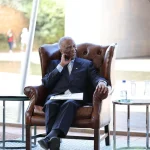
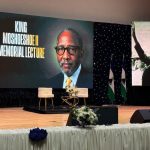
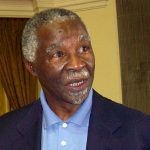
* These are edited remarks from a presentation of a discussion document by Thabo Mbeki, the Patron of the Mbeki Foundation and former President of both SA and the ANC, at the 2026 Seminar on National Democratic Revolution in Johannesburg hosted by the Mbeki Foundation and African Renaissance Podcast.