AFRICA arrived in North America with its largest ever delegation, ten proud flags among the forty-eight, and a continent’s worth of expectation strapped to their backs. A week and a half into the 2026 FIFA World Cup, that expectation has produced fireworks and frustration in equal measure, a Moroccan masterclass, a Cabo Verdean fairytale, and a Bafana Bafana cliff-edge that will be resolved only in Monterrey. This is the story, so far, of Africa’s mountain to climb.
Matchday one has given way to matchday two across the twelve groups, and the picture for the continent is one of contrasts rather than collapse. Two African sides sit proudly at the summit of their groups. Three more have banked precious points against vastly fancied opposition. And three, Tunisia, Senegal and Algeria, must now find the resolve their qualifying campaigns were built on, or watch the tournament slip away. Meanwhile, on Saturday evening in Toronto, a ferocious Group E duel between Côte d’Ivoire and Germany will go a long way to deciding whether the Elephants charge into the Round of 32, while in South Africa’s case, destiny will not be decided until next week, when Bafana Bafana face South Korea in a match Hugo Broos has reduced to its simplest terms: win, or go home.
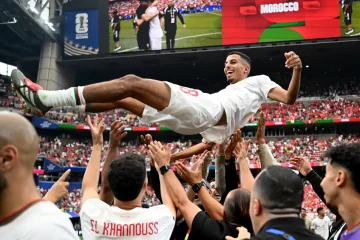
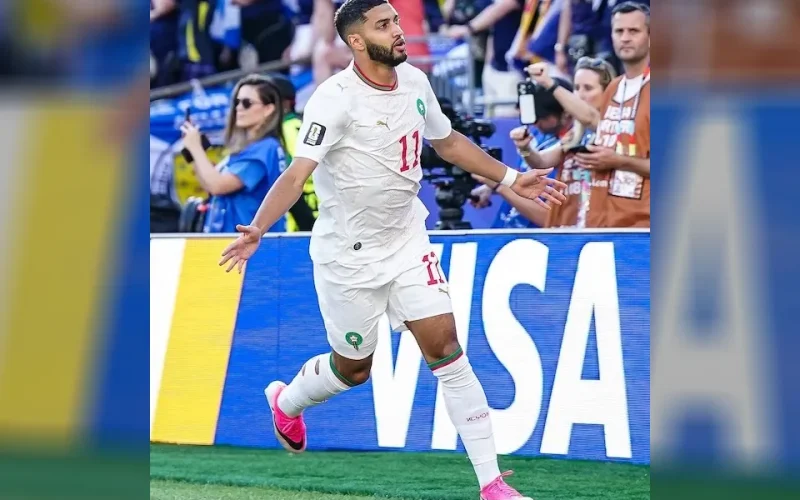
If any African side has announced itself as a genuine contender, it is Morocco. Ismael Saibari needed just seventy-one seconds, the fastest goal of this World Cup, to send Scotland’s Tartan Army into stunned silence at Boston Stadium on Friday, latching onto a Brahim Diaz through-ball and rifling it past Angus Gunn at the far post. The 1-0 victory, following an opening 1-1 draw with five-time champions Brazil, lifted the fifth-ranked Atlas Lions to the summit of Group C on four points, and to the brink of a second consecutive World Cup knockout berth.
It is precisely the kind of ruthless efficiency that carried Morocco to a historic semi-final in Qatar four years ago, and with Saibari reportedly closing in on a blockbuster move from PSV Eindhoven to Bayern Munich, the Atlas Lions look every inch a side built to go deep again. One more positive result against Haiti will all but confirm what the continent already suspects: Morocco remain Africa’s standard-bearer.
BLACK STARS SHINE, CABO VERDE PEN A FAIRYTALE
Ghana have been the continent’s quiet overachievers. Their narrow 1-0 win over Panama installed the Black Stars at the top of Group L, a position few predicted for a side returning to the World Cup after missing out in 2018. A daunting test against England awaits on Tuesday, but Otto Addo’s men have already banked the points that matter.
Yet the most heartwarming African story of the tournament so far belongs to Cabo Verde. The tiny Atlantic archipelago nation, the smallest by population ever to grace a World Cup stage, held mighty Spain to a goalless draw in Group H, a result that will be celebrated from Praia to the diaspora corners of Lisbon and Boston for a generation. The Blue Sharks now travel to face Uruguay knowing that history is already theirs, with more still to write.
DR CONGO AND EGYPT HOLD THEIR OWN
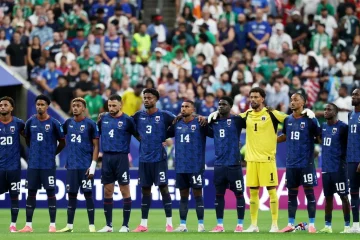
Half a century after their last appearance, DR Congo marked their World Cup return in style, frustrating Portugal to a 1-1 draw in Group K. It was a result built on discipline and nerve, exactly the foundation the Leopards will need against Colombia next. In Group G, Mohamed Salah and Egypt could not find a breakthrough against Belgium, settling for a 1-1 share of the spoils that keeps the Pharaohs’ knockout hopes very much alive ahead of a winnable tie with New Zealand.
HARD LESSONS FOR TUNISIA, SENEGAL AND ALGERIA
Not every African story this week has been one of triumph. Tunisia were given a brutal European lesson, beaten 5-1 by Sweden in a result that demands an immediate response against Japan. Senegal’s Teranga Lions, fourth in the world rankings not so long ago, were undone 3-1 by France, while Algeria’s Desert Foxes were brushed aside 3-0 by Argentina’s relentless attack. None of these results are fatal on their own, World Cup groups are unforgiving but rarely final after a single round, yet all three nations now face matches that have shifted from opportunity to obligation.
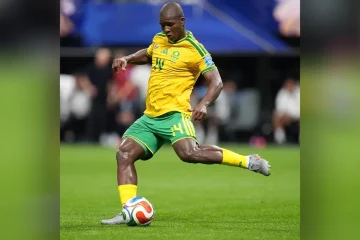
South Africa’s own opening exchanges told a similarly mixed tale. Bafana Bafana were beaten 2-0 by co-hosts Mexico in a fractious, three-red-card affair in Mexico City, before responding with real character in Atlanta, where Teboho Mokoena’s 83rd-minute penalty rescued a 1-1 draw against Czechia after Hugo Broos’ men had trailed since the sixth minute. One point from two games leaves South Africa’s World Cup fate entirely in their own hands.
TANTALISING TORONTO TEST: COTE D’IVOIRE v GERMANY
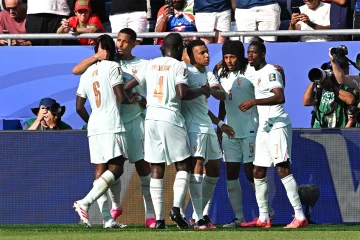
There is no bigger African assignment on the board this weekend than the one awaiting Côte d’Ivoire in Toronto. The Elephants, who needed a stoppage-time Amad Diallo strike to see off Ecuador 1-0 in their opener, now face a Germany side that has announced itself as a genuine title threat after a ruthless 7-1 demolition of World Cup debutants Curaçao. Both nations sit on three points at the top of Group E, and a win for either at BMO Field would all but confirm their place in the Round of 32 with a game still to spare.
On paper, this looks like a mismatch of styles rather than of class. Julian Nagelsmann’s Germany boast a frightening attacking trident in Florian Wirtz, Jamal Musiala and Kai Havertz, players who tore Curaçao apart with ease, and Joshua Kimmich has openly admitted his side must be wary of the Ivorians’ spectacular attacking threat. Côte d’Ivoire, for their part, carry the kind of pace and directness in Yan Diomande and Nicolas Pépé that has unsettled German backlines before, Japan in 2022 and South Korea in 2018 both spring to mind as cautionary tales for Die Mannschaft. The Elephants have never won more than one match at a single World Cup finals. Toronto offers them the stage to rewrite that history.
“We must be wary of Ivory Coast’s spectacular attacking players.”
Joshua Kimmich, Germany midfielder
BAFANA’S MOUNTAIN: WHY SOUTH AFRICA MUST BEAT SOUTH KOREA
And so the continent’s gaze turns next to Monterrey, where South Africa’s entire World Cup now balances on a single result. Bafana Bafana have not progressed beyond the group stage in any of their three previous World Cup appearances, including as hosts in 2010, and an entire generation of South African football lovers has waited a quarter of a century to watch their national team qualify on merit, let alone advance. Victory over South Korea on the final group matchday would not just be a result. It would be history.
The permutations favour the brave. South Korea themselves were beaten 1-0 by Mexico in their most recent outing, a result that leaves Group A finely balanced and means a Bafana win, combined with the right scoreline elsewhere, would be enough to send South Africa through to the knockout rounds for the first time. Broos will be without the suspended Teboho Mokoena, whose penalty saved South Africa against Czechia, but he has already seen reason for confidence: South Korea were thrashed 4-0 by Côte d’Ivoire in a pre-tournament friendly, a result Broos has reportedly studied closely for clues on how to dismantle the Asian side’s defence.
“We just have to win the game against South Korea.”
Hugo Broos, South Africa head coach
A CONTINENT STILL CLIMBING
Ten nations. Ten different stories, of triumph in Boston, heartbreak in Stockholm’s colours, fairytale in Cabo Verde, and unfinished business everywhere else. Africa’s World Cup is not yet won or lost, it is being decided, match by match, penalty by penalty, in stadiums from Boston to Monterrey. Morocco have shown the continent what is possible. Ghana and Cabo Verde have shown the world what African football can still surprise it with. And in Toronto tonight, and in Monterrey next week, Côte d’Ivoire and South Africa will discover whether they, too, belong among the lions still climbing.
The mountain remains steep. But Africa, as it has shown time and again on football’s grandest stage, does not climb it alone, it climbs it loud, together, and unbowed.