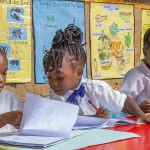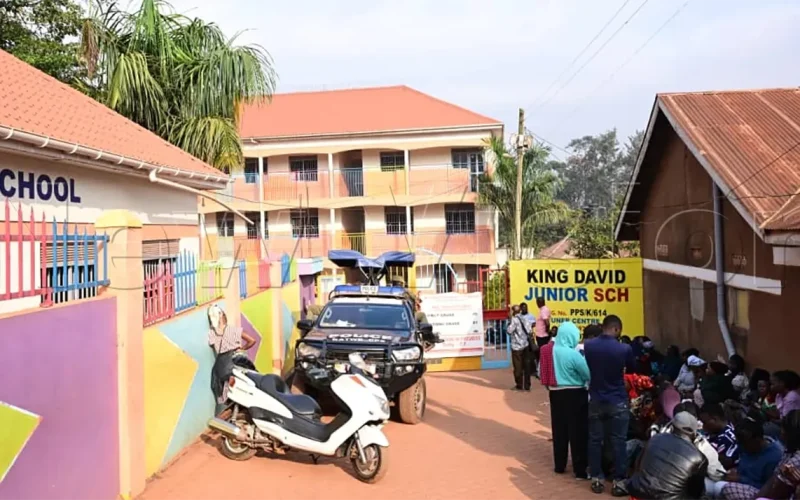
THEY set off from Kampala’s Ndejje suburb carrying the unguarded excitement that only children on a school outing can hold – pupils of King David Junior School, chattering about the roaring cascades of Sipi Falls, eastern Uganda’s postcard waterfall carved into the foothills of Mount Elgon. By Thursday night, twenty of them would never chatter again.
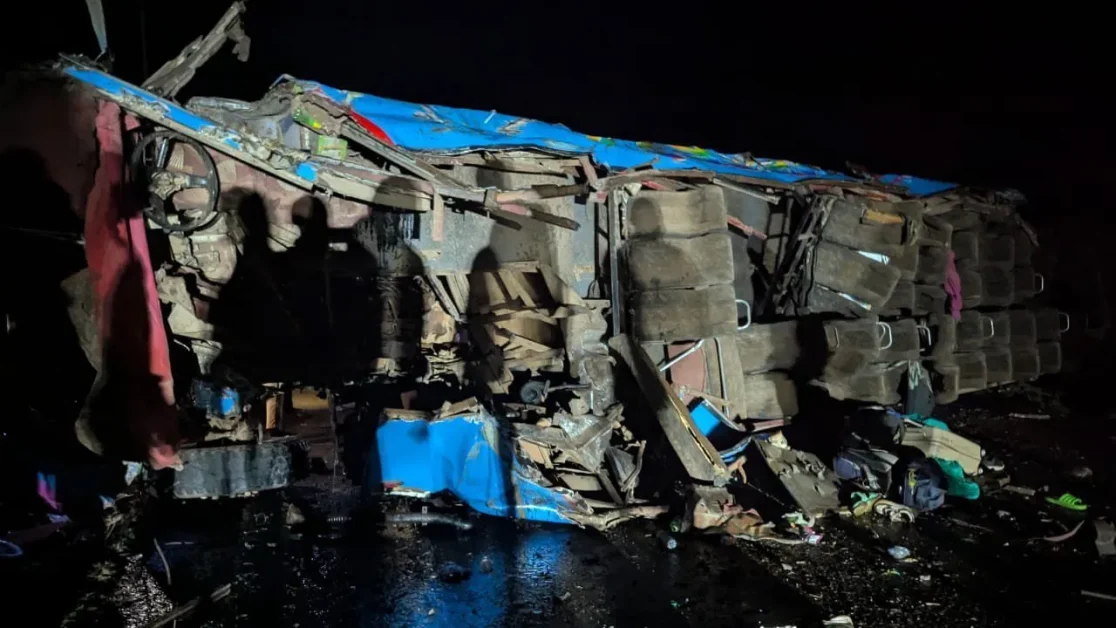
The bus, registration UA 108BQ, had spent the day carrying its young passengers on the kind of educational tour that has become a rite of passage for Ugandan schoolchildren – a day meant to widen young minds beyond the classroom. Instead, descending Chekwatit Hill in Kapchorwa District, a stretch of road so treacherous it is locally notorious as an accident blackspot, the outing became a scene of carnage before the bus had even reached home.
Police say preliminary investigations point to a mechanical fault that caused the driver to lose control; the vehicle veered off the road, struck a large roadside stone, and overturned. Twenty children and one adult – Tadeo Ssekade, the founder and director of King David Junior School, who had accompanied the pupils he had built an institution to educate – were killed. Three adult males and several children were injured and rushed through the chaos of Thursday night to Kaserem Health Centre IV, Kapchorwa General Hospital, Bulambuli Health Centre IV and Mbale Regional Referral Hospital, where medical teams worked through the night to stabilise the critically wounded.
By Friday morning, the bodies of the dead lay at Kapchorwa Mortuary, awaiting identification by relatives and the postmortem examinations that would formally confirm what an entire community already knows: that a single, catastrophic descent down one hill erased twenty futures in the space of a moment.
A nation’s grief, and a familiar reckoning
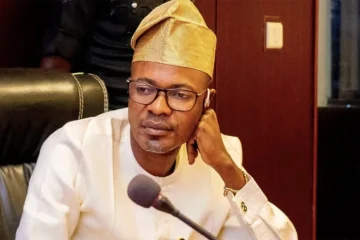
The scale of the loss – the equivalent of an entire graduating class, gone in an instant – has provoked an outpouring of grief across Uganda and beyond, with tributes and demands for accountability spreading across social media through Friday. Local Government Minister Balaam Ateenyi Barugahara, who travelled to the crash site alongside Minister of State for Labour, Employment and Industrial Relations Simon Mulongo, confirmed the toll in a statement naming Ssekade among the dead – a founder who did not survive the very children he had dedicated his career to educating.
Kapchorwa Resident District Commissioner Stanley Bayole praised the swift response of local residents who pulled survivors from the wreckage before formal emergency services arrived – a reminder of the thin margins on which rural Uganda’s road-safety net operates.
The government’s response has been swift, if narrow. Education Minister Chrysostom Muyingo announced on Friday that all school trips and excursions across the country have been suspended “effective immediately and until further notice,” a government communications agency confirmed – an emergency measure that will offer little comfort to grieving families but signals recognition that Thursday’s crash was no isolated act of fate.
The deeper story: Africa’s deadliest roads
For a continent that has grown grimly accustomed to counting its dead in bus crashes, the Kapchorwa tragedy fits a pattern that road-safety experts and African newsrooms have documented for years: poorly maintained vehicles, unlit and poorly engineered rural highways, and a transport sector that too often treats safety compliance as optional rather than obligatory.
Uganda’s own record is stark. Less than a year ago, in October 2025, a bus crash on the highway between Kampala and the northern city of Gulu killed 46 people. Officials and safety advocates raised alarm then, too, about poorly regulated public transport and a road network ill-equipped for the volume and speed of modern traffic. Those warnings, evidently, did not translate into the systemic reform that might have kept Thursday’s bus from ever leaving Kampala with a mechanical fault, or kept Chekwatit Hill’s dangers from claiming yet another busload of victims.
This is not a uniquely Ugandan affliction. Across the region, school and public transport disasters have repeated themselves with numbing regularity – from the 2017 Arusha crash in northern Tanzania, in which 32 schoolchildren, teachers and their driver died when a minibus plunged into a ravine, to a string of crashes along the Uganda-Kenya border corridor that have claimed dozens more lives. The details shift – a stone here, a ravine there, a vehicle with no lights on another night – but the underlying failures recur: vehicles that should never have been on the road, roads never engineered to carry them safely, and a regulatory apparatus that reacts to catastrophe rather than preventing it.
A blanket ban on school excursions may spare Ugandan children from the next Chekwatit Hill in the short term, but it does not address the vehicle inspection regimes, driver licensing standards, and road engineering investment that safety advocates have long argued are the real levers of change. Uganda’s road death toll, running into the thousands annually, has for years outpaced the government’s capacity – or apparently its political will – to address it structurally.
For the families of Ndejje and the wider King David Junior School community, none of that policy debate will soften Friday’s grief. Twenty children who left home this week to marvel at one of Uganda’s natural wonders will not come home. The school’s founder, who might have consoled their families in this moment, lies among the dead himself. What remains is a demand – echoed across Ugandan social media and now amplified across the continent – that this generation of loss be the last paid in the currency of Africa’s neglected roads.