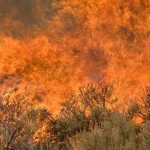
THE Santa Ana winds whispered their ancient warning as they swept down from the mountains, carrying with them the scent of sage and fear. Los Angeles lay spread below like a glittering jewel box, unaware that these deceptively gentle breezes would soon become harbingers of destruction.
They called it a perfect storm – the dry vegetation crackling underfoot after months of below-normal rainfall, despite last year’s abundance. Nature’s cruel joke: giving enough rain to grow the fuel, then withholding the moisture that might have kept it green. The mountains loomed over the city like stern guardians, watching as their winds transformed from protectors to betrayers.
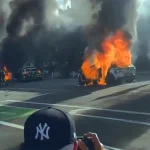
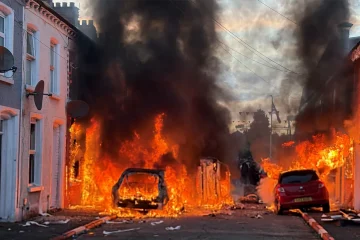
In the heart of the firefighting operation, exhausted crews fought an enemy that danced and shifted with every capricious gust. Their faces were masked with soot and determination, their eyes reflecting the orange glow that had become their constant companion. The fire had already claimed ten souls, and devoured more than 10,000 buildings, and still it hungered for more.
Through neighbourhoods once filled with the laughter of children and the quiet contentment of suburban life, hundreds of thousands fled, carrying what precious memories they could gather in the precious minutes between warning and evacuation. Behind them, the sky burned crimson, a testament to what climate scientists had been warning about for years – that 2024 would not just break records, it would shatter them.
The smoke rose like a malevolent spirit, carrying within it invisible dangers that Dr. Margaret Harris of the WHO would later describe as silent killers – microscopic particles that could penetrate deep into lungs, hearts, and even affect the mind itself. The firefighters knew this, yet they pushed forward, their resolve stronger than their fear.
From space, satellites captured what human eyes could barely comprehend – a landscape transformed into a hellscape, where temperature records fell like dominoes across the globe. Clare Nullis of the WMO would later say it destroyed “hopes and dreams,” but in the moment, as Los Angeles burned, it was destroying something more immediate: homes, memories, and the illusion of safety.
The Santa Ana winds continued their mournful song, a requiem for a changing world. In their wake, they left not just destruction, but a stark warning etched in ash and ember: this was not just a California story, but a global one. The fires of 2024 were writing a new chapter in Earth’s history, their smoke signals spelling out a message that could no longer be ignored.
As red flag warnings flashed across Southern California’s weather alerts, the city’s residents watched and waited, their eyes fixed on the horizon where nature’s fury danced with human resilience. In this dance, there would be no clear winner – only lessons written in the language of fire and wind, telling a story that would echo long after the last ember cooled.
The fires in Los Angeles continue ?????????
— Geology Science??? (@GeologyyScience) January 10, 2025
@ai_creatiions#geology #science #usa#losangeles #losangelesincendio #aiart #california #lacalifornia #la #earth #nature #planet pic.twitter.com/omKPBk8hCb