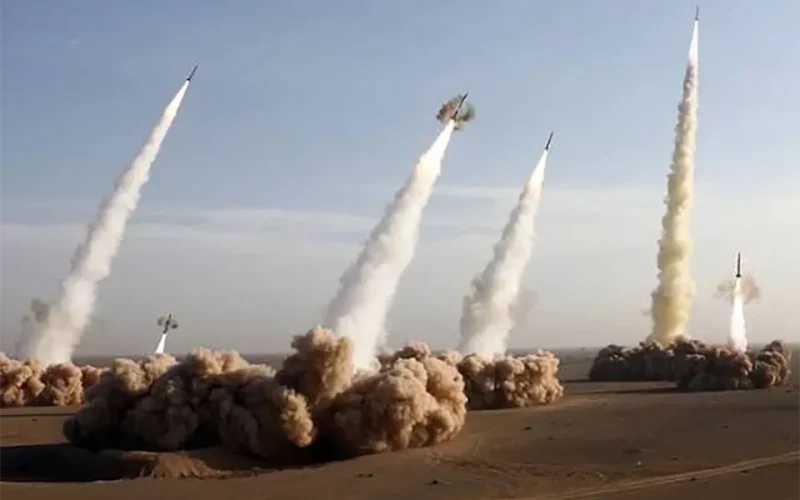
IRAN’S Revolutionary Guards said they launched missile and drone strikes on U.S. military bases in Jordan, Kuwait and Bahrain on Wednesday, marking one of the sharpest exchanges since a fragile ceasefire took effect in April and underscoring the fragility of efforts to end the broader US‑Israeli campaign against Tehran.
The attacks followed U.S. strikes on Iranian targets around the Strait of Hormuz that Washington said targeted air-defence sites, ground-control stations and surveillance radar. U.S. Central Command said the strikes lasted about four hours and hit nearly 20 targets; Iranian state media reported explosions on Qeshm island, in the port city of Sirik and near Bandar Abbas and Jask, at the strait’s entrance. The Revolutionary Guards framed Wednesday’s operations as retaliation for what they called U.S. “aggression.”
The confrontation came after U.S. President Donald Trump spoke publicly about an incident on Tuesday in which Iran reportedly downed a U.S. Apache helicopter near the Strait. Trump described the response as “very strong, very powerful.” Washington officials said a U.S. Navy surface drone rescued the two helicopter crew members and they were uninjured. The U.S. military’s Central Command, speaking more cautiously, said the pilots were in stable condition and gave no immediate cause for the crash.
Iran’s statement warned Gulf states that host U.S. or Israeli forces that they would face consequences if their territory were used for attacks on Tehran. The Revolutionary Guards said they struck U.S. positions at al‑Azraq in Jordan with long‑range missiles, targeting F‑35 hangars and a command centre, and also fired on locations in Bahrain and Kuwait. Jordan’s military said it intercepted five missiles launched toward al‑Azraq; debris fell inside Jordan but caused no injuries. Kuwait and Bahrain reported engaging hostile aerial targets and repelling assaults with their air defences. A U.S. official, speaking on condition of anonymity, said initial assessments indicated almost all Iranian missiles and drones were intercepted and there were no immediate reports of U.S. casualties or damage.
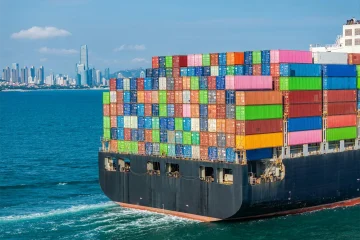
The episode has immediate tactical and broader strategic consequences. Tactically, it demonstrated both sides’ growing reliance on long‑range fires and unmanned strike systems, and the improvement of Gulf air‑defence cooperation. Strategically, it exposed the limits of the ceasefire that took hold in April after months of escalating violence sparked by joint U.S.‑Israeli strikes on Iran on Feb. 28 and Tehran’s retaliatory attacks that choked most commercial traffic through the Strait of Hormuz — a waterway that formerly carried roughly one-fifth of the world’s crude and LNG shipments.
Efforts to translate a temporary halt in wide‑scale operations into a durable peace have been complicated by competing red lines and asymmetric aims. Washington has insisted any deal must prevent Iran from developing nuclear weapons — a claim Tehran denies — and has demanded guarantees on future behaviour. Tehran’s conditions include lifting international sanctions, the release of billions in frozen assets and formal acknowledgement of its control over the strait and maritime transit arrangements. Those positions remain far apart.
Diplomatic mediators have signalled cautious optimism at times, and both sides have publicly hinted at progress. But episodic flare‑ups such as Wednesday’s strikes reveal how quickly local incidents — whether an Apache downing, a misidentified UAV, or attacks on radar sites — can rekindle large‑scale military responses and inflame domestic politics on all sides. In the United States, the Trump administration has used a posture of strength in public statements; in Iran, the Revolutionary Guards maintain a political as well as military role, raising the stakes of any perceived concession.
The economic reverberations were immediate: oil prices rose about 1% in Asian trading on Wednesday as markets priced in renewed supply risk should fighting widen or the Strait of Hormuz remain effectively constrained. U.S. Energy Secretary Chris Wright said ship traffic through the strait is increasing “very meaningfully” but warned it would take many months to restore normal energy flows even after fighting ends.
On the ground, fighting between Israel and Iran‑backed Hezbollah in Lebanon has continued through the ceasefire’s window, and Iran has preserved strict controls over shipping through the strait. Washington has intensified its own maritime and port blockades of Iran, creating a tit‑for‑tat dynamic that complicates third‑party mediation efforts and raises the probability of miscalculation.
For diplomats seeking a durable ceasefire, the immediate priorities are clear but politically difficult: establish reliable, verifiable mechanisms to prevent cross‑border strikes; create communication channels to de‑escalate incidents rapidly; and reach a phased agreement on sanctions relief and the management of Hormuz that addresses Tehran’s economic demands while satisfying U.S. and regional security concerns. Without credible verification and enforcement, however, any pause will remain vulnerable to the same triggers that have punctured past agreements.
Wednesday’s exchanges underscore how tenuous that process has become. The military balance, the multiplicity of state and non‑state actors, and public posturing in capitals mean that local incidents can cascade into broader confrontation. The hunt for an elusive ceasefire now depends as much on building resilient diplomatic architecture — hotlines, third‑party monitors, calibrated incentives — as on battlefield calculations. Absent such measures, the pattern of episodic violence puncturing fragile truces is likely to continue, with regional and global economic consequences that extend well beyond the Gulf.