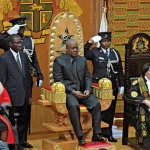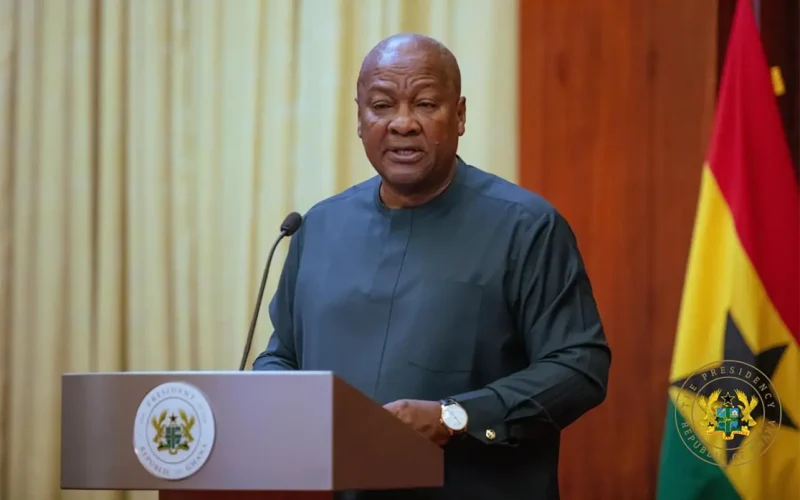
IN the heart of Accra, a profound shift was taking place. The grand halls of the presidential palace witnessed a ceremony that would mark the beginning of a new chapter in Ghana’s economic journey. President John Dramani Mahama stood tall, his voice resonating with conviction as he addressed Dr. Johnson Pandit Kwesi Asiama and Dr. Zakari Mumuni – the newly appointed Governor and First Deputy Governor of the Bank of Ghana.
“When governments resort to unsustainable consumption expenditures financed by excessive and unregulated money printing, the consequences are severe,” Mahama declared, his words hanging heavy in the air. “From spiralling inflation and erosion of incomes to driving millions into poverty. Such actions not only weaken public confidence in financial institutions but also threaten long-term stability.”
The President’s extraordinary commitment to central bank independence came against the backdrop of recent economic turmoil. Ghana’s financial sector had been ravaged by political interference, resulting in thousands of job losses and untold suffering. Decisions had been made with narrow political interests in mind, disregarding the human impact.
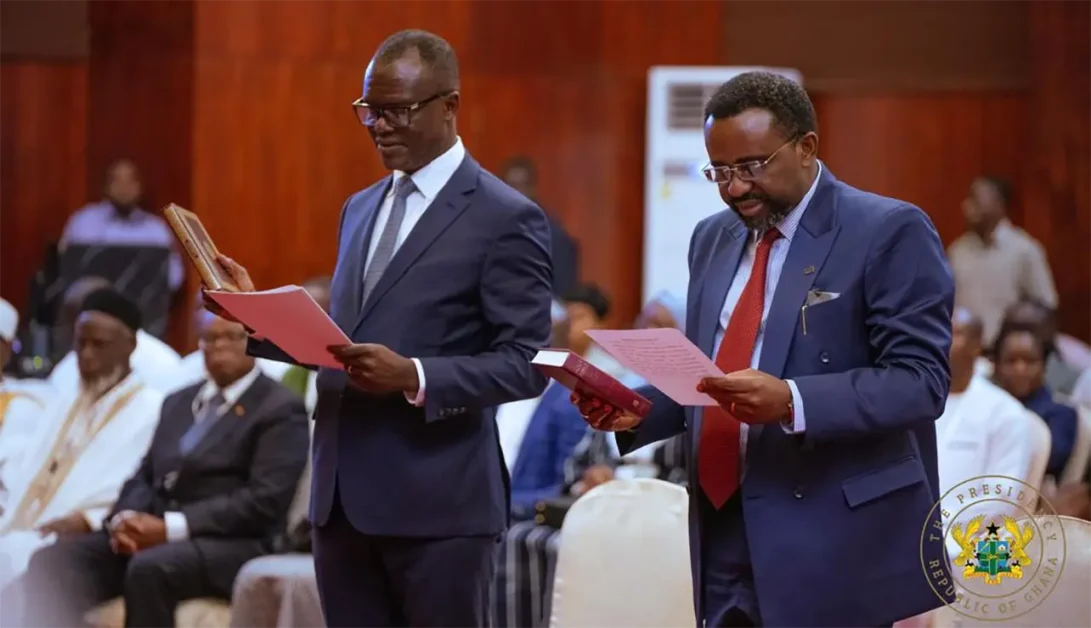
Dr. Asiama listened intently, his expression reflecting the weight of responsibility being placed upon his shoulders. He had witnessed firsthand the devastation caused by reckless monetary policies driven by political expediency rather than sound economic principles.
Three months earlier, Mary Boateng had stood outside the locked doors of her local bank, tears streaming down her face. The savings she had accumulated over twenty years of selling cloth at Makola Market had vanished overnight when the bank collapsed—another casualty of the financial crisis. Her daughter’s university education, her retirement plans, her security—all gone.
“They didn’t think about people like me when they made their decisions,” she whispered to herself.
Across town, Emmanuel Quartey had gathered his former employees one last time. His small manufacturing business, which had employed thirty people, could no longer operate in an environment of hyperinflation and currency instability.
“I fought as long as I could,” he told them, his voice breaking. “But when the cedi loses value every day, when interest rates climb weekly, when customers can no longer afford our products—what can one businessman do?”
These were the stories that haunted President Mahama as he spoke of his vision for a truly independent Central Bank. He had seen how political meddling in monetary policy had caused inflation to soar, investor confidence to plummet, and ordinary Ghanaians to suffer.
“Ghana’s financial sector is in crisis,” the President acknowledged, “and the huge task ahead demands your experience, foresight, and decisive leadership. With Dr. Asiama, I am confident that we will rebuild trust, restore stability, and put our economy on a sustained growth path.”
President Mahama’s pledge was unprecedented in its clarity and commitment: the Bank of Ghana would operate independently, guided solely by its mandate to maintain price stability and support sustainable economic growth. Political considerations would no longer influence monetary policy decisions.
To demonstrate his commitment, the President announced several extraordinary measures:
First, he established a public charter guaranteeing the Bank of Ghana’s operational independence, requiring any communication between the government and the central bank to be transparent and published.
Second, he introduced legislation extending the Governor’s term beyond the political cycle and making removal from office possible only in cases of gross misconduct, with parliamentary approval required.
Third, he mandated quarterly public reporting by the Bank of Ghana on monetary policy decisions, ensuring accountability to the people rather than to political masters.
“When a central bank operates independently,” explained Dr. Asiama in his acceptance speech, “it can make decisions based on long-term economic health rather than short-term political gain. This means controlling inflation, stabilizing the currency, and creating the conditions for sustainable growth.”
The significance of these measures extended far beyond ceremonial gestures. An independent central bank serves as the cornerstone of economic stability for several crucial reasons:
First, it guards against the temptation of governments to finance deficits through excessive money printing, which inevitably leads to inflation—a tax that falls hardest on the poor and middle class.
Second, it ensures that monetary policy decisions are made based on economic data and forecasts rather than electoral calendars or political pressure.
Third, it builds credibility with international investors and financial institutions, lowering borrowing costs and attracting foreign investment.
As the ceremony concluded, President Mahama’s final words resonated throughout the hall: “I pledge to ensure that the bank’s operations are guided solely by its mandate—one where policies are driven by discipline, foresight, and the best interests of the Ghanaian people.”
***
Six months later, Mary Boateng received compensation from the newly established Depositor Protection Fund—an initiative championed by Dr. Asiama to protect small savers. Emmanuel Quartey secured a loan at a stable interest rate to reopen his business. Across Ghana, the early signs of recovery were becoming visible.
Inflation had stabilized. The cedi had strengthened. Foreign investors were returning. Most importantly, ordinary Ghanaians were beginning to believe in their financial system again.
On the international stage, Ghana was being cited as a model for central bank independence in developing economies. The President’s extraordinary steps had transformed a crisis into an opportunity for fundamental reform.
In the markets and villages across Ghana, people spoke of “Asiama’s cedi”—a currency they could trust. But the true legacy of President Mahama’s actions was more profound: he had established a principle that would outlast any individual or administration—that Ghana’s economic stability was too important to be subjected to the whims of political cycles.
The Bank of Ghana stood as guardian not of any party’s agenda, but of the nation’s prosperity.