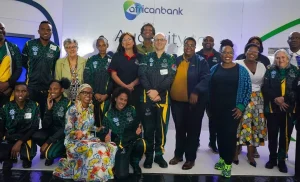
THE morning sun cast golden rays across the courtyard where they gathered – athletes with extraordinary hearts, their families with proud tears, coaches with unwavering belief, and supporters whose faith had never faltered. The air hummed with anticipation as the African Bank, sponsors of one of South Africa’s national teams prepared to honour and send off a team of its finest ambassadors to the world stage.
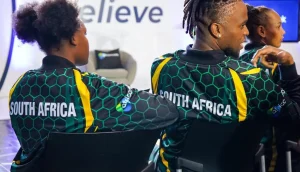
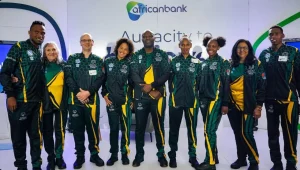
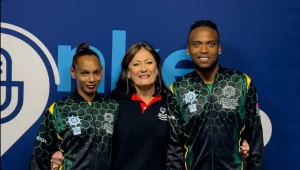
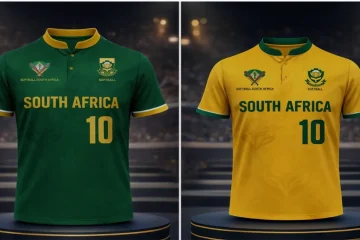
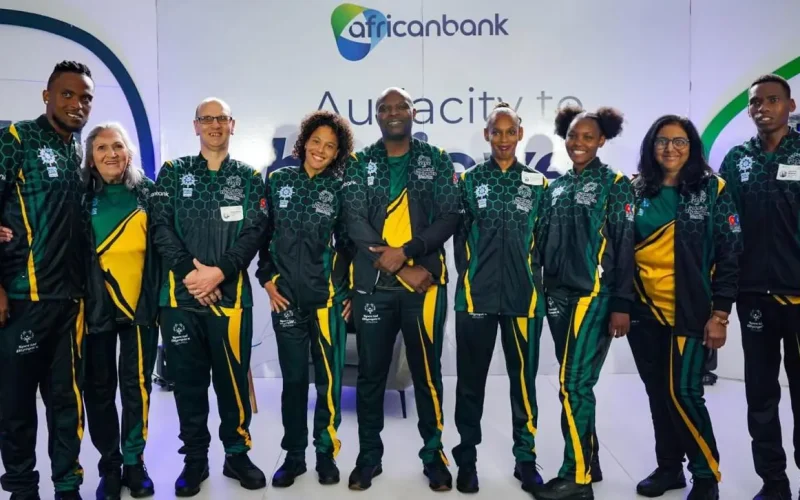
They stood in formation, these remarkable athletes, their team uniforms crisp and vibrant with the colors of their nation. Each face told a story of perseverance – of dawn training sessions when the world still slept, of muscles pushed beyond comfort, of victories measured not just in medals but in moments when limitations shattered like glass beneath determined feet.
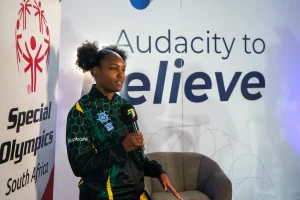
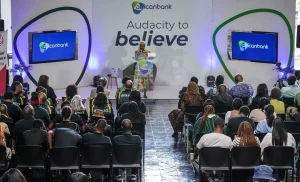
Dr. Mathews Phosa, the Chairperson of Special Olympics South Africa (S0SA) wrote an inspirational keynote address, which was delivered on his behalf by Bongeka Mamuremi, a board member. As Mamuremi approached the podium, her posture straight and dignified, eyes scanning the gathered crowd. The silence that fell was immediate and respectful.
“We gather today,” she began, her voice carrying across the assembly with quiet authority, “not merely to send off athletes, but to celebrate warriors of the human spirit.”
Behind her, the banner of SOSA rippled in the gentle breeze, alongside the emblem of the African Bank – an unexpected but profound partnership that had transformed possibility into certainty for these athletes.
“Look at them,” Mamuremi continued, gesturing toward the assembled team members. “Society once defined them by what they could not do. Today, we celebrate them for what they have accomplished despite every obstacle placed in their path.”
In the front row, an athlete adjusted his team tracksuit, fingers tracing the embroidered national emblem. He had never imagined standing here, selected to represent his country. The boy whose classmates had mocked his awkward gait was now the man whose speed on ice had scouts whispering in amazed disbelief.
Beside him, a fellow athlete’s hands fidgeted with her medal from the national qualifiers – hands that doctors once said would never have the coordination for competitive sports. The gold caught the sunlight and threw it back, defiant and brilliant.
“When they compete in Turin,” Mamuremi’s voice strengthened, “they carry more than our flag. They carry the proof that human potential cannot be contained by labels or limited by prejudice.”
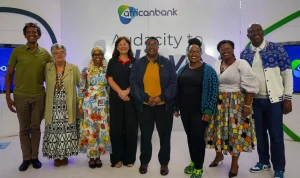
The representatives from African Bank nodded in solemn agreement. Their commitment – a three-year partnership – had transformed abstract support into tangible opportunity. The specialised training equipment, the world-class coaching, and the international travel that would have remained an impossible dream – all made real through their belief in these athletes.
“This partnership,” Mamueremi acknowledged, turning toward the bank’s executives, “is not charity. It is an investment in excellence. It is recognition that greatness wears many faces and walks many paths.”
In the audience, parents who had once been told to limit their expectations for their children now watched with overflowing hearts. Mothers who had fought education systems for inclusion. Fathers who had built makeshift training equipment in backyards when proper facilities denied access.
Mamuremi paused, her gaze sweeping over the athletes once more.
“To those who will compete: When you stand at the starting line in Turin, remember this. You were born into a world that was not built for you, yet you have rebuilt it through your determination. You have already won the most difficult race—the race against doubt, against dismissal, against the word ‘impossible.'”
One athlete straightened his shoulders. Nomsa’s fidgeted. Across the line of athletes, heads lifted higher.
“The world will watch you,” Mamuremi continued, “and in watching, learn what we already know: that the human spirit transcends all limitation when given the chance to soar.”
The ceremony continued with the formal presentation of the team to the nation—each athlete stepping forward as their name echoed through the speakers, each receiving their official documentation for the international games. Not as tokens of inclusion, but as champions who had earned their place through merit and dedication.
As the national anthem played, their voices joined in perfect unity—different tones, different abilities, but one powerful harmony. The flag rose slowly above them, carried upward on the strength of their collective journey.
Dr. Phosa’s final words remained with them long after the ceremony ended, echoing in their minds as they boarded the bus that would take them to the airport, the first step of their journey to Turin:
“Go with the knowledge that you have already changed your nation. Now, go change the world’s perception of what is possible. We stand with you, always.”
And as the bus pulled away, the cheers of the crowd followed them—not as special athletes, but as champions. As ambassadors. As the living embodiment of human potential unleashed.
In Turin, the world waited. And South Africa had sent its finest.