For Iván Olivares, being a Scout is about much more than wearing the uniform – it has been a part of his life since he was 10 years old. “I have been a Scout since the last Saturday of March 1976,” he recalls. “After 48 years, I am still a Scout, and I still feel the same excitement as I did on my first day.”
The 58-year-old Nicaraguan journalist was forced to flee his country in 2021 as government repression against the press escalated. He followed the media outlet where he had worked for 22 years when it relocated to Costa Rica, allowing him to continue reporting on events in Nicaragua from a safe place.
Since 2018, the deterioration of the political and human rights situation in Nicaragua has forced more than 379,000 people to flee the country. As of June 2024, more than half of them were living in neighbouring Costa Rica.
Repression continues to affect multiple sectors of Nicaraguan society, from journalism and academia to civil society organizations. In February 2024, the government outlawed the country’s Scouts Association, abruptly shutting down a movement that had existed in Nicaragua since 1917.

It was a sad day for Iván, who reported on the ban for his news outlet. “I called many Scouts, some who had been my friends since we were teenagers. The phrase I heard most in those conversations was: ‘I am crying.’”
A safe space
Determined to provide refugee and local youth with the same sense of community and purpose that Scouting had given him, Iván decided to start a Scout group in La Carpio, a neighborhood in the capital, San José, affected by poverty and violence, that is home to many refugees and asylum-seekers.

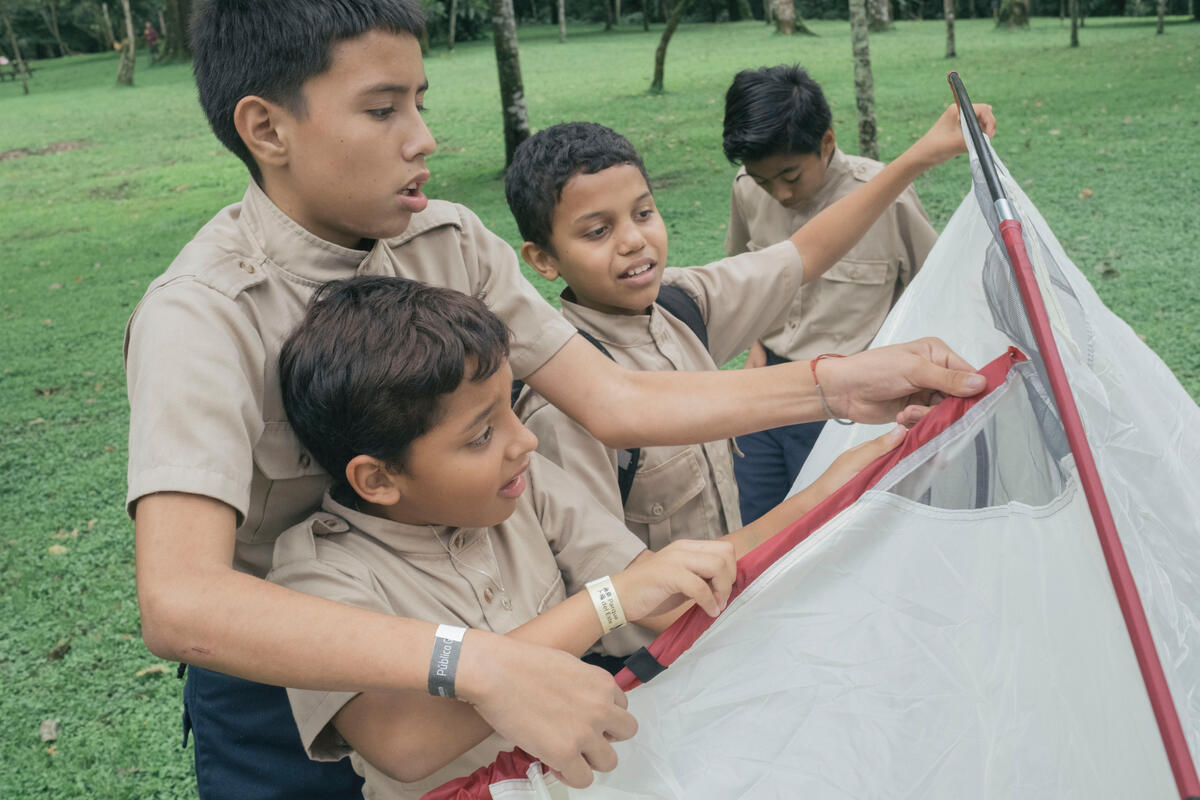
The group carries the same name as the one Iván was part of in Nicaragua – “Group 17 Náhuatl”. It brings together young Nicaraguan refugees and asylum-seekers, as well as Costa Ricans and Hondurans, to take part in activities that build friendships, foster teamwork and develop leadership skills. With great pride, Ivan displays one of the patches from the group: “My greatest legacy, which I continue to work for, is these young people,” he says.
For many young refugees in San José, having access to a safe space like this is not guaranteed. They face risks such as recruitment into gangs and social exclusion, and many struggle to find a sense of stability after being forced to flee their homes. Initiatives like Iván’s not only provide them with a supportive community but also help keep them safe while they rebuild their lives.
Mentoring the next generation
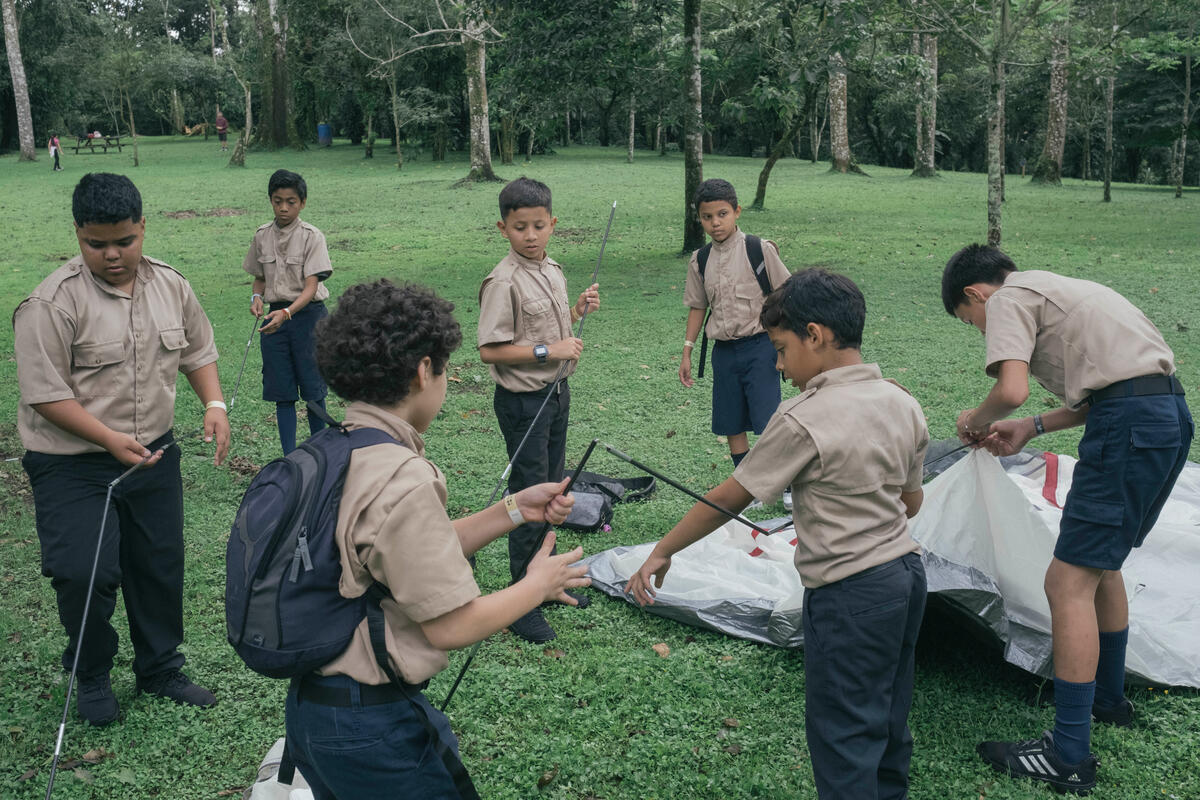
This is why UNHCR, the UN Refugee Agency, supports the group and other community-led initiatives that foster inclusion and integration of refugees and asylum-seekers, as well as government efforts to strengthen Costa Rica’s asylum system.
UNHCR and the Scout Movement have a long history of collaborating on shared goals, including creating more opportunities and a welcoming environment for young people from marginalized communities.

“The support UNHCR has given us has helped these young people not only feel heard but also see themselves and identify as Scouts,” says Iván. “[It] has allowed them to start living the values of the Scout movement – loyalty, honour, friendship, respect, environmental stewardship, and generosity.”
Iván is confident that Scouting will one day return to Nicaragua. Until that day comes, he continues to mentor the next generation of Scouts. “It makes me proud to see that many Nicaraguans who have arrived in this country do not limit themselves to simply living their lives in the freedom that Costa Rica grants us – we are also contributing to this society.”
“You and I alone won’t change the world,” he adds. “But we can each do our part. And if everyone did their part, we could build a better world.”