THE reported Israeli proposal to deliver humanitarian supplies through hubs controlled by the military would be a breach of the core principles of neutral, impartial and independent aid delivery, the UN aid coordination office, OCHA, said.
“Israeli officials have sought to shut down the existing aid system run by 15 UN agencies and 200 NGOs and partners,” said Jens Laerke, OCHA spokesperson.
Speaking to journalists in Geneva, Mr. Laerke referred to a verbal brief the Israeli authorities gave to UN partners on Monday, 5 May, in which they offered to deliver supplies through Israeli hubs under conditions set by the military, once the Government reopens crossings into Gaza. The proposal came as part of Israel’s plans to expand its military offensive against Hamas, including the “capture” of the Gaza Strip and a reported comment by Israeli Finance Minister Bezalel Smotrich that Palestinian territory will be “entirely destroyed”.
“We do not accept a proposal and a plan that does not live up to the core, fundamental, humanitarian principles of impartiality, neutrality and independent delivery of aid,” explained Mr. Laerke. “It appears to be a deliberate attempt to weaponise the aid, and we have warned against that for a very long time. Aid should be provided based on humanitarian need to whomever needs it,” he insisted.
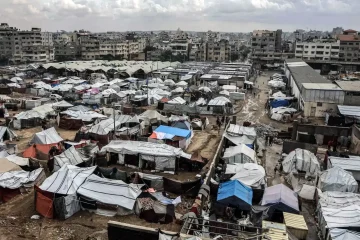
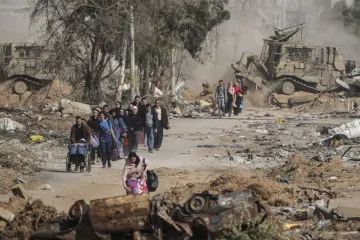
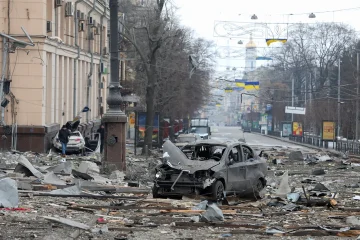
The Israeli cabinet’s vow to escalate the war will force the more than two million Gazans to move to the south of the Strip once again. After 19 months of conflict, the entire enclave has suffered the impact of closed border crossings that have caused severe water and food shortages.
The Israeli decision to cut off the entry of humanitarian supplies to the enclave is reportedly to pressure Hamas to release the remaining hostages taken in Hamas-led terror attacks on 7 October 2023 that sparked the war. Humanitarians condemn the blockade as it violates international law and risks creating a man-made famine.
UN partners working in the food sectors have distributed all they had and have no more to give. The OCHA spokesperson reported testimonies of colleagues on the ground who observed “people rummaging through garbage, trying to find something edible. That is the harsh, brutal, inhuman reality of the situation.”
Since the beginning of 2025, nearly 10,000 children with global acute malnutrition have been admitted for outpatient and inpatient treatment, according to the UN World Health Organisation (WHO). That includes 1,397 with severe acute malnutrition. “We are also seeing a lot of children with severe acute malnutrition with medical complications. And once you get to that stage, without treatment, you will die,” warned Dr. Margaret Harris, spokesperson for the UN health agency.
The WHO sees fewer cases of children coming into the partially functioning hospitals for treatment than expected, most probably because they are not getting access to the care centres. According to WHO data, one in five children do not complete their treatment because of the displacement and chaotic situation they face. The lack of water and sewage infrastructure is also causing a worrying spike in acute watery diarrhoea. Skin diseases are on the rise because people do not have the water to wash themselves with.
Meanwhile, Mr. Laerke continued to call on all political actors for an immediate, permanent ceasefire and the immediate and unconditional release of hostages in Gaza. “It is a horrible crime of war to take hostages and use them as some kind of bargaining chip,” he said. “On the other hand, you can also not withhold aid to civilians as a bargaining chip on the other side of the board game,” he added. – UN Multimedia Newsroom