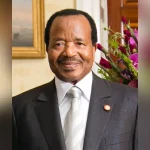
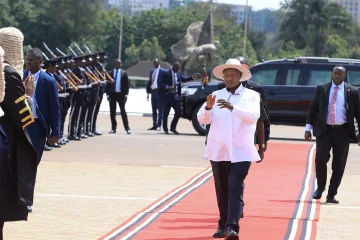
IN a move that has both shocked and dismayed many across Africa and beyond, Uganda’s President Yoweri Museveni has officially confirmed his intention to run for re-election in the general elections scheduled for January next year. At 80 years old, Museveni is seeking to extend his nearly four-decade-long rule, making him Africa’s fourth-longest-serving leader, second only to Cameroon’s Paul Biya.
Museveni first came to power in 1986, promising to bring stability and development to a country ravaged by years of conflict. For many years, he was hailed as a liberator and a reformer. However, as time passed, his presidency transformed into an emblem of entrenched power and authoritarianism. His rule has been marked by constitutional amendments – twice changed by the ruling National Resistance Movement (NRM) party – to remove presidential term limits and age caps, effectively clearing the path for indefinite rule.
The recent years have seen a sharp increase in anti-democratic and dictatorial measures under Museveni’s government. One of the most alarming developments is the empowerment of military courts to try civilians, a move that undermines the independence of the judiciary and threatens fundamental human rights. This militarisation of justice is a clear signal of a regime increasingly intolerant of dissent and opposition.
In tandem with judicial overreach, Uganda has witnessed a clampdown on media freedom. Independent journalists and media houses face harassment, arbitrary arrests, and censorship. The government’s anti-media antics have stifled free expression and restricted the public’s access to unbiased information, further consolidating Museveni’s grip on power.
Museveni’s main challenger is the charismatic pop star-turned-politician Robert Kyagulanyi, popularly known as Bobi Wine. Wine, who came second in the 2021 elections, has been a vocal critic of Museveni’s regime and a symbol of youthful resistance. He rejected the 2021 election results, citing widespread electoral fraud, intimidation, and ballot stuffing. His continued political activism has made him a target of state repression, yet he remains a beacon of hope for many Ugandans yearning for democratic change.
What This Means for Uganda and Africa
Museveni’s decision to run again is a stark reminder of the challenges facing democracy in Africa. While some leaders have stepped down or respected term limits, others like Museveni and Biya continue to cling to power, often at the expense of democratic institutions and human rights.
The international community and African citizens alike must watch closely as Uganda approaches its elections. The country stands at a crossroads: will it continue down the path of authoritarianism, or will the voices for democracy and reform finally prevail?
Yoweri Museveni’s nearly 40 years in power have transformed Uganda’s political landscape – from hopeful beginnings to a state increasingly characterised by repression and anti-democratic practices. His bid for another term underscores the urgent need for renewed commitment to democratic norms, respect for human rights, and genuine political competition in Uganda and across the continent.
As the January elections approach, the world awaits to see whether Uganda’s people will embrace continuity under an ageing strongman or seize the moment for transformative change. The stakes could not be higher.