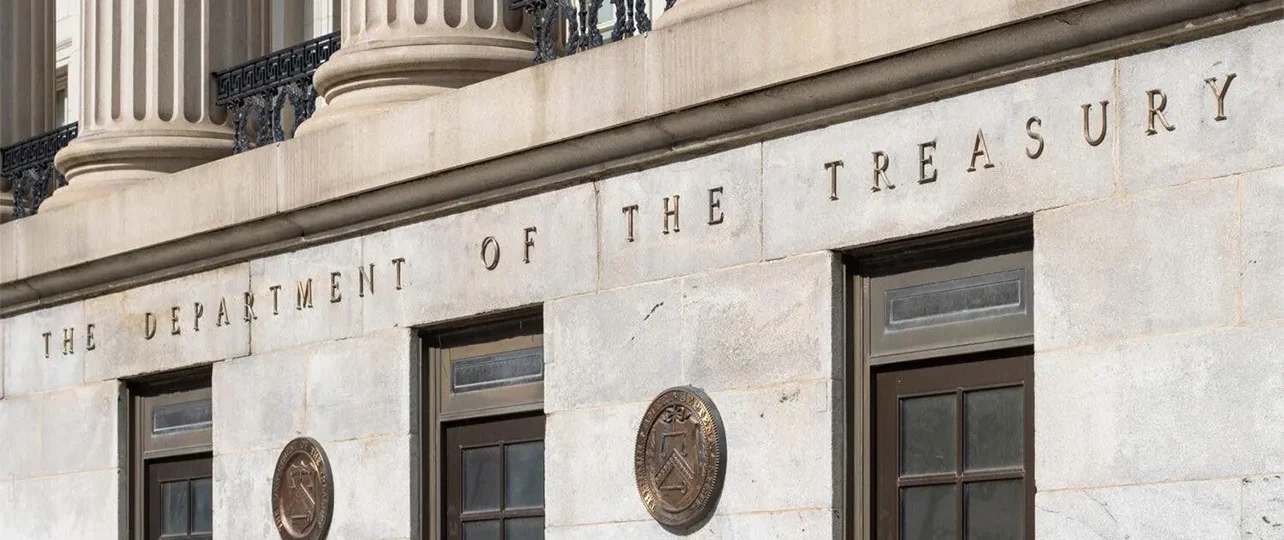

THE United States Department of the Treasury’s Office of Foreign Assets Control (OFAC) has moved decisively, sanctioning two senior intelligence commanders driving violence in the eastern Democratic Republic of the Congo – one from each warring camp – in what Washington described as a firm signal that all parties to the crumbling peace process will be held accountable.
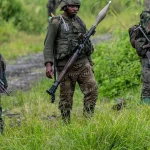
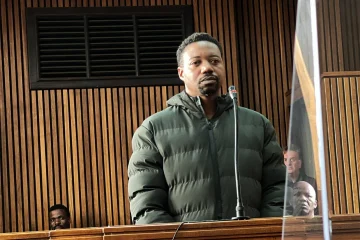
The designations, announced simultaneously by Treasury and the State Department, target Gustave Kubwayo of the Democratic Forces for the Liberation of Rwanda (FDLR) and John Imani Nzenze of the Rwanda-backed March 23 Movement (M23). Both are intelligence chiefs at the heart of the machinery sustaining a conflict that has killed thousands, displaced millions, and destabilised the entire Great Lakes region.
The action is the latest in a mounting series of US sanctions measures targeting the DRC conflict since the Trump administration repositioned itself as the lead mediator. It follows the sanctioning of the Rwanda Defence Force (RDF) in March 2026, the designation of former DRC president Joseph Kabila in April 2026 for materially supporting M23 and the Alliance Fleuve Congo (AFC), and the landmark Washington Accords signed between Kinshasa and Kigali in December 2025 — a deal whose implementation is rapidly unravelling on the ground.
The Sanctioned: Who They Are
Gustave Kubwayo — FDLR. Known by the alias “Colonel Sirkoof,” Kubwayo commands an FDLR intelligence and special operations unit operating in North Kivu. Washington accuses him of directing operations that encompass ethnic violence against civilians, the use of child soldiers, sexual violence, cross-border attacks threatening Rwanda’s security, illegal taxation, and environmental crimes including illegal logging inside Virunga National Park. He is designated under Executive Order 13413.
John Imani Nzenze — M23. A colonel and M23’s chief of intelligence, Nzenze, is described by OFAC as one of the closest collaborators and confidants of Sultani Makenga, the US- and UN-sanctioned overall military commander of M23. The European Union had previously sanctioned Nzenze for his role in planning and executing military operations resulting in deadly assaults on civilians and Congolese security forces. He is designated under Executive Order 13413.
Under US sanctions law, all assets belonging to these individuals that fall under US jurisdiction are frozen, and American citizens and entities are broadly prohibited from conducting any business with them. Foreign financial institutions that facilitate significant transactions on their behalf also risk exposure to US secondary sanctions.
The Diplomatic Architecture – and Its Fractures
To understand what Tuesday’s sanctions mean, it is necessary to understand the peace architecture that Washington has spent the past year constructing – and the scale of the violations now threatening to bring it down.
The conflict in eastern DRC traces its bloodiest modern roots to the 1994 Rwandan genocide, whose aftermath unleashed decades of proxy warfare, resource exploitation, and mass atrocity in the Kivu provinces. The FDLR was born in 2000 from the remnants of the ex-Rwandan Armed Forces and the extremist Interahamwe militias that fled Rwanda after the genocide — making it, in Kigali’s eyes, an existential security threat on its western border, and in Kinshasa’s calculations, a sometime instrument against Rwandan-backed rebels.
M23 – the March 23 Movement – is the latest iteration of a series of Rwandan-supported Congolese Tutsi armed groups stretching back to the late 1990s. The UN Group of Experts and successive independent monitors have documented direct military, financial, and logistical support from the Rwanda Defence Force to M23 operations. Kigali has consistently denied this, even as its troops advanced alongside M23 columns through the Kivus.
In January 2025, M23 and embedded Rwandan forces seized Goma – the regional hub of North Kivu and home to one of the world’s largest humanitarian operations. Bukavu, capital of South Kivu, fell weeks later. Between 900 and 2,000 civilians were killed in the assault on Goma alone. The diplomatic response accelerated.
In June 2025, the DRC and Rwanda initialled a Declaration of Principles in Washington. On 27 June 2025, the two countries signed a full US-brokered peace agreement. Parallel Qatari-mediated talks produced the Doha Framework Agreement in November 2025, followed by a ceasefire monitoring mechanism document signed in February 2026. On 4 December 2025, Presidents Félix Tshisekedi and Paul Kagame signed the landmark Washington Accords for Peace and Prosperity in Washington.
Yet the peace has remained elusive. The State Department itself noted that M23 captured Uvira within days of the December signing. Under US pressure, M23 later withdrew from Uvira, but the rebels still hold Goma, Bukavu, and significant territory in both Kivu provinces. M23 has simultaneously been training over 400 parallel administration officials and consolidating governance structures in occupied areas.
The Sanctions Escalation Ladder
2 March 2026: OFAC sanctioned the Rwanda Defence Force itself alongside senior RDF officers, including army chief of staff Vincent Nyakarundi and Major-General Ruki Karusisi, for providing direct military, logistical, and financial support to M23. Treasury Secretary Bessent explicitly demanded the immediate withdrawal of RDF troops, weapons, and equipment from Congolese territory.
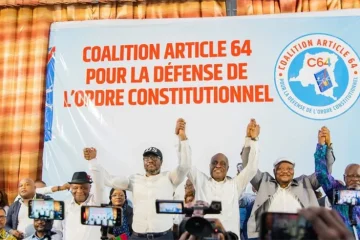
30 April 2026: OFAC sanctioned former DRC president Joseph Kabila for materially supporting M23 and the AFC – the political-military coalition led by Corneille Nangaa that seeks regime change in Kinshasa. The designation sent a message that former heads of state are not untouchable.
3 June 2026: OFAC designates Kubwayo and Nzenze – the intelligence architects on both sides of the conflict. The symmetrical targeting of both an FDLR and an M23 commander is deliberate. Washington is signalling that it will not pressure Rwanda’s proxies while ignoring Kinshasa’s problematic partners. The obligations under the Washington Accords run in both directions.
On the Ground: The War That Won’t Stop
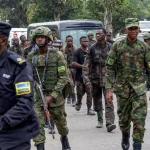
The military reality in eastern DRC remains grim. M23 launched drone attacks on the Congolese army’s airbase in Kisangani – deep in central DRC, far beyond the eastern theatre — demonstrating a capacity and reach that alarms analysts. The Congolese government has responded with drone strikes near M23’s main military base north of Goma.
Pro-government Wazalendo fighters have clashed repeatedly with M23 in the Ruzizi Plain in South Kivu and in the Kalehe district highlands of North Kivu. A FARDC and Wazalendo offensive on Rubaya town in Masisi district, North Kivu, failed. Peace talks between Kinshasa and M23 have reportedly shifted toward Switzerland, with US and Swiss mediators meeting separately with both parties in late May 2026.
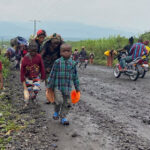
The humanitarian toll is staggering. The conflict has produced one of the world’s worst displacement crises, with millions of internally displaced persons in the Kivus and a catastrophic collapse of health, sanitation, and food security infrastructure.
What the Sanctions Mean – and What They Cannot Do
The decision to sanction intelligence chiefs from both belligerent camps carries symbolic and practical weight. Kubwayo and Nzenze are not frontline commanders chosen for visibility; they are the men who run espionage, special operations, and information networks for their respective organisations. Targeting them strikes at the nervous systems of both armed groups.
The symmetry is also a message to Kinshasa. By sanctioning Kubwayo alongside Nzenze, Washington is serving notice that the DRC government cannot indefinitely tolerate FDLR operations on its territory and present itself as the aggrieved party. The obligations under the Washington Accords run in both directions.
Yet sanctions have their limits. Sultani Makenga has been sanctioned by OFAC since 2013. The RDF has been sanctioned since March 2026. Rwanda’s economy has not collapsed; Kigali has not withdrawn its troops; M23 has not disarmed. The minerals – coltan, cassiterite, wolframite, gold – that sustain the political economy of the conflict continue to flow.
What the escalating US pressure campaign does signal is that the Trump administration has made an unusually significant diplomatic and political investment in the DRC peace process – one now linked explicitly to American mineral interests under the logic of the Washington Accords. The prospect of billions in Western investment in Congolese and Rwandan extractive industries creates an economic incentive for compliance that pure security pressure has never produced.
Whether that incentive is sufficient – whether Kagame calculates that Rwandan security interests in a buffer zone and mineral revenues outweigh the cost of US economic pressure, and whether Tshisekedi can or will confront the FDLR – remains the central, unresolved question of the most important peace process on the continent.
Context: FDLR — The Genocide’s Long Shadow
The FDLR is not simply another armed group. Its founding membership included perpetrators and architects of the 1994 genocide against the Tutsi — a crime in which an estimated 800,000 people were murdered in one hundred days. That history gives the group a uniquely toxic character in the regional political landscape: it provides Rwanda with a genuine, if frequently overstated, security justification for its engagement in eastern DRC; it functions as the darkest strand in the complex web of Congolese proxy politics; and it makes any Congolese government association with FDLR operations politically devastating in international forums.
For decades, successive Kinshasa governments have oscillated between tolerating, instrumentalising, and halfheartedly pursuing the FDLR. The Washington Accords’ explicit demand that the DRC neutralise the group is therefore not merely a procedural obligation — it is a demand that Kinshasa make a decisive and potentially costly political choice. That Tuesday’s sanctions targeted an FDLR intelligence commander is Washington’s way of making clear the price of delay.
The Road Ahead
The peace process is at a genuinely critical juncture. The Washington Accords specified that within ninety days of signing, the parties would implement a ceasefire, secure Rwandan troop withdrawal, and establish a Regional Economic Integration Framework. Those ninety days have passed without full compliance.
The question now is whether the cumulative weight of US financial pressure creates enough pain to shift the calculations of the actors with the power to end this war. That means, above all else, Rwanda’s President Kagame and his inner circle. If Rwanda withdraws and ends material support, M23’s capacity is fundamentally altered.
For now, the war continues. Drones strike airbases hundreds of kilometres from the front. Displacement columns move through the forests of North Kivu. Children are still being recruited. And in Washington, Nairobi, Doha, and now apparently Geneva, diplomats meet, draft, and redraft frameworks for a peace that has so far proved more durable on paper than in practice.