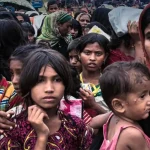
GENEVA – The UN refugee agency warned that essential services for nearly one million Rohingya refugees in Bangladesh are on the brink of collapse as 150,000 new arrivals over the past 18 months push the world’s largest refugee camp beyond its breaking point.
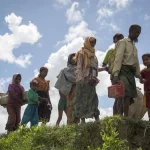
The massive influx to Cox’s Bazar represents the largest movement of Rohingya refugees from Myanmar since 2017, when 750,000 fled deadly violence in Rakhine State. Targeted violence and persecution continue to drive thousands from their homes as conflict rages across Myanmar.
“This movement of Rohingya refugees into Bangladesh, spread over months, is the largest from Myanmar since 2017,” said Babar Baloch, spokesperson for the UN High Commissioner for Refugees (UNHCR), at a press briefing in Geneva.
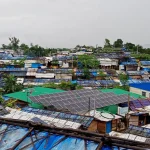
The new arrivals join nearly one million Rohingya refugees already crammed into just 24 square kilometres, creating one of the world’s most densely populated places. Among the newcomers, 121,000 had been biometrically identified by the end of June, with more believed to be living informally in the overcrowded camps. The overwhelming majority are women and children.
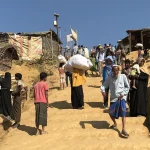
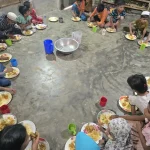
Bangladesh, which has generously hosted Rohingya refugees for generations, now faces an acute funding crisis that threatens to devastate humanitarian operations. Without immediate financial support, health services will be severely disrupted by September, cooking fuel supplies will run out, and food assistance will stop entirely by December.
“More humanitarian support is urgently required as the new arrivals are largely dependent on the solidarity of those living in the camps, overstretching severely diminished resources,” Baloch warned.
The funding shortage puts the education of 230,000 children at risk, including 63,000 new arrivals. The deteriorating conditions are already fueling desperation among refugees, with some embarking on dangerous sea journeys to other countries in search of safety and dignity.
Despite the border between Bangladesh and Myanmar remaining officially closed and under surveillance, the Bangladeshi government has authorised newly arrived Rohingya refugees to access emergency assistance and key services in the camps.
“UNHCR and humanitarian partners are grateful that the Government of Bangladesh has authorised newly-arrived Rohingya refugees to access emergency assistance and key services in the camps in Cox’s Bazar,” Baloch said, while advocating for managed access to safety and asylum for civilians fleeing the conflict.
The UN agency called on the international community to stand in solidarity with Bangladesh and other regional countries hosting Rohingya refugees, emphasising that support must continue until peace and stability return to Myanmar’s Rakhine State and allow for safe, voluntary return.
The crisis highlights the ongoing persecution of the Rohingya minority, who have faced systematic discrimination and violence in Myanmar for decades. The current exodus underscores the urgent need for international intervention to address both the humanitarian emergency and the root causes of the conflict driving hundreds of thousands from their homes.