STAKEHOLDERS within Kenya’s coffee sector are raising concerns over the country’s preparedness and readiness for the European Union Regulation on Deforestation-free Products (EUDR), which takes effect in January 2026.
Farmers, cooperatives, coffee exporters, and service providers fear that the majority of smallholder coffee farmers risk losing the EU market for failure to comply with the EUDR policy.
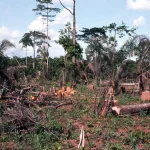
The regulation, which takes effect in January 2026, requires that coffee exported to the EU be traceable to plots of land proven to be free of deforestation or forest degradation after December 2020.
The European Union Deforestation Regulation (EUDR) is a new law adopted by the European Union to prevent the import and sale of products linked to deforestation and forest degradation.
It targets seven key products, among them cattle, cocoa, coffee, palm oil, soy, timber, and rubber.
Cost implication
According to the stakeholders, while the law aims to protect global forests, small-scale farmers who lack the digital tools, mapping data, and institutional infrastructure needed to prove compliance risk being locked out of the lucrative EU market.
In a joint statement issued under the Kenya Coffee Platform, the stakeholders cited the cost implication as a major hindrance to compliance by smallholder farmers.
“The group recognises the significant financial burden that EUDR compliance may place on the sector, particularly for small and medium farmers, estates, and cooperatives. Costs related to traceability systems, precise geolocation mapping, and digital technologies can be substantial,” the statement read in part.
They are also raising concerns about the logistical and technical difficulties posed by the requirement for detailed geolocation mapping, particularly polygon mapping.
“This requirement is challenging to meet not only for smallholder farmers, but also for cooperatives and estates that may lack the necessary resources and technical capabilities”, they said.
The stakeholders observe that Kenya already has strong manual and digital systems that support coffee trading and that existing systems should be leveraged and strengthened as part of developing more robust platforms that enhance accountability and protect Kenya’s position in global markets.
Tech Challenge
George Watene, from the Global Coffee Platform, said insufficient access to infrastructure and technical support are significant barriers to EUDR compliance.
“Limited access to essential information and communication technology (ICT) resources, such as reliable internet and suitable digital tools like smartphones, undermines the ability to implement traceability systems effectively”, he said.
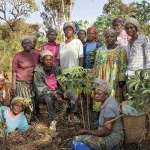
Sarah Nyaga, a smallholder coffee farmer from Embu County, said that most farmers have yet to understand what EUDR is since it has not been simplified for them.
“Most smallholder farmers are not sufficiently literate to understand the technical language of the requirements, and some of them do not even know that it exists’’ she said.
The group wants the government to support the sector in ensuring EUDR compliance by providing clear guidance, policy support, and fostering public-private collaboration to streamline compliance efforts.
“The gathered coffee sector stakeholders unanimously affirm the necessity of extensive training, sensitisation, and capacity-building initiatives to help stakeholders understand and meet EUDR standards,” they said.
At the same time, they raised concerns with the issue of privacy of farmers required s part of EUDR compliance.
“Sharing data is essential for EUDR compliance and maintaining EU market access, but data must be collected and used responsibly, with safeguards to prevent misuse and protect farmer rights,” they said.
EUDR requires farmers to provide exact GPS coordinates of their coffee farms. This allows EU regulators to check satellite images and determine whether deforestation or land degradation occurred.
Kenya has thousands of smallholder farmers, most without digital maps of their farms.
Farmers must also provide details of when their coffee was cultivated and harvested. This helps verify whether the coffee was grown after the December 31, 2020, cut-off date on land that remained forested.
On the other hand, coffee exporters will be required to file a due diligence statement declaring that the product is deforestation-free and that the coffee complies with the relevant Kenyan environmental laws.
Stakeholder cooperation
While recognising the importance of EUDR’s environmental goals, the stakeholders note that EUDR places a heavy burden on producers, and consumer countries must also take responsibility.
“We call for more balanced, collaborative approaches that include incentives and shared commitments between producer and consumer countries, aligned with national reforestation goals and local realities”, they said.
Brian King, senior manager for technology integration at Alliance for Biodiversity International and CIAT, said cooperatives have a key role in supporting smallholder farmers, complying with EUDR.
“For Kenya to realise EUDR compliance, there is a need for collaboration from both public and private sector players’’
CIAT is providing stakeholders with technical advice to help them absorb the regulatory shock of EUDR.
Felix Mutwiri, head of Kenya’s coffee Directorate, said a multi-agency team on compliance had been set up to meet the deadline.
Mutwiri said that Kenya is keen on remaining a leading exporter of coffee to the EU Market.
“The government has already developed a concept for implementing the regulations”, said Mutwiri.
To help farmers comply, the Kenyan government has rolled out Geolocation mapping drives and training on EUDR requirements.
Revenue Risk
Smallholder farmers produce approximately 70% Kenya’s coffee.
There are an estimated 800,000 small-scale growers and over 2,500 coffee estates operating under some 500 cooperatives.
With an estimated 1.5 million household employees, Kenya’s coffee sector constitutes 30% of agricultural labour.
The Kenyan coffee market is projected to reach USD 2.4 billion by 2033.
Kenya could lose an estimated KES 90 billion (US$695 m) in export earnings over five years for EUDR non-compliance.
The EU buys 60% of all Kenyan coffee exports.
In 2024, Kenya exported 53,519 tons of coffee with an estimated value of KES 38.4 billion (US$296.8 m).
In 2025, production is projected to rise by 13% to 850,000 60‑kg bags (51,000 tons), with exports growing by 10% to 840,000 bags (50,400 tons).
- Jackson Ambole Okata is a multiple-award-winning journalist