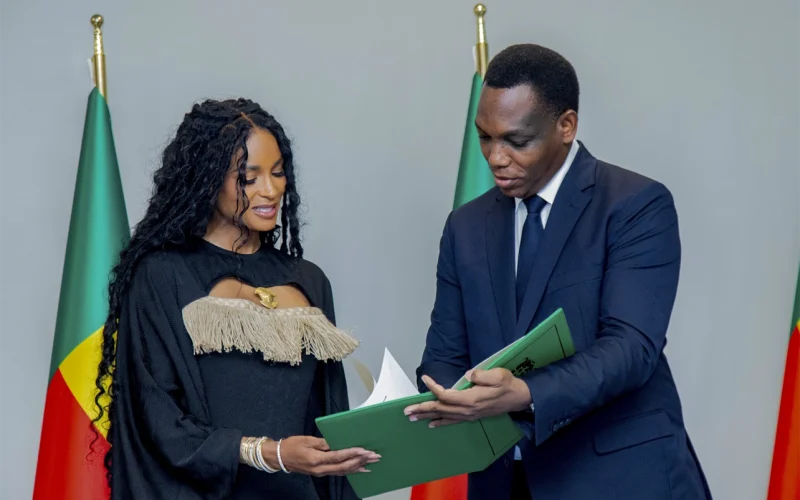
IN a moment that transcended celebrity headlines and touched the very soul of identity, Grammy-winning superstar Ciara stood in the heart of Cotonou, Benin, on July 26, 2025, as she received something no amount of fame or fortune could buy – a piece of her ancestral home. The “Level Up” hitmaker became one of the first prominent figures to be granted citizenship under Benin’s groundbreaking new law, designed to welcome back the descendants of those forcibly torn from African shores centuries ago.
The ceremony was nothing short of electric. As Justice Minister Yvon Détchénou presented Ciara with her citizenship documents, the air crackled with the weight of history being rewritten. “By legally recognising these children of Africa, Benin is healing a historical wound,” he declared, his words echoing through the venue like a long-overdue prayer finally answered. “It is an act of justice, but also one of belonging and hope.”
For Ciara, this wasn’t just a legal formality – it was a spiritual homecoming that had been 400 years in the making. The singer, whose infectious beats and empowering anthems have dominated charts worldwide, found herself part of a profound narrative of restoration and recognition. Her acquisition of Beninese citizenship represents more than personal triumph; it’s a beacon of hope for millions of diaspora descendants seeking to trace the threads of their origins back to the motherland.
Ciara’s historic moment places her at the forefront of a powerful cultural renaissance sweeping through the African diaspora. She joins an impressive constellation of stars who have embarked on similar journeys of ancestral reclamation, each story adding vibrant threads to the tapestry of African identity being rewoven across the globe.
The legendary Stevie Wonder blazed this trail when he became a Ghanaian citizen in a jubilant ceremony that coincided with his 74th birthday. The musical genius, whose connection to Ghana spans decades back to the 1970s, has long been inspired by the nation’s rich heritage and pan-African ideals. Wonder’s citizenship wasn’t just ceremonial – it represented a lifelong bond and commitment to creating opportunities for African youth, transforming his cultural connection into a tangible impact.
Ghana itself has become a magnet for diaspora reconnection through initiatives like the “Year of Return,” which has drawn countless African Americans to explore their roots. The country’s citizenship programs have welcomed descendants of enslaved Africans with open arms, creating a bridge across centuries of separation. From sports stars like Alphonso Davies, who was born in a Ghanaian refugee camp and carries his heritage with pride in international soccer, to actors like Nana-Kofi Siriboe, whose familial ties to Ghana inform his artistic identity, the movement spans every corner of entertainment and athletics.
The Benin Blueprint
Benin’s approach carries particular historical weight. The small West African nation played a significant role in the transatlantic slave trade, making its current efforts to welcome descendants back especially poignant. The country’s citizenship law, passed in September 2024, opens its doors to anyone over 18 who can trace their lineage to the slave trade through DNA tests, authenticated testimonies, or family records.
The launch of “My Afro Origins,” a digital platform processing applications, signals Benin’s commitment to making this reconnection accessible and streamlined. It’s not just about paperwork—it’s about healing, tourism, and building bridges between Africa and its scattered children.
Music as Memory
For Ciara, this citizenship represents the culmination of a journey that has long influenced her artistry. The performer has consistently celebrated her African heritage through her music, most powerfully in her 2020 video “Rooted,” which served as a stirring affirmation of Black identity and cultural pride. On her Apple Music show “Level Up Radio,” she’s spoken passionately about how contemporary music genres trace their DNA back to African origins, celebrating the ongoing creativity born from this rich legacy.
“African heritage profoundly influences both my music and my identity,” Ciara has shared, describing it as “a deep well of inspiration and empowerment.” Her new citizenship adds legal weight to what has always been an emotional and artistic truth – her unbreakable connection to the continent that gave birth to the rhythms that now move the world.
As Ciara posed with fellow citizenship recipients and Beninese officials, their smiles illuminated more than just a photo opportunity. They captured a moment of justice delayed but not denied, of families separated by oceans and centuries finally finding their way back to each other.
This movement extends far beyond celebrity participation. It represents a fundamental shift in how the African diaspora views its relationship with the continent, transforming abstract heritage into concrete belonging. Each citizenship ceremony, each DNA test revealing African ancestry, each cultural pilgrimage home adds another voice to a growing chorus declaring: “We are still here. We remember. We belong.”
For Ciara’s children and the millions of others seeking to understand their origins, these acts of reconnection offer something invaluable – proof that home was never truly lost, only temporarily out of reach. In reclaiming her Beninese citizenship, Ciara hasn’t just gained legal status in a West African nation; she’s helped light a pathway for countless others to find their way back to the roots that have always been calling them home.
The scars of slavery may never fully heal, but moments like these prove that love, identity, and belonging can transcend even the darkest chapters of history. In the end, Ciara’s journey to Benin wasn’t just about becoming a citizen – it was about coming home.