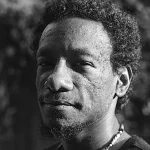
AS a filmmaker, I see the world through the details that come into focus – or that become blurry – in my camera’s viewfinder. So when violence broke out a month ago in my home of Sweida, a province in southern Syria, I couldn’t help but see it all unfold through that same lens.
I was in Sweida’s main city when clashes between Bedouin and Druze forces broke out in mid-July, so I was spared the worst of the violence that took over the countryside and turned sectarian, claiming the lives of hundreds of people – possibly more than 1,000 – some in mass killings of Druze.
By Adnan Mansour Azzam
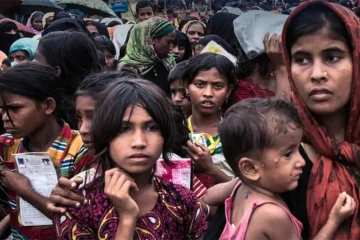
Peace was shattered in the homeland of Syria’s Druze – my homeland – as more than 158,000 people were forced to flee their homes in fear. Most have still not gone home, and they are now facing shortages of food and water, not to mention safety.
I couldn’t see the worst of the devastation for myself, but I felt the fear, and I pieced together what happened through constant contact with family and friends, including my childhood friend Radwan Azzam.
What emerged was sectarian sentiment that is now sharper and harsher than ever before. Blurrier is the future for the Druze community in Sweida and Syria, with ongoing flare-ups in fighting, people still sheltering with friends, family, and in shelters, and aid access uneven and under threat.
What follows is a depiction of the terrifying days in the life of Radwan and the Druze of Sweida, before a still-shaky late July ceasefire, written in the way I express myself best: The brief outline of a movie script.
FADE IN: EXTERIOR. RADWAN AZZAM’S HOUSE, TA’ARA – MORNING, 15 JULY 2025
The night before the attack on Radwan Azzam’s Sweida village of Ta’ara, sleep was impossible. For weeks, voice messages crackled across the phones of other Druze, warning of government-backed militias gathered on the western outskirts of Sweida’s countryside. In the past few days, clashes had already killed dozens, and there were reports that Bedouin fighters allied with Syria’s new transitional government were pushing deeper into Sweida, armed with tanks and machine guns.
It felt like only a matter of time before the violence came to Ta’ara. Azzam, a 43-year-old music teacher who lives with his mother, heard his elderly neighbour mutter his fear over their shared garden wall: “They’re coming to finish us off this time.”
His words captured what many – perhaps most – of Sweida’s population felt: This violence was the culmination of months of incitement against the religious minority that makes up about 3% of Syria’s population, but is the majority in Sweida. These provocations included a fake audio recording of a Druze cleric insulting the Prophet Mohammed.
By mid-July, clashes had erupted between Bedouins and Druze militias – some of which escalated to sectarian violence – and there were reports of extrajudicial shootings.
At first, Radwan refused to believe the warnings. On the morning of 15 July, he walked around his garden, his eyes lingering on every detail. He took in every corner of the home his father had built, trying to hold onto its walls, its scent, its story.
Radwan and his mother did not plan to leave. For Syria’s Druze, who have known no home but this stretch of land, displacement is more than losing shelter. It is a true uprooting.
“Nothing will happen,” he told his mother, trying to convince himself, too. He walked to the mulberry tree his father had planted in the backyard in 1980, a few years before he was born. Over the years, Radwan’s friends had enjoyed its fruit, but he had never liked how it stained his fingers.
That morning, he picked a few berries. They were sweet. Too sweet. As the juice ran down his fingers, staining them deep red, he had no idea the colour would cling to his skin – and to his memory – for days.
At 10 am, the first gunshot rang out. Moments before, a drone had appeared overhead, floating slowly through the grey sky. The invasion had begun.
“I wasn’t ready to be killed in front of my mother.”
Syrian state television said the government had sent its forces in to “resolve sectarian clashes between Bedouins and Druze” and “restore security”. But the gunfire and the stories that emerged later told a different story; one of forced displacement, collective punishment, and demographic intimidation.
Radwan’s mother grabbed his hand. Together they ran two kilometres, heading east towards the village of Qsara. On their way out, Radwan saw columns of smoke rising from houses near the entrance to his neighbourhood. He heard someone scream a friend’s name in anguish as they were pronounced dead. He saw some people trying to resist with their own rifles – which they keep on hand for self-defence – from behind the stone walls of their homes.
He carried nothing but her hand – and those red-stained fingers. Everything else – their future, their plans, their sense of tomorrow – had been left behind.
“I wasn’t ready to be killed in front of my mother,” he later said of why he finally listened to his mother’s pleas to leave.
“I never got to wash my hands,” he said of that day. “They stayed the colour of blood.”
FADE IN: EXTERIOR. VILLAGE SQUARE, QRASA – MID-MORNING, 15 JULY
Qrasa wasn’t a place to stay for good, just a temporary hiding place.
In the village’s central square, Radwan ran into former classmates and distant relatives who had fled before him. Many, like Radwan, were fleeing home for the first time. Sweida had mostly avoided the heavy conflict that forced some 14 million Syrians from their homes since Syria’s civil war began in 2011.
Many Sweida families had lived in their homes for generations, even during the darkest years of the war. Now they stood barefoot in the courtyards of Qsara, whispering about missing children and burned homes, their voices heavy with questions that had no answer.
Radwan spotted his Christian neighbours, whose house he had briefly considered seeking shelter in. They, too, had fled. Sectarian violence spares no one, they said.
His mother still clung on to his hand. In a tone he had never heard her use before, she said: “We don’t stop. Not here, not anywhere. We keep moving.”
On the road out of Qsara, old pickup trucks, smugglers’ vans, and tractors appeared. Anyone with a spare seat called out to women first. Men clung to the backs of vehicles, some even to the roofs.
Radwan and his mother climbed into a truck bed. He looked back and saw plumes of black smoke rising from the west, from the direction of their home.
In the weeks that followed, Radwan heard that armed Bedouins had established camps in their village. While he still hasn’t been able to confirm his home’s fate, local activists said many houses in the next village had been burned down.
FADE IN: INTERIOR. UNCLE SAOUD’S HOUSE, SWEIDA CITY – AFTERNOON, 15 JULY
By the time they reached Radwan’s uncle’s house in Sweida city, seven newly arrived family members were already crammed into the small apartment.
Radwan collapsed near the door, his red-stained fingers on his forehead. His aunt noticed them and whispered, “Radwan… are you hurt?”
He answered without looking up: “No. It’s just mulberries.”
That night, the city transformed. Sirens, rumours, chaos. Government troops were closing in. Radwan’s aunt was already preparing to evacuate again; this time to the mountain villages around Salkhad, south of Sweida city, where other Druze families had begun gathering.
That evening, reports came through of executions, homes burned down, and livestock slaughtered.
As Radwan and his mother readied to leave yet again, he stopped thinking about his garden, which was home; or the berries, which were his childhood. The present demanded all his attention. He just had to survive.
FADE IN: INTERIOR. SALKHAD VILLAGE – NIGHT, 15 JULY
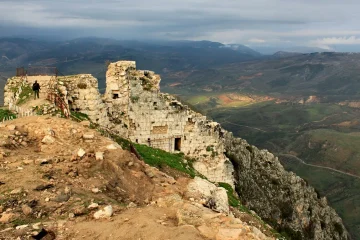
By sunset, Radwan, his mother, his uncle’s family, and several neighbours had reached Salkhad, a village near Jordan’s border. Perched on a hilltop, far from the violence, it offered a sense of fragile security.
On the doorstep to the home of a family friend where they took shelter, a cat that resembled his own rubbed against Radwan’s legs.
“Maybe he followed me,” he thought. “Maybe he, too, is displaced.”
That night, Radwan slept on the floor with several others. His mother rested behind a curtain with other women. According to local activists, Salkhad hosted roughly 44,000 displaced people from the western suburbs and Sweida city.
FADE IN: INTERIOR. SALKHAD HOUSE – MORNING, 16 JULY
Waking up in Salkhad, Radwan saw floor tiles that resembled his own. The cat moved across them familiarly, and Radwan felt he was coming out of a strange dream.
But then he remembered this wasn’t his cat, and it wasn’t his home.
How long would this ceasefire last? What kind of life awaited them? Could they ever truly return home?
They stayed in Salkhad for four days, until 19 July, the first of a series of ceasefires. By the time they returned to his uncle’s home in Sweida city, government forces and their allies had withdrawn.
The mulberry stains were gone from his fingers, but the scars remained, and so did the questions: How long would this ceasefire last? What kind of life awaited them? Could they ever truly return home?
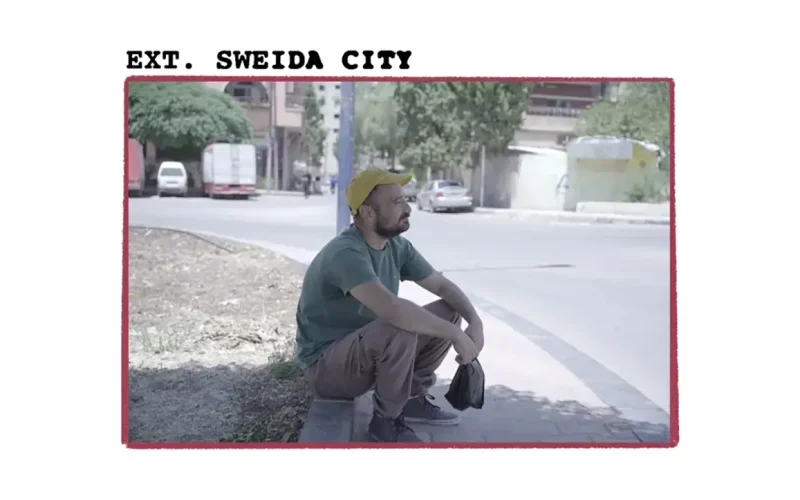
FADE IN: EXTERIOR. SWEIDA TOWN SQUARE – LATE JULY
Radwan met a childhood friend – a filmmaker – in the town square, holding a black bag with four tomatoes – a lucky find, as they had been hard to buy in the shops given the heavy restrictions on entry that many Druze still call a siege on Sweida.
Like many Druze, he had still not gone home. He was still staying with his uncle, and life was a series of provisional moments, temporary arrangements, borrowed spaces. According to the Syrian Observatory for Human Rights, around 35 villages in Sweida were emptied of their resident,s and large swathes of land have become uninhabitable.
He spoke like a man suspended between worlds: no longer able to return to what was, not yet able to imagine what might be.
“All of a sudden, this Earth has no room for us,” he said to his old friend. “We just need to find another planet.”
The words hung in the air between them, carrying the weight of a people who had lost not just their homes, but their certainty about tomorrow.
This piece was published in collaboration with Egab.
–––––
The New Humanitarian puts quality, independent journalism at the service of the millions of people affected by humanitarian crises around the world. Find out more at www.thenewhumanitarian.org.