AS the dust settles on another dramatic day of World Cup qualifying across Africa, two contrasting narratives emerge from the beautiful game’s most unforgiving theatre. While Senegal and South Africa inch tantalizingly close to booking their tickets to the 2026 World Cup, two of West Africa’s most storied footballing nations – Nigeria and Cameroon – find themselves staring into the abyss of qualification heartbreak.
The Rise of the Underdogs
In perhaps the most stunning subplot of Tuesday’s action, the tiny Cape Verde Islands delivered a thunderbolt that reverberated across the continent. With a population barely exceeding 600,000 souls scattered across their Atlantic archipelago, the Blue Sharks took a giant leap toward becoming only the second smallest nation ever to grace a World Cup stage.
Their 1-0 triumph over Cameroon wasn’t just a victory – it was a statement. In the 54th minute, striker Dailon Livramento produced a moment of pure brilliance that will echo through Cape Verdean folklore for generations. Stripping the ball from Carlos Baleba in his own half, the forward embarked on a mesmerising solo run, leaving defenders in his wake before coolly slotting past the helpless André Onana.
The victory in Praia catapulted Cape Verde four crucial points clear of the once-mighty Indomitable Lions, leaving their World Cup destiny firmly in their own hands. Only Iceland, with 350,000 inhabitants, has ever taken a smaller population to football’s grandest stage—their magical journey to Russia 2018 now serving as inspiration for these Atlantic islanders.
Senegal’s Phoenix-Like Resurrection
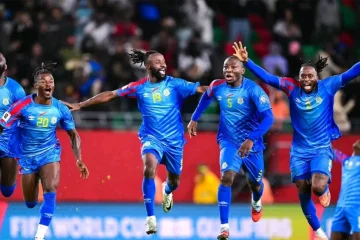
If Cape Verde’s story reads like a fairy tale, Senegal’s comeback in Kinshasa was pure sporting theatre at its most dramatic. The Lions of Teranga faced their demons in the cauldron of the 80,000-capacity Stade des Martyrs, where Congolese fans had been building the atmosphere for four hours before kickoff.
Trailing 2-0 after goals from Cédric Bakambu and Yoane Wissa, Senegal’s World Cup dreams appeared to be crumbling in the humid Kinshasa air. But champions aren’t made in moments of comfort—they’re forged in the furnace of adversity.
Pape Gueye sparked the revival just before halftime, before Nicolas Jackson levelled the score early in the second period. Then came the moment that will live forever in Senegalese hearts: Pape Matar Sarr’s thunderous 87th-minute volley that sent the travelling support into delirium and moved Senegal tantalizingly close to a third consecutive World Cup appearance.
South Africa’s Steady March
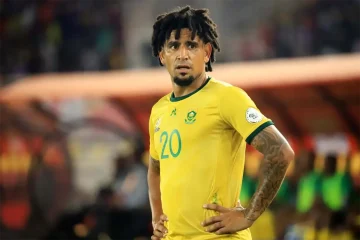
Meanwhile, in Bloemfontein, South Africa, demonstrated the composure of a team that knows its destiny. Their 1-1 draw with Nigeria might have lacked the drama of other fixtures, but it was a result that effectively ended the Super Eagles’ direct qualification hopes—a devastating blow for a nation that has graced three of the last six World Cups.
William Troost-Ekong’s unfortunate own goal handed Bafana Bafana the advantage, though Calvin Bassey’s equaliser on the stroke of halftime kept Nigerian dreams flickering, if only barely. For South Africa, the point keeps them firmly in the driving seat of Group C, their methodical approach paying dividends where others have faltered.
The Agony of Giants
The cruel beauty of World Cup qualifying lies in its democratic brutality—reputation counts for nothing when dreams collide with reality. Nigeria, a nation that has produced some of Africa’s most celebrated footballing talents, now finds itself in the unfamiliar position of watching others control their fate.
Even more stunning is Cameroon’s predicament. The Indomitable Lions, who have roared across five World Cup campaigns and famously reached the quarterfinals in 1990, now trail Cape Verde by four points with just two matches remaining. For a nation that has given the world legends like Samuel Eto’o and Roger Milla, the prospect of missing out on North America 2026 represents nothing short of a seismic shock.
The Final Stretch
As the qualification campaign enters its death throes, the mathematics are beautifully simple yet brutally unforgiving. Nine group winners will automatically join the party in Canada, Mexico, and the United States, while the four best runners-up will battle through November playoffs for one final golden ticket.
Cape Verde needs just three points from fixtures against Libya and Eswatini to complete their miraculous journey. Senegal, buoyed by their Kinshasa heroics, can almost taste their third consecutive World Cup. South Africa continues their measured march toward qualification.
But for Nigeria and Cameroon—two proud footballing nations with rich World Cup histories—the sand in the hourglass is running perilously low. In the beautiful game’s most democratic theatre, giants can fall, and dreams can die as quickly as they’re born.
The stage is set for a thrilling conclusion to Africa’s World Cup qualifying odyssey, where the smallest nations dare to dream the biggest dreams, and where football’s greatest lesson continues to ring true: on the pitch, anything is possible.