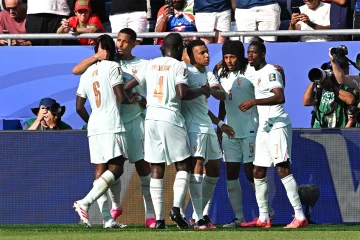
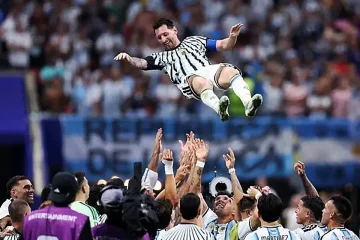
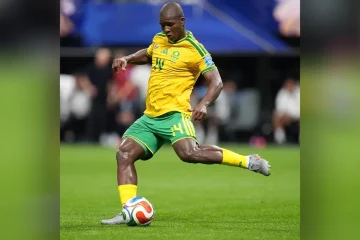
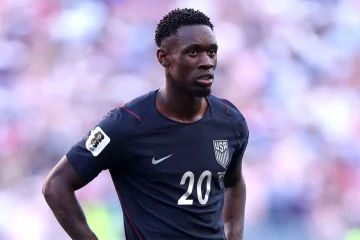
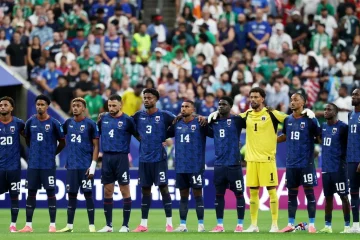
IT came in the 100th minute, in the rain-drenched dark just west of Guadalajara, and it landed like thunder across 100 million souls. When Burnley defender Axel Tuanzebe bundled a corner over the line at Estadio Akron, and the referee’s whistle confirmed what the VAR screen had taken an agonising 60 seconds to ratify, the Democratic Republic of Congo – the Leopards, the giants of Central Africa – were going back to the FIFA World Cup for the first time in 52 years.
The final score was 1-0 over Jamaica in the intercontinental playoff. The meaning was immeasurable. In the Kinshasa neighbourhood of Kingabwa, hundreds of fans who had stood in a city-centre square through rain and anxiety since dusk erupted into a delirium of car horns, banging pots, and singing that lasted until dawn. “We’ve been waiting 50 years for this,” one supporter, Beni Ile, told AFP, soaked to the skin and draped in the Leopards’ sky-blue national colours. “We’re staying out until dawn.”
“We deserve a moment of happiness, away from the gunfire.”
Congolese fan Maclain, Kinshasa
Those words – raw, unbidden, devastating in their honesty – say everything that football statistics cannot. The DRC is a country whose eastern provinces have been engulfed in armed conflict for more than three decades, a slow catastrophe that deepened sharply when the M23 rebel group seized swathes of territory, including the strategic city of Goma, in January 2025. Ceasefire talks have stuttered and collapsed. Displacement figures run into the millions. And yet, on the night of March 31, 2026, in a stadium a world away on the Mexican plateau, eleven men in sky-blue pulled a fractured nation – briefly, gloriously – together.
TUANZEBE: THE UNLIKELY HERO
The match itself was a testament to Congolese nerve, if not always to Congolese fluency. Under French coach Sébastien Desabre, the Leopards dominated possession throughout, but Jamaica’s defensive discipline – anchored behind an extraordinary performance by goalkeeper Andre Blake – denied them again and again. Striker Cédric Bakambu had the ball in the net after five minutes only for offside to intervene; his looping header was comfortably gathered; a curling long-range effort was palmed away. In the 85th minute, a second Bakambu “goal” was disallowed for offside in the build-up. Substitute Edo Kayembe rattled the post at the death. The final whistle of normal time brought not relief but a fresh bout of collective anxiety.
Extra time. The kind that ages supporters in real time. And then, in the 100th minute, Tuanzebe – a former Manchester United centre-back, now plying his trade at Burnley in the English Championship – met an inswinging corner in the six-yard box and forced it home. “We made it very difficult for ourselves, perhaps the occasion got the better of us,” Tuanzebe said afterwards, with the understatement of a man who had just scored his first senior international goal in the most consequential match of his country’s footballing generation. “But we dug in, and we got the job done.”
SLAYING GIANTS: THE ROAD TO NORTH AMERICA
This was no accidental qualification. The Leopards’ 13-match campaign – which began in November 2023 – was among the most demanding of any African side. They finished second in CAF Group B behind Senegal, then dismantled two of the continent’s most storied footballing powers: first Cameroon, the Indomitable Lions, were dispatched in the African playoff; then Nigeria, the Super Eagles, fell in the playoff final – a result that sent shockwaves through West African football. Only then did Congo face Jamaica’s Reggae Boyz in the intercontinental decider, the stage set appropriately enough at Estadio Akron in Guadalajara – the very ground that will host one of their group stage fixtures when the World Cup begins in June.
Coach Desabre, who has steadily rebuilt a squad that blends European-based talent with continental grit, was characteristically measured in his assessment. “The commitment from every player, every member of staff, earned us this qualification,” he said. The assessment is fair. Ten African nations have now qualified for the expanded 48-team 2026 World Cup — the strongest continental representation in history. That DRC stands among them, having beaten Nigeria and Cameroon to get here, is a statement of intent as much as a celebration of arrival.
“This exceptional decision reflects the wishes of His Excellency the President — to allow the Congolese people to celebrate in unity, fervour, and national pride.”
DRC Ministry of Labour and Employment
TSHISEKEDI’S DECREE: A NATION STANDS DOWN
By 08h00 on Wednesday morning, Kinshasa time, the DRC Ministry of Labour and Employment had issued a formal communiqué. Wednesday, April 1, 2026, was declared a paid public holiday across the entire national territory. The language of the decree spoke directly of the wishes of President Félix Antoine Tshisekedi Tshilombo, who has pledged to place every resource of the state at the disposal of the national team as they prepare for the tournament in North America. Banks shuttered. Shops closed. In Kinshasa – a city of seventeen million people – the streets belonged to the Leopards.
The president’s commitment goes beyond the symbolic. Reports indicate that Tshisekedi has promised comprehensive government support for the team’s preparation: logistics, financial guarantees, and infrastructure – a signal that this World Cup return is to be treated not merely as sport but as a matter of national prestige. For a government navigating the political and military pressures of the eastern conflict, the qualifying triumph offers something rare and precious: an unambiguous victory to celebrate, a moment of unity that transcends the fault lines of a complex and wounded society.
FOOTBALL AS ARMISTICE: WHAT ONE NIGHT MEANS
One of the most striking footnotes to Tuesday’s victory arrived from an unexpected quarter. Rwanda – whose government is widely believed to support the M23 rebel group that has seized territory in eastern DRC, and whose leaders have traded bitter public recriminations with Kinshasa – sent a message of congratulation. “Leopards stepping up for Africa!” posted deputy government spokesperson Jean Maurice Uwera on X. “Congratulations DR Congo, go make the continent proud on the world stage.” From a fan in Goma – a major city in eastern DRC that fell to M23 in early 2025 – came a quieter response: “It’s truly exceptional. We are very proud of the Leopards today for this feat.”
This is what sport, at its rarest and most elemental, can do. It cannot stop wars. It cannot rebuild homes or return the displaced. But it can, for a night, make a people feel the wholeness of themselves – remind them that there is a “we” that outlasts the moment of conflict. A supporter named Maclain put it with a simplicity that should shame every hand-wringing caveat about football’s limits: “We deserve a moment of happiness, away from the gunfire.”
FROM GUADALAJARA TO HOUSTON: WHAT COMES NEXT
The football arithmetic is unsparing. In Group K, the Leopards face Portugal – Cristiano Ronaldo’s side, ranked among the genuine contenders – in Houston on June 17. Six days later, they take on Colombia at Estadio Akron, the ground where they sealed qualification. The group concludes on June 27 against Uzbekistan at Mercedes-Benz Stadium in Atlanta. It is not a draw that invites complacency.
Historical memory casts a long shadow. The last time DRC played at this tournament – as Zaire, in West Germany in 1974 – they lost all three group matches, conceded 14 goals and scored none, including a 9-0 thrashing by Yugoslavia that still carries the sting of humiliation. But this is a different squad, a different era, and a different Africa. A continent that has sent ten teams to the expanded tournament – among them Morocco, Senegal, Egypt, South Africa, Côte d’Ivoire, Algeria, Ghana, Tunisia, and Cape Verde – is not turning up merely to make numbers. In Kinshasa’s streets on Wednesday morning, fans were already chanting: “Cristiano Ronaldo is next.”
They may not beat Portugal. They may not advance beyond the group stage. But they will be there — in Houston, in Guadalajara, in Atlanta — playing on football’s biggest stage, representing a nation of 100 million whose eastern provinces are on fire but whose heart, for this moment, is soaring. The Leopards are back. Africa is watching. The world should take note.
KEY FACTS AT A GLANCE
Result: DR Congo 1–0 Jamaica (AET) — Intercontinental Playoff Final, Estadio Akron, Guadalajara
Goal: Axel Tuanzebe, 100th minute (first senior international goal)
DRC’s previous World Cup: 1974, West Germany (competed as Zaire)
Group K fixtures: v Portugal (Houston, June 17) · v Colombia (Guadalajara, June 23) · v Uzbekistan (Atlanta, June 27)
Africa at 2026 World Cup: 10 nations — a record continental representation: Morocco, Senegal, Egypt, South Africa, Côte d’Ivoire, Algeria, Ghana, Tunisia, Cape Verde, DR Congo