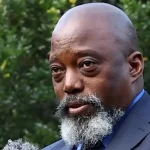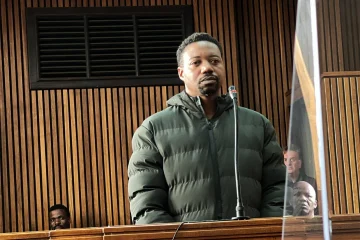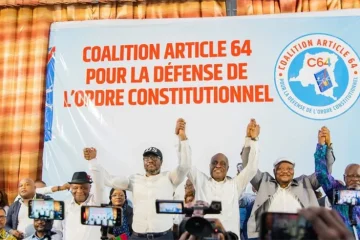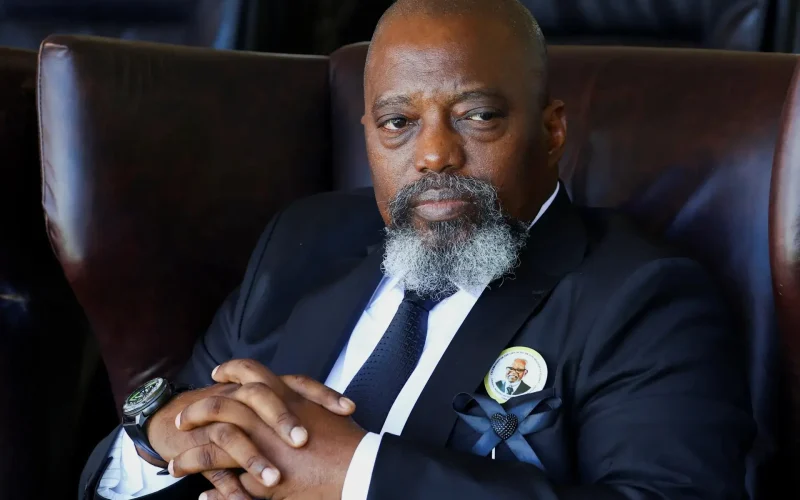
THE gavel fell with historic finality when Lieutenant-General Joseph Mutombo Katalayi pronounced a death sentence against Joseph Kabila, the former president who ruled the Democratic Republic of Congo (DRC) for eighteen tumultuous years. The military tribunal’s verdict – convicting Kabila in absentia of treason, war crimes, and crimes against humanity – represents far more than the legal reckoning of one man. It signals a seismic rupture in Central Africa’s long-standing tradition of executive impunity.
The sentence is extraordinary not just for its severity, but for what it dismantles: the unwritten covenant that has historically protected African leaders from accountability once they leave office. Kabila, who inherited power at 29 following his father’s assassination and clung to it until protests forced him out in 2019, now faces the ultimate penalty for allegedly conspiring with the very rebel forces he once claimed to combat.
A Verdict Measured in Billions
The court’s judgment extends beyond Kabila’s life. He has been ordered to pay approximately $50 billion in damages – $29 billion to the DRC state, with an additional $4 billion split between the ravaged eastern provinces of North Kivu and South Kivu. These astronomical figures underscore the scale of devastation the tribunal attributes to his alleged betrayal: the murder, sexual assault, torture, and insurrection that have characterised the M23 rebellion’s territorial conquest.
The specific charges paint a damning portrait. Military prosecutors accused Kabila of secretly backing the Rwanda-supported M23 rebels who launched a lightning offensive in January, seizing key cities including Goma and Bukavu. The rebels now control vast swaths of mineral-rich territory in a region that has become ground zero for great power competition over cobalt, lithium, and other materials essential to the global energy transition.
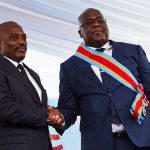
That a former president would allegedly sponsor insurgents to destabilise his own country strains credulity – until one considers the bitter political calculus at play. Kabila’s power-sharing arrangement with his successor, President Felix Tshisekedi, collapsed into mutual antagonism. As M23 forces advanced on Bukavu in February, Tshisekedi stood before the Munich Security Conference and publicly accused his predecessor of sponsoring the insurgency. The trial that followed appears to be the judicial extension of this political warfare.
Justice or Political Theatre?
Kabila’s defenders, and the man himself, have characterised the proceedings as a politically motivated persecution designed to eliminate opposition. The former president, who did not attend the trial and was not represented by counsel, has called the judiciary “an instrument of oppression for a dictatorship desperately trying to survive.” His denunciation carries weight in a country where institutional independence has historically been subordinate to executive power.
Yet the government insists it possesses substantial evidence linking Kabila to atrocities and rebel coordination. The Senate’s 88-to-5 vote in May to strip his immunity suggests broad political consensus, even if the charges themselves serve Tshisekedi’s interests. The question of whether this represents genuine accountability or victor’s justice may ultimately be unanswerable—perhaps it is both simultaneously.
What remains undeniable is that Kabila’s trial marks the first time a former Congolese head of state has faced such charges within the country’s own legal system. Previous leaders either died in office, fled into comfortable exile, or negotiated immunity as the price of their departure. Kabila had secured a lifetime senate seat precisely to guarantee such protection. That guarantee has now been voided.
The Ghost President’s Return
Adding to the surreal nature of the case is Kabila’s inexplicable reappearance in May in rebel-controlled Goma—one of the very cities the M23 forces, allegedly supported by him, had seized. His presence there, in territory held by his supposed collaborators, seemed designed to validate accusations of collusion. Yet his current whereabouts remain unknown, transforming the once-powerful leader into a phantom figure haunting Congo’s political landscape.
Since late 2023, Kabila has lived primarily in South Africa, a strategic exile that now appears prescient. Any return to government-controlled Congolese territory would result in immediate arrest under Tuesday’s verdict. The death sentence, while unlikely to be carried out given his absence, has made him a permanent fugitive in the nation he once ruled.
Regional Reverberations
The implications of Kabila’s conviction radiate far beyond Congo’s borders. For decades, African leaders have observed an informal mutual protection pact: we do not prosecute our predecessors because tomorrow, we may be the predecessors. This arrangement has enabled extraordinary corruption and violence to go unpunished, perpetuating cycles of abuse.
Tshisekedi’s willingness to break this covenant—whether from genuine reform impulse or political opportunism—sends an unmistakable signal to other leaders in the region. The comfortable retirement once guaranteed by high office can no longer be assumed. The precedent is particularly significant given the International Criminal Court’s limited success in prosecuting African leaders, often stymied by claims of neo-colonial interference.
At the same time, the verdict arrives amid a humanitarian catastrophe in eastern Congo. The M23 offensive has killed thousands and displaced hundreds of thousands more in 2025 alone. A U.S.-brokered peace agreement signed in June appears fragile, with both sides reinforcing positions and accusing each other of violations. Rwanda continues to deny supporting M23, claiming its forces act in self-defence against Hutu militiamen linked to the 1994 genocide.
The international community, particularly the United States and European powers, views eastern Congo’s mineral wealth as strategically vital for the green energy transition. Yet the region’s persistent instability threatens access to these resources while creating conditions for continued exploitation by armed groups and their alleged state sponsors. Kabila’s conviction, if it helps consolidate state authority, could theoretically advance stability. If it simply intensifies political divisions, it risks deepening the chaos.
The Irony of Kabila’s Fall
Perhaps the cruellest irony is that Kabila spent his presidency justifying expanded emergency powers by citing the threat of armed groups in the east. He positioned himself as the indispensable guardian against rebel violence, the strong man necessary to hold a fractured nation together. Now he stands convicted of facilitating the very insurgency he claimed to combat, allegedly weaponising instability for political revenge.
His father, Laurent-Désiré Kabila, seized power in 1997 by overthrowing Mobutu Sese Seko, ending one of Africa’s most notorious kleptocracies. The younger Kabila inherited a nation already devastated by years of conflict and resource extraction. Rather than breaking the cycle, he perpetuated it—and now faces the harshest penalty for allegedly continuing that pattern from outside power.
The death sentence transforms Kabila from former president to condemned criminal, from dynasty heir to dynastical endpoint. His political party has been suspended, his properties raided, his assets targeted for seizure. The infrastructure of his power has been systematically dismantled. Where he once commanded one of Africa’s largest armies and controlled access to vast mineral wealth, he now exists in a state of permanent fugitive status.
An Uncertain Legacy
Whether Kabila will ever face physical punishment remains doubtful. Executions of political figures, even convicted ones, carry enormous risks in fragile states. More likely, the sentence serves as a tool of political exile and historical condemnation—a formal judicial declaration that his rule was not merely failed governance but a criminal enterprise.
For Congo, the verdict poses a fundamental question: Can a nation break free from decades of conflict and impunity by prosecuting its former leaders, or does such prosecution simply become another weapon in ongoing political warfare? The answer will shape not only Kabila’s fate but the trajectory of Congolese democracy itself.
What Tuesday’s death sentence makes clear is that the old rules no longer apply. The culture of impunity that protected African leaders for generations has been breached. Whether this breach leads to genuine accountability or merely to more sophisticated forms of political persecution will determine if Kabila’s conviction represents a watershed for justice or simply another chapter in Congo’s long history of power struggles disguised as legal proceedings.
One thing is certain: the former president who refused to leave power voluntarily has now been definitively expelled from it, not by coup or protest, but by a court verdict that strips away not just his freedom but any claim to legitimacy. In a nation starved for accountability, that may be the most powerful sentence of all.