QUALIFYING for the FIFA World Cup is supposed to be the reward. The trophy. The culmination. The moment players and coaches hoist each other onto heaving shoulders and weep into television cameras while their nation erupts into national delirium. That is the deal. That is how it has always worked.
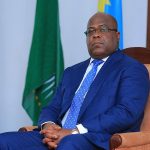
Nobody appears to have explained this to President Félix Tshisekedi of the Democratic Republic of Congo.
Because in Kinshasa, qualifying is apparently just the down payment.
“Axel Tuanzebe scored his knee into World Cup history — and into a brand-new Jeep, a fat bank account, and a chunk of the Congo Basin.”
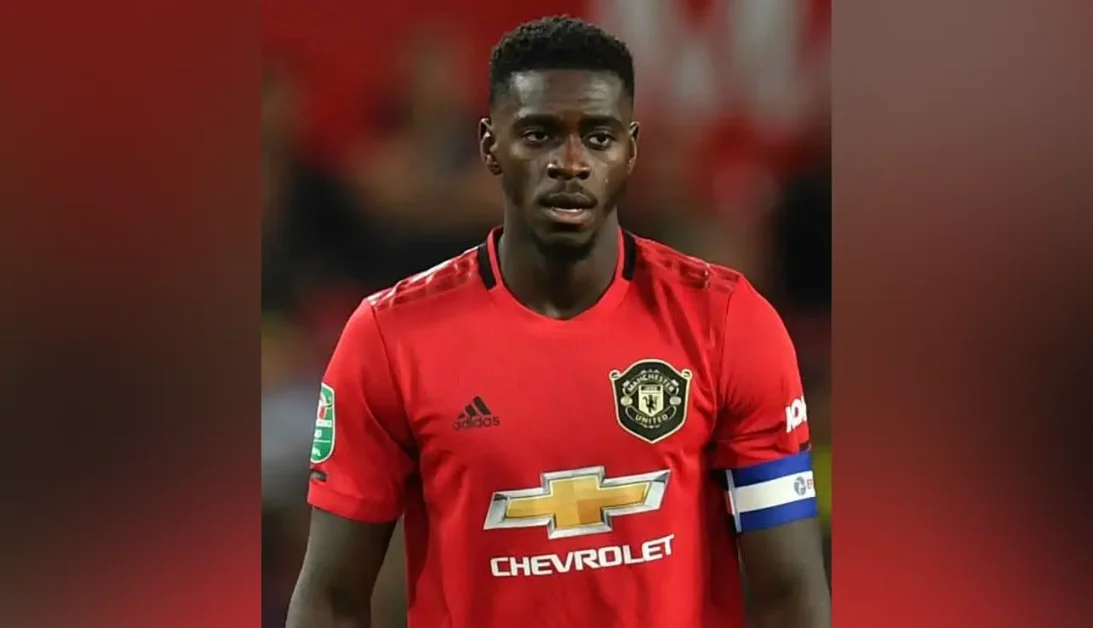
When Axel Tuanzebe – yes, a former Manchester United defender now plying his trade at Burnley in England’s Championship – bundled home a corner kick in the 100th minute against Jamaica in Guadalajara on the last day of March, he did not merely send the Democratic Republic of Congo to the 2026 World Cup for the first time in 52 years. He knee-nudged his teammates into a treasure chest that would make a mediaeval king blush.
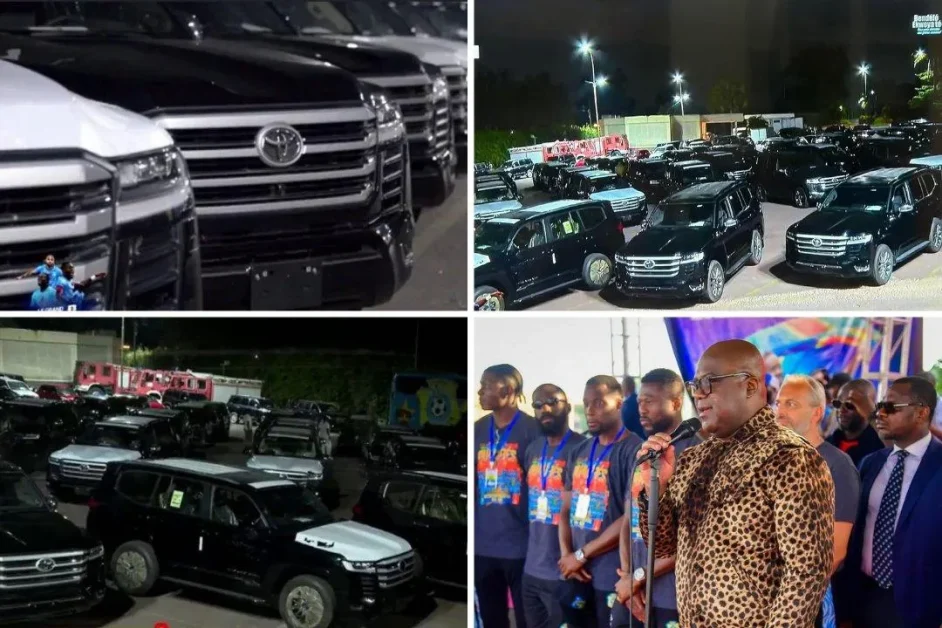
Jeep cars. Cold, hard cash. And huge plots of land.
For the whole squad. For the entire staff. Before a single minute of World Cup football has been played.
Let that marinate for a moment.
HISTORY, WITH LEATHER SEATS
When the then-Zaire national team appeared at the 1974 World Cup in West Germany — their first and, until now, only appearance — they were famously bribed not to concede too many goals against Brazil. They lost 3-0 and shuffled home without a point. That was a different era, a different kind of presidential persuasion.
Tshisekedi, it seems, prefers the carrot to the stick. An exceptionally large, motorised carrot with four-wheel drive.
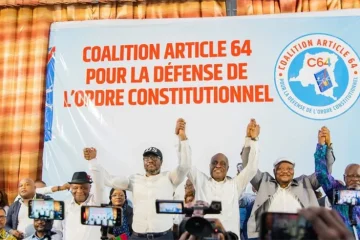
The image of the President himself dancing in rain-soaked Kinshasa streets, surrounded by supporters drenched in joy and muddy euphoria, set the emotional scene perfectly. This was not a diplomatic photo opportunity. This was a man who had declared April 1 a national public holiday — and absolutely nobody was calling it a joke.
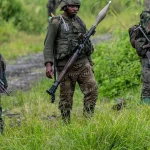
Across the country, from the conflict-ravaged east — where even M23 rebel spokesman Lawrence Kanyuka publicly rejoiced — to the boulevards of the capital, a nation that has known far more grim news than good in recent years exhaled an entire half-century of footballing frustration in one glorious, collective scream into the Congolese night.
“In a country that has known far more grief than glory, the Leopards gave an entire generation something their parents could only describe.”
THE MATHEMATICS OF MAGNIFICENCE
Now, about those rewards. Let us do some rough arithmetic, purely in the spirit of journalistic enquiry.
A World Cup squad consists of 26 players. Add to that coaches, analysts, physiotherapists, kit men, team doctors, nutritionists, video analysts, goalkeeping coaches, and the various other members of modern football’s bloated — though undeniably necessary — travelling circus, and you are looking at somewhere north of 50 individuals who will be taking delivery of shiny new Jeeps.
Somewhere in a Kinshasa dealership, a salesman is having the greatest month of his career. Possibly his life.
Then there is the money. President Tshisekedi had already reportedly dangled a $1 million bonus per player during the nerve-shredding CAF playoff phase against Nigeria. One assumes the final reward package, with the actual World Cup ticket in hand, has only grown more generous. The Leopards fought off Nigeria on penalties, dispatched Jamaica in extra time, and survived weeks of legal challenge by the Nigeria Football Federation — and they are being compensated accordingly.
And then there is the land. Huge plots of it. In a country that happens to be the second-largest in Africa by area, spanning 2.3 million square kilometres of equatorial rainforest, savannah, and river basin, land is not exactly scarce. But the symbolism is profound. These are not just footballers being paid. They are being planted into the soil of their own nation as national monuments.
THE WORLD CUP AWAITS — AND IT IS UNIMPRESSED
In Group K at the tournament hosted across the United States, Mexico, and Canada, the Leopards will face Colombia, Uzbekistan, and — in their very first match — Portugal. That is Cristiano Ronaldo’s Portugal, who, at 41, will presumably be playing his final World Cup and is extremely unlikely to be distracted by thoughts of someone else’s Jeep.
One imagines the pre-match team talk will involve some delicate navigation. ‘Gentlemen,’ the coach might reasonably say, ‘I know you are already the proud owners of significant real estate and a luxury SUV. But perhaps — just perhaps — let us attempt to score a goal against CR7 before we drive home.’
To be fair, the Leopards will not be short of talent regardless of material comfort. The squad that clawed its way through 52 years of football’s wilderness includes European-based professionals of considerable quality. Tuanzebe himself is a seasoned Premier League-era defender. These are not men who will be distracted from their duties by the memory of a shiny key fob.
“Portugal, Colombia, and Uzbekistan await — none of whom have promised their players land. The Leopards arrive as both underdogs and landowners.”
A REWARD FOR A LONG, LONG WAIT
Behind the humour — and there is plenty of it — lies something genuinely moving. Fifty-two years is not an abstract number. It is a grandfather who watched Zaire in 1974 and never lived to see his grandchildren’s Leopards return. It is a generation that grew up hearing stories of that West German summer as though it were mythology. It is the fans dancing through Goma’s muddy streets — a city that has seen active conflict, drone strikes, and rebel occupation — finding, for one night, something worth dancing about.
President Tshisekedi’s extravagance is not simply populism. In a country battling deep structural challenges — poverty, conflict in the east, infrastructure deficits that would humble most nations — the act of visibly, materially honouring these athletes is a statement about what the state values. It says: we see you. The whole world sees you. Here is a Jeep to prove it.
And if it also happens to light a fire under the squad before they face Ronaldo — well, that is a bonus that requires no presidential decree.
THEY CAME. THEY QUALIFIED. THEY COLLECTED.
The 1974 Zaire squad departed the World Cup in shame, their dignity battered by score lines and political interference. The 2026 DR Congo Leopards depart for it already compensated, celebrated, and carrying the expectations of 110 million people in the boot of their brand-new Jeep Wranglers.
Some of those Jeeps, one suspects, will need to navigate some very emotional terrain before the tournament is done.
But for now, in Kinshasa, in Goma, in the diaspora from Brussels to Johannesburg to Paris — the Leopards have already won something that no scoreboard can record.
They gave an entire country reason to believe the wait was worth it.
The Jeep is simply a bonus.