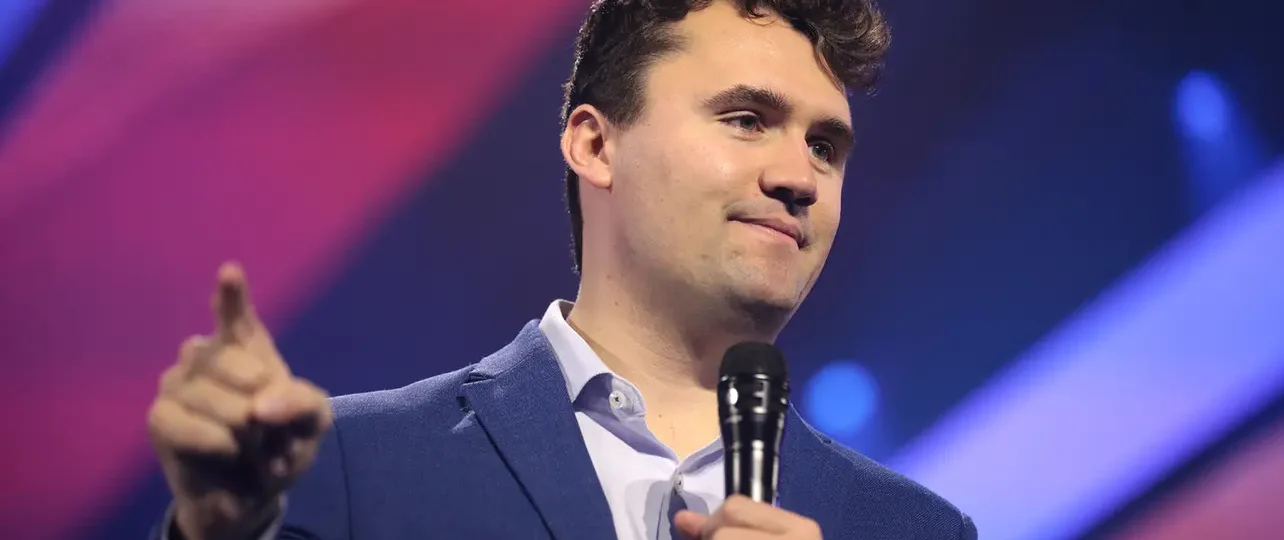

THE single gunshot that ended Charlie Kirk’s life at Utah Valley University on September 10, 2025, reverberated far beyond the campus in Orem, Utah. In one devastating moment, America lost not just a prominent conservative voice but crossed a threshold that threatens the very foundations of democratic discourse.
The assassination of the 31-year-old Turning Point USA founder represents more than an isolated act of political violence – it signals a dangerous escalation in America’s ongoing political crisis. Kirk’s murder occurred during what should have been a routine campus speaking event, the kind of open political dialogue that has historically been central to American democratic tradition.
Utah Governor Spencer Cox captured the gravity of the moment when he described Kirk’s killing as striking at “our most basic constitutional rights.” The governor’s words underscore a chilling reality: when political disagreement transforms into lethal violence, the social contract that enables a democratic society begins to fracture.
This assassination unfolds against the backdrop of unprecedented political volatility. The period since January 6, 2021, has witnessed over 300 documented cases of politically motivated violence across the ideological spectrum. The fact that even President Trump—himself the target of two assassination attempts—has experienced such threats illustrates how normalised political violence has become in American life.
Kirk’s death is particularly jarring because it occurred in broad daylight, before 3,000 witnesses, during an event explicitly dedicated to political dialogue. The sniper-style attack—apparently executed from a campus rooftop—demonstrates a level of premeditation that suggests not impulsive rage, but calculated political terrorism.
The Victim and His Impact
Kirk was more than a conservative commentator; he was a significant force in shaping young conservative political identity. His ability to mobilise younger voters for Republican causes made him a valuable asset to the Trump coalition and a prominent target for political opponents. His “American Comeback Tour” was designed to bring conservative arguments directly to college campuses—traditionally liberal spaces where such viewpoints face fierce opposition.
The tragic irony that Kirk was discussing gun violence at the moment he was fatally shot adds another layer of complexity to an already fraught national conversation about firearms, free speech, and political violence.
Leadership in Crisis
The immediate responses from across the political spectrum have been telling. President Trump’s condemnation of “radical left” rhetoric, while simultaneously decrying political violence, reflects the challenge of maintaining moral authority while engaging in the very divisive discourse he critiques. Former President Obama’s denunciation of “despicable violence” represents an attempt to restore some measure of national unity in a moment of crisis.
Yet these statements, however well-intentioned, may prove insufficient to address the underlying dynamics driving political violence. The question facing American leaders is whether they can model the kind of discourse that de-escalates rather than inflames existing tensions.
The Broader Implications
Kirk’s assassination raises fundamental questions about the sustainability of American democratic institutions. If political figures cannot safely engage in public discourse—even on college campuses, traditional bastions of open debate—then the marketplace of ideas that democracy requires begins to collapse.
The ongoing manhunt for Kirk’s killer has revealed the challenges law enforcement faces in an era of political terrorism. Multiple suspects have been detained and released, suggesting the difficulty of distinguishing between legitimate political dissent and dangerous extremism.
A Nation at a Crossroads
America now faces a critical choice. The Kirk assassination can either serve as a wake-up call that pulls the nation back from the brink of further political violence, or it can become another step toward the normalisation of political assassination as a tool of ideological warfare.
The response to this tragedy will likely determine whether American democracy can maintain the norms of peaceful discourse that have historically defined the nation’s political culture. If Kirk’s death becomes merely another data point in an escalating cycle of political violence, the consequences for American society could be irreversible.
The manhunt continues, but the broader reckoning with America’s political culture has only just begun. In the coming days and weeks, the nation’s leaders and citizens will determine whether Charlie Kirk’s death marks a turning point toward healing—or a further descent into the kind of political violence that destroys democracies from within.
As investigators work to identify Kirk’s killer, a more fundamental investigation must take place: how did American political discourse become so toxic that assassination seemed like a viable form of political expression? Until that question is honestly confronted, Charlie Kirk’s death may be remembered not as an aberration, but as a preview of America’s democratic future.