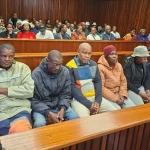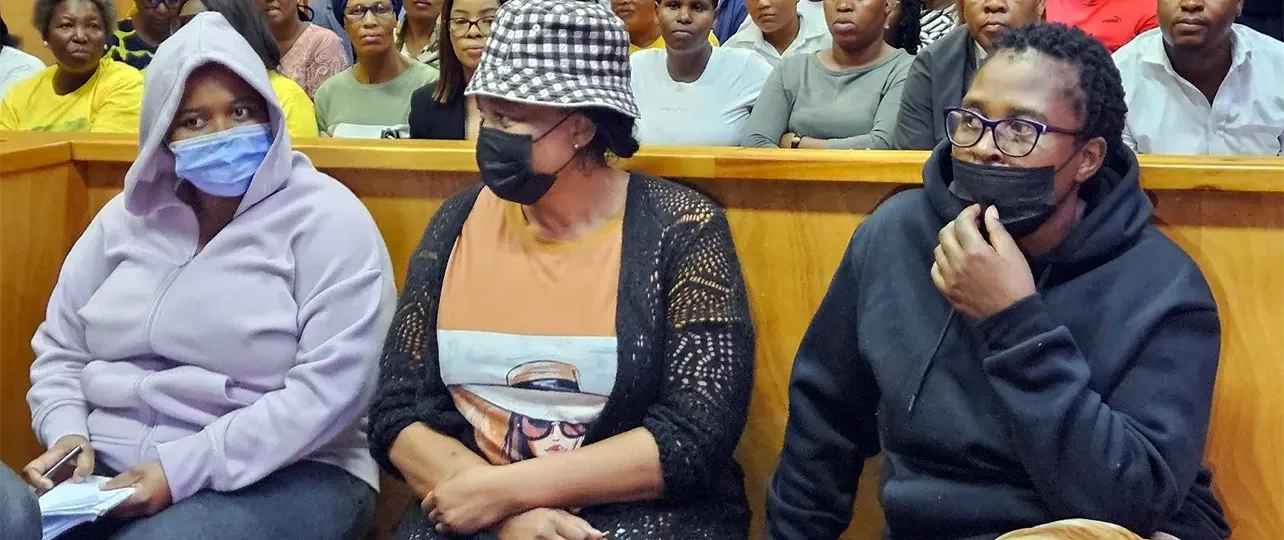

THE body of a disabled man found floating in a dam — a man who could not have walked there on his own — is reportedly what finally cracked open one of the most disturbing criminal conspiracies in post-apartheid South Africa.
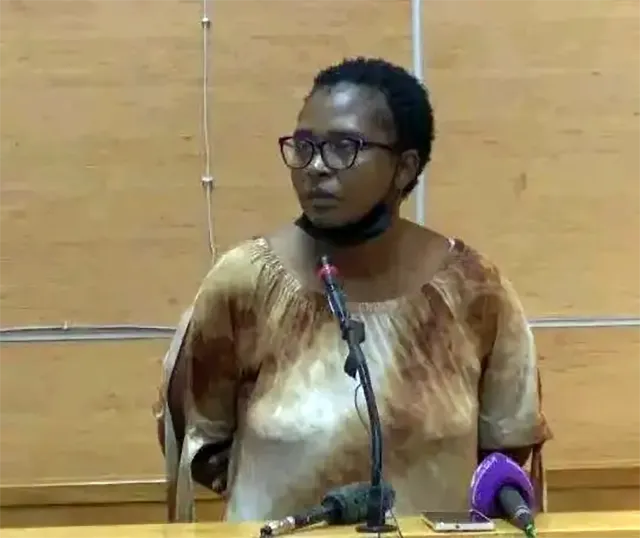
That grim discovery in 2024 led investigators to former South African Police Service (SAPS) sergeant Rachel Raesetsa Shokane-Kutumela, 43, who was arrested while in uniform at Senwabarwana Police Station in October of that year. What would unravel over the following 18 months is an alleged murder-for-insurance scheme so methodical, so intimate, and so relentless that police would ultimately describe it simply as an “evil family scheme.”
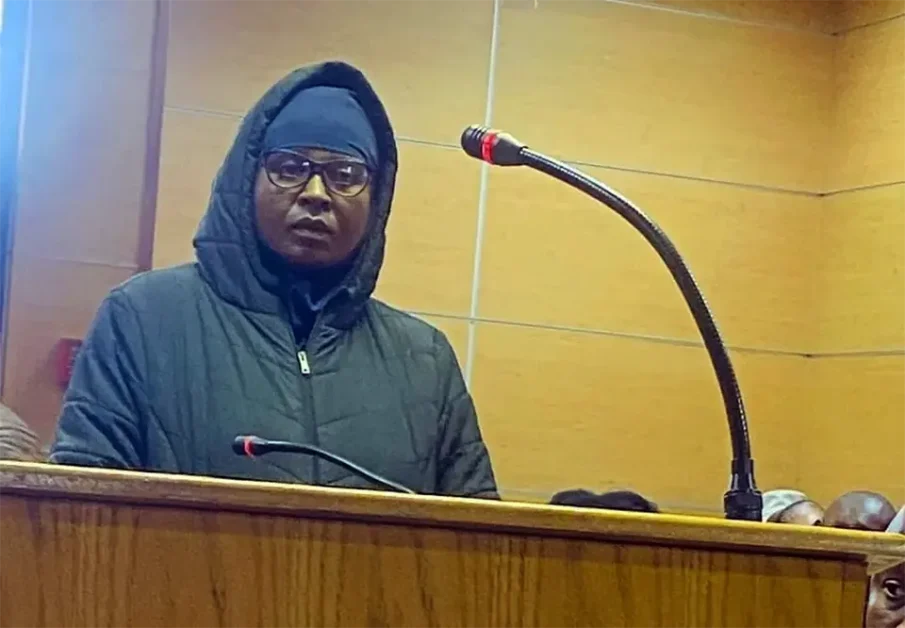
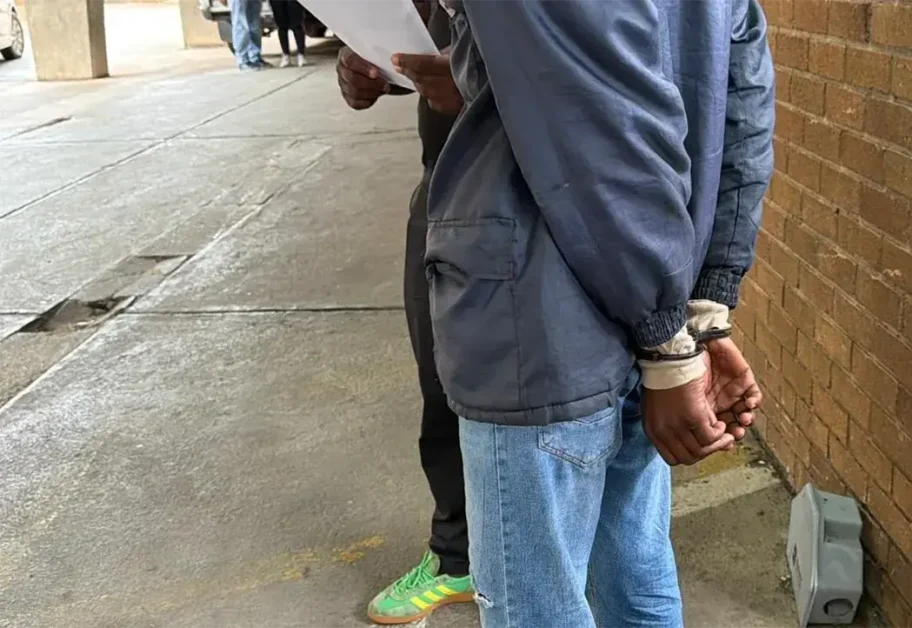
On Thursday, a 41-year-old man surrendered to the Polokwane police station, bringing the total number of suspects accused of participating in the R10-million insurance murder syndicate to eleven. He is expected to appear in the Polokwane Magistrate’s Court on Friday, facing charges that now include murder, fraud, money laundering, and receiving the proceeds of unlawful activities.
“In all the cases I have mentioned, Rachel was always the first person at the crime scene — in her police uniform.”
National Police Spokesperson Brigadier Athlenda Mathe
THE ARCHITECTURE OF AN ALLEGED KILLING MACHINE
Investigators allege that the scheme was no spontaneous enterprise. According to the South African Police Service, the syndicate “extensively researched” how to execute its plan — a killing spree that authorities say commenced as early as 2013 and continued through to 2024, claiming ten lives over more than a decade.
The method was coldly systematic. Policies were taken out — without the knowledge of those being insured — with major providers including ABSA, Standard Bank, Capitec, Hollard, Assupol, Old Mutual, One Life, and Clientele. Once the paperwork was in order, the alleged machinery of murder was set in motion. Victims died in ways deliberately designed to appear accidental or mysterious: two were burned, one was found dead in the street, one was found floating in a dam, one was killed when acid was poured on him, another was found burnt inside a vehicle, and another perished in a burning shack.
According to national police spokesperson Brigadier Athlenda Mathe, Rachel Kutumela was consistently first on the scene — wearing her SAPS uniform. This pattern, investigators say, was not coincidental. Her position within the police gave the syndicate critical intelligence: she knew how scenes were processed, what investigators looked for, and how to ensure deaths looked unremarkable on the margins of a country accustomed to violent fatality.
Mathe put it without diplomatic softening when she spoke outside Polokwane police station following last week’s arrests: “Some were disabled, and the suspects would earn their trust. They took out insurance policies on them, and later, they would be murdered. More than R10 million was paid out to Rachel and her accomplices.”
A FAMILY BUSINESS BUILT ON BLOOD
What makes the Kutumela case particularly unsettling is its domestic architecture. The eleven suspects are not a street gang or a criminal fraternity assembled for profit. They are, in the main, a family — bound by blood, by marriage, and, prosecutors allege, by conspiracy to commit murder.
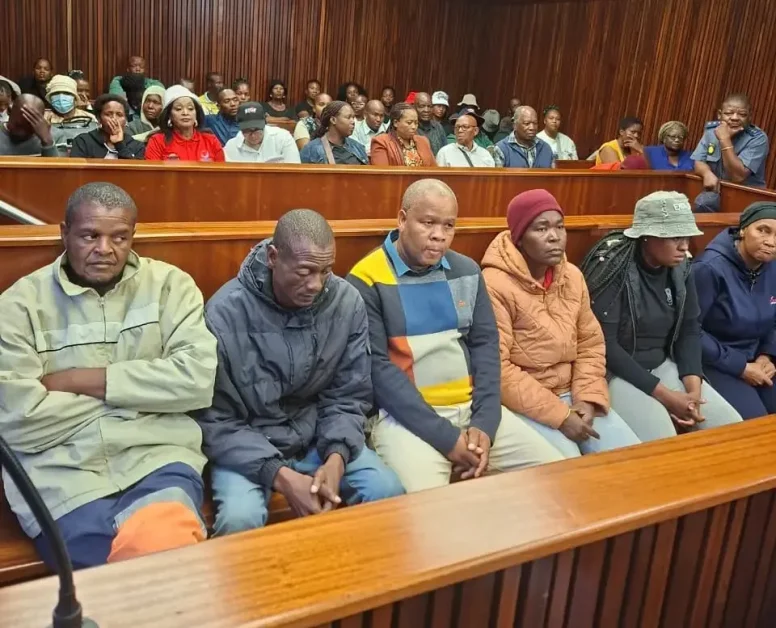
Kutumela’s husband, Mmakoena David Kutumela (52) — a school principal — was arrested at his school while on duty, mirroring the circumstances of his wife’s own arrest. Her two brothers, Masephe Thomas Shokane (50) and William Shokane (41), were arrested alongside their twin, Robert, who remains at large and is actively being sought by police. A fourth brother, Leshweng Johannes Shokane (53), was arrested in November 2025. Her sister, Annah Shokane (47), and daughter, Madjadji Flora Shokane (23), were arrested alongside Rachel in the initial 2024 sweep. A cousin, Masepe Damaris Selepe (38), a sister-in-law, Martha Iris Ruiters, and a sangoma, Mojeri Benedictor Mataba (38), round out the accused.
The victims, too, were largely drawn from within or around this family’s orbit. Among those allegedly killed are: Andrew Mokhabudi, Annah’s first husband and a former police officer (murdered 2013); a man Kutumela claimed as a husband, killed with a blunt object; Gordon Rasekoma, believed to be another of Kutumela’s husbands, burnt to death; Joyce Malesa, a community member from a destitute background whom Kutumela fraudulently claimed as an aunt, also burnt to death in her home; and Neville Kutumela, the mentally challenged younger brother of Rachel’s husband, killed and dumped by a roadside.
Rachel’s ex-boyfriend — the father of her daughter, Florah — is also among the alleged victims. Annah’s second ex-husband, a South African National Defence Force member, is believed to have been killed as well.
“It was an organised syndicate because they made sure their victims died under mysterious circumstances. Some were shot, some were hit by objects, some were poisoned.”
Brigadier Athlenda Mathe, SAPS National Spokesperson
The state alleges that between 2013 and 2022, Rachel and Annah fraudulently took out life and funeral insurance policies across multiple providers, making themselves and their accomplices beneficiaries — then systematically murdering those insured. Individual syndicate members would receive payouts, remitting the majority back to Rachel for distribution. The accused collectively face 47 charges.
THE 11TH SUSPECT AND A WIDENING NET
The surrender of the 41-year-old suspect on Thursday is the latest movement in a case that has been escalating in intensity through March 2026. On 10 March, Limpopo police executed seven arrest warrants simultaneously, netting Kutumela’s husband, two brothers, a cousin, and the sangoma in early morning raids across the Moletjie area outside Polokwane. A fifth suspect voluntarily surrendered at the police station on that same day. A sixth had been arrested in Sebokeng, Gauteng, on the preceding Monday.
The geographic spread of the operation — from Limpopo into Gauteng — has prompted investigators to caution that the scheme may not have been confined to a single province. Mathe confirmed that police are “not ruling out the possibility” that the syndicate’s reach extended beyond Limpopo, and that further investigations are ongoing.
With Robert Shokane still at large and the 47-charge case proceeding against ten accused, the Polokwane Magistrate’s Court and Polokwane High Court face a complex, multi-defendant prosecution. The trial of Kutumela, Annah Shokane, and Flora Shokane has been transferred to the High Court and is scheduled to commence on 5 October 2026. The six most recently arrested suspects return to court on 25 March for bail applications.
Importantly, the investigation was led by Captain Keshi Mabunda — the same detective who built the state’s case against Rosemary Ndlovu, South Africa’s most notorious insurance killer cop.
THE SHADOW OF ROSEMARY NDLOVU
When Rachel Kutumela’s name first surfaced in October 2024, the comparison was immediate and obvious. South Africans had seen this before — or thought they had.
Nomia Rosemary Ndlovu, a former constable stationed at Tembisa South police station in Gauteng, murdered her live-in partner and five relatives between 2012 and 2018. Her motive was identical: life and funeral insurance policies. She collected over R1.4 million in payouts across those years. Ndlovu’s killing spree was only halted when one of the hitmen she had hired to murder her sister and the sister’s five children, appalled by the inclusion of children, went to the police. An undercover operation then recorded Ndlovu instructing her supposed assassins in precise, graphic terms.
In November 2021, Judge Ramarumo Monama of the Gauteng High Court — sitting at Palm Ridge — handed down six concurrent life sentences for the murders, along with additional jail terms for fraud, incitement to murder, attempted murder, and defeating the ends of justice. Her application for leave to appeal was dismissed.
The Kutumela case, however, is significantly larger in every dimension. Where Ndlovu acted largely alone and killed six people, Kutumela allegedly commanded an eleven-person family syndicate that killed ten, extracted more than seven times the insurance revenue, and operated for over a decade with an active police officer at its centre. The same detective, Mabunda — now a captain — has been the pivot of both investigations, an unusual continuity that speaks to the specialist nature of insurance-murder investigation in South Africa.
“I don’t think they should be regarded as human beings, because I don’t think human beings can do such to other humans.”
Brigadier Athlenda Mathe, on the Kutumela syndicate
A SYSTEMIC INDICTMENT
Beyond the horror of individual victims — disabled people lured to their deaths, lovers and spouses targeted, the poor exploited precisely because their deaths were unlikely to attract scrutiny — the Kutumela case raises structural questions that South Africa cannot afford to defer.
The SAPS, already reeling from chronic institutional distrust, faces a compounded crisis when its serving members are alleged to be not merely corrupt or negligent, but actively murderous. Kutumela was dismissed from the service before her criminal case was concluded, a step police confirmed was warranted by the seriousness of the allegations. Yet for more than a decade, she allegedly operated within — and used — the uniform and authority of the state.
The insurance industry, too, faces questions about systemic gaps. R10 million in payouts across at least eight providers — ABSA, Standard Bank, Capitec, Hollard, Assupol, Old Mutual, One Life, and Clientele — suggests that no single provider detected the pattern of multiple claims by the same set of beneficiaries over a period of years. The cross-provider nature of the alleged fraud is precisely what allowed it to escape detection for so long.
Criminologist Lieutenant-Colonel Almerie Myburgh, who testified in the Ndlovu trial and characterised the accused as a serial murderer with “little to no chance of rehabilitation,” noted a personality profile that forensic investigators will likely revisit in the Kutumela prosecution: manipulation, an inability to accept consequences, and an exclusive focus on personal gain. The parallel profiles invite uncomfortable questions about whether South Africa’s pre-employment vetting and ongoing psychological monitoring of police officers are adequate to their task.
WHAT COMES NEXT
With the full syndicate now largely in custody — Robert Shokane, the notable remaining fugitive — attention shifts to the prosecution. The High Court trial set for October 2026 will be one of the most complex insurance-murder prosecutions in South African legal history, involving multiple accused, dozens of charges, and a decade of alleged criminal activity spanning numerous jurisdictions.
The state will need to establish not only the individual culpability of each accused across specific murders, but also the overarching conspiracy — demonstrating the syndicate operated as a coherent criminal enterprise under Kutumela’s alleged direction. The NPA has signalled confidence, with police noting that those arrested “have been positively linked to the murders because of the roles they played.”
For the families of the ten who died — spouses, children, neighbours from struggling communities in Limpopo — the court process will be long and painful. Several of them likely had no idea that the person they trusted had simultaneously taken out a policy on their lives.
Mathe’s assessment, delivered outside Polokwane police station with evident anger, may be the closest thing to moral clarity this case affords: “It was an evil family scheme.”
| CASE AT A GLANCE Accused mastermind: Rachel Raesetsa Shokane-Kutumela, 43, former SAPS sergeant, Senwabarwana Police Station Total suspects: 11 (10 in custody; 1 — Robert Shokane — at large) Alleged victims: 10 killed between 2013 and 2024 Insurance payouts: More than R10 million across ABSA, Standard Bank, Capitec, Hollard, Assupol, Old Mutual, One Life, Clientele Charges: 47, including 9 counts of murder, fraud, money laundering, receiving proceeds of unlawful activities High Court trial: 5–30 October 2026, Polokwane High Court (Kutumela, Annah Shokane, Flora Shokane) Lead investigator: Captain Keshi Mabunda — also the detective who secured the conviction of Rosemary Ndlovu |