IN a sweeping coordinated strike against cybercrime, authorities across 14 African countries have arrested 260 suspects and dismantled sophisticated criminal networks that exploited vulnerable victims through romance scams and sexual extortion schemes.
The unprecedented operation, dubbed “Contender 3.0,” ran from July 28 to August 11, 2025, targeting transnational criminal syndicates that weaponised social media and dating platforms to manipulate and defraud victims across continents. The crackdown resulted in the seizure of 1,235 electronic devices and the identification of 1,463 victims who lost nearly $2.8 million to these elaborate schemes.

Criminal Networks Exposed
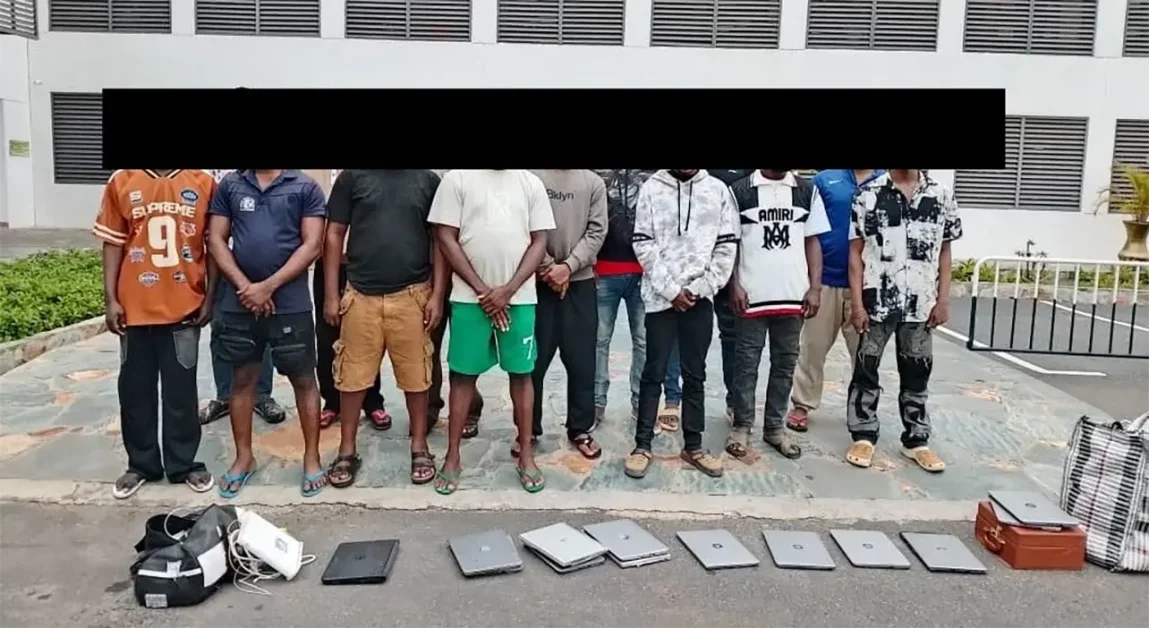
The investigation revealed the shocking scope of these operations. In Ghana alone, 68 individuals were arrested as authorities seized 835 devices and uncovered $450,000 in financial losses from 108 victims. The criminals had constructed elaborate fake identities, stealing photographs and creating false profiles to build romantic relationships that served as covers for their fraudulent activities.
These weren’t simple scams—they were sophisticated psychological operations. The perpetrators employed emotional manipulation, impersonated celebrities, and even created fake courier and customs fees to extract money from unsuspecting victims. In sextortion cases, criminals secretly record intimate videos during explicit online conversations, then use these recordings as weapons for blackmail.
International Web of Deception
The criminal networks spanned continents, with operations uncovered across Angola, Benin, Burkina Faso, Côte d’Ivoire, Gambia, Ghana, Guinea, Kenya, Nigeria, Rwanda, Senegal, South Africa, Uganda, and Zambia. In Senegal, police arrested 22 suspects who had defrauded 120 victims of approximately $34,000 by impersonating celebrities and exploiting emotions on dating platforms.
Côte d’Ivoire authorities dismantled a particularly insidious network that created fake profiles to manipulate vulnerable individuals into sharing intimate images, then blackmailed 809 victims with public exposure. The operation led to 24 arrests and the seizure of 29 devices.

Digital Evidence Trail
The coordinated effort went beyond arrests. Investigators identified and took down 81 cybercrime infrastructures across Africa, seizing USB drives, SIM cards, and forged documents that revealed the intricate web of these criminal enterprises. The collaboration with private sector partners Group-IB and Trend Micro enhanced data sharing capabilities, allowing authorities to trace IP addresses, digital infrastructures, domains, and social media profiles linked to the criminal syndicates.
Growing Threat Landscape
The operation comes as INTERPOL reports a sharp rise in digital-enabled crimes across Africa. According to the organisation’s 2025 Africa Cyberthreat Assessment Report, two-thirds of surveyed African member countries reported that cyber-related offences now constitute a medium-to-high proportion of all crimes.
“The growth of online platforms has opened new opportunities for criminal networks to exploit victims, causing both financial loss and psychological harm,” said Cyril Gout, Acting Executive Director of Police Services at INTERPOL. “By working closely with our member countries and private sector partners, we remain committed to disrupting and dismantling the groups that prey on vulnerable individuals online.”
International Cooperation Success
Operation Contender 3.0, funded by the United Kingdom’s Foreign, Commonwealth and Development Office under the African Joint Operation against Cybercrime project, demonstrates the power of international coordination in combating transnational crime. The swift exchange of INTERPOL cyber activity reports enabled participating countries to take immediate enforcement action, highlighting how global cooperation can effectively counter criminal networks that operate without borders.
The operation serves as both a victory against organised cybercrime and a stark reminder of the sophisticated threats facing internet users worldwide. As these criminal networks continue to evolve their tactics, the international law enforcement community’s coordinated response represents a crucial step in protecting vulnerable individuals from digital predators.