THE whistle sounded at Puskas Arena and Paris Saint-Germain’s players erupted. They had beaten Arsenal on penalties, 4-3 in a shootout that followed a 1-1 draw after extra time, to become the first repeat Champions League champions since Real Madrid swept three consecutive titles between 2016 and 2018. Luis Enrique’s side was brilliant, dramatic, and worthy. But as the confetti fell on the Danube, another winner was already quietly counting its returns: the Republic of Rwanda.
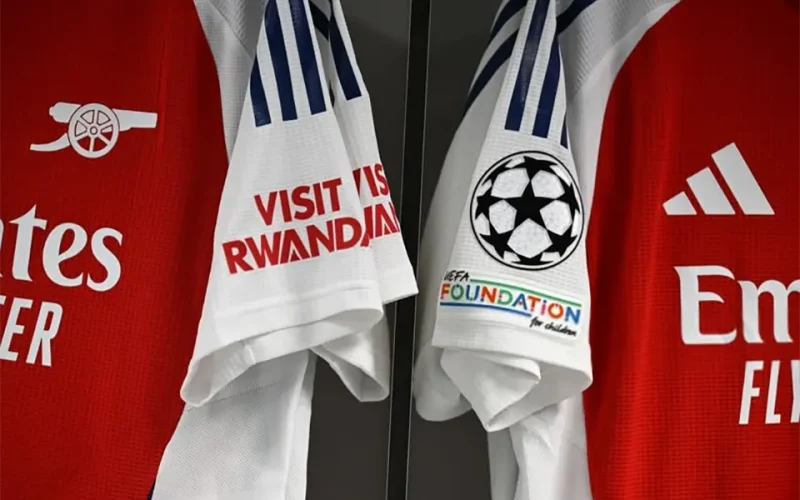
On every PSG shirt. On every Arsenal shirt. Sewn onto the left sleeve of every player who kicked, headed, dove, wept and celebrated in that electric stadium – the words: “Visit Rwanda”. For the first time in the history of the UEFA Champions League, both finalists were carrying the tourism brand of the same African nation. It was the culmination of one of the most audacious nation-branding strategies in modern sport, and by multiple measures, it has worked.
A DECADE OF DELIBERATE VISIBILITY
Rwanda’s sports marketing offensive began in 2018 when the Rwanda Development Board (RDB) signed a sleeve sponsorship deal with Arsenal – the first time in history a European top-flight club had carried a destination brand on its kit. The move was bold, unconventional, and, to some, bewildering. Why would a small landlocked East African country spend more than $13 million a year to put its name on the shirt of an English football club?
The answer, as Kigali saw it, was scale. Arsenal alone commanded a global fanbase of hundreds of millions, with matches broadcast to more than 200 territories. The Visit Rwanda logo would reach audiences that no conventional tourism advertising budget could ever access. Paris Saint-Germain and Bayern Munich followed Arsenal into the programme. Later, Atletico de Madrid signed a three-year partnership running until 2028. At the peak of the campaign, the Visit Rwanda brand was simultaneously visible on four of the most-watched clubs in world football.
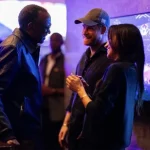
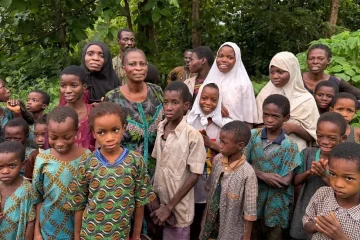
The strategy was not merely about passive visibility. Rwanda paired the shirt deals with coordinated content campaigns across club social media channels, player visits to Rwanda for gorilla-naming ceremonies and heritage events, grassroots football coaching programmes, and a simultaneous domestic push to build the infrastructure – hotels, lodges, airports, conservation areas – that could actually receive the tourists the branding was meant to attract.
THE BUDAPEST MOMENT: SCALE OF THE FINAL’S GLOBAL AUDIENCE
The Champions League is the world’s most-watched annual club football competition. Its group and knockout rounds routinely draw cumulative weekly global audiences in the low hundreds of millions across linear television and digital streaming platforms, with Arsenal, PSG, and Bayern consistently generating the largest shares of those audiences.
The final is its own order of magnitude. UEFA’s own estimates place a typical final’s live average audience at between 84 million and 184 million viewers, with total reach – including those who watched portions of the broadcast, highlights and streaming clips – stretching toward and beyond 450 million. The 2023/24 final between Real Madrid and Borussia Dortmund at Wembley drew an estimated global viewership of 145 million, according to UEFA’s post-match measurement. The 2014 Real Madrid versus Atletico final set the all-time average audience record at 184 million.
The 2026 final was different from all of them in one critical respect. For the first time in the competition’s seven-decade history, the two clubs contesting the final were both simultaneously carrying the branding of a single nation-state sponsor. Every cutaway to a player’s shirt. Every slow-motion replay of a saved penalty. Every close-up of Gianluigi Donnarumma’s match-winning stop. Every one of those images, broadcast live to scores of countries and recycled through hundreds of millions of social media impressions in the hours and days that followed, carried the three words: Visit Rwanda.
Industry audience measurement for the Budapest final had not been published at the time of writing, but pre-match estimates described a global audience running into the hundreds of millions. Historical benchmarks suggest the combination of PSG’s defending champion status, Arsenal’s first final since 2006, and the all-but-unique dual branding narrative would attract viewership at or above recent finals, placing the Visit Rwanda logo in front of what experts describe as one of the largest single-event television audiences of the year.
THE NUMBERS RWANDA POINTS TO
Rwanda’s return-on-investment claims rest on a set of headline tourism figures that, while largely drawn from government and RDB sources, represent a compelling and sustained trajectory over eight years.
| INDICATOR | FIGURE |
| Tourism revenue (2025) | ~$685 million |
| International arrivals (2025) | ~1.5 million |
| Tourism-related jobs | ~386,000 |
| Tourism share of GDP (2025) | ~10% |
| Revenue increase since 2018 Arsenal deal | +47% |
| Arsenal sleeve deal value (annual) | >$13.3 million |
| UCL Final global viewership (2023/24 — UEFA est.) | 145 million |
| UCL final all-time average audience record (2014) | 184 million |
The figures cited by the RDB in its joint statement with Arsenal in November 2025 -when the two parties announced they would conclude their eight-year partnership at the close of the 2025/26 season – described tourism revenues of $650 million in 2024, representing a 47 percent increase since the partnership launched in 2018. The government’s more recent figures for 2025 cite revenues approaching $685 million, roughly 1.5 million international visitors, and approximately 386,000 tourism-related jobs. Tourism’s share of GDP is reported to have approached 10 percent.
RDB Chief Executive Jean-Guy Afrika was unequivocal. The Arsenal deal, he said, “broke new ground for tourism boards around the world, driving awareness and visitation for Rwandan tourism at a pace traditional campaigns could never match.” Arsenal CEO Richard Garlick described the eight-year partnership as a win for both parties, noting that it raised “global awareness of Rwanda’s tourism and conservation efforts” while building “new connections with supporters across Africa.”
Among the tangible spillovers officials cite: increased direct flight routes to Kigali, higher hotel occupancy rates, new hotel construction financed by foreign investors, expanded conservation investment, and a steady rise in high-value tourism products — gorilla trekking, luxury lodges, and international conferencing. Officials also note that in 2023 alone, Rwanda recorded an 18 percent year-on-year increase in tourist arrivals from the United Kingdom, the home market of Arsenal.
THE STRATEGIC PIVOT: FROM LONDON TO LOS ANGELES
Paradoxically, Rwanda announced the end of its Arsenal deal even as the club was completing what would prove to be its greatest Champions League season in two decades. The explanation illuminates just how data-driven Kigali’s approach to sport marketing has become.
By mid-2024, North American visitors were generating $51.1 million in tourism revenue – 75 percent more than Europe, including the United Kingdom. By mid-2025, that gap had widened to 93 percent. The United States had become Rwanda’s most valuable single tourism market, and the government made a strategic decision to redirect its marketing spend accordingly.
The RDB announced new sponsorships with the Los Angeles Rams NFL franchise and SoFi Stadium, targeting the American market directly. The PSG deal was extended until 2028. The Atletico de Madrid partnership was confirmed for three years. The Arsenal relationship, having served its purpose in opening European markets and building the foundational brand architecture, was concluded with mutual respect and publicly shared data.
THE CRITICS: COST, CAUSATION AND CONTROVERSY
Rwanda’s sports marketing campaign has not been without sustained criticism, and the most credible objections deserve serious consideration.
The cost question is the most straightforward. The Arsenal deal alone was valued at over $13.3 million per year – a figure that opposition politicians and civil society organisations in Rwanda regularly cited as an opportunity cost against public spending on health, education and rural development. Exact contract values for the PSG, Bayern Munich and Atletico deals have not been fully disclosed, but reported figures place the multiyear portfolio in the tens of millions of dollars.
The attribution challenge is more analytically complex. Tourism arrivals and revenues rose sharply over the partnership period – but separating the marginal contribution of football sponsorship from the simultaneous effects of new airline routes, global travel recovery post-pandemic, improvements in Rwanda’s domestic safety and service quality, competitive pricing, and broader African tourism growth is methodologically difficult. Independent analysts have consistently called for transparent, third-party evaluations that measure incremental visitors and investment directly attributable to the club deals, rather than aggregate figures that bundle together multiple drivers.
The political controversy was the sharpest and most consequential. In February 2026, the Democratic Republic of Congo appealed directly to Arsenal, PSG, and Bayern Munich to end their so-called blood-stained deals with Visit Rwanda, amid the escalating humanitarian crisis in eastern DRC and international accusations that Kigali was providing support to M23 rebel forces. Human rights organisations amplified the appeal. The clubs, for their part, did not terminate their deals before their contractually scheduled conclusions.
The controversy casts a long shadow over how Visit Rwanda’s return on investment should be understood. The nation-branding exercise undoubtedly succeeded in raising Rwanda’s profile in high-income tourism markets. Whether that visibility was worth the political costs is a question that sits beyond the reach of tourism statistics alone.
A NATION-BRANDING MASTERCLASS – WITH CAVEATS
Independent analysts who have followed the campaign describe it as a genuine case study in what sports marketing can achieve for a small country with limited conventional resources. Dr Guy Karema, a Rwandan commentator who has written extensively on nation-branding, described the strategy as a nation-branding masterclass, arguing that Rwanda managed to convert branding into genuine economic growth. He acknowledged the criticisms over cost and sustainability but maintained that the tourism data trajectory vindicates the original investment thesis.
The caveats from independent tourism economists are consistent: a rigorous independent cost-benefit analysis — separating the sponsorship effect from other variables, applying conservative attribution rates, and accounting for the full cost of the programme — has never been publicly released. Rwanda’s government has all the data. The question is whether it will subject that data to the kind of transparent, third-party scrutiny that would transform a compelling narrative into a verified case study.
Audience measurement for the Champions League final should also be interpreted with care. Headline global numbers aggregate live viewers, delayed viewers, streaming audiences and those watching in public venues. They vary by source and methodology. The number of unique human beings who saw the Visit Rwanda logo in the Budapest final is unknowable with precision. What is certain is that no equivalent media buy in print, digital or conventional broadcast could have delivered remotely comparable reach for the same investment.
WHAT THIS MEANS FOR AFRICA
Rwanda’s campaign provides the continent’s most high-profile and data-rich case study in sports marketing as soft power. The lesson it offers for other African states is not simply that sports sponsorship works – it is that sports sponsorship at sufficient scale, paired with credible domestic investment in the product being advertised, can work.
The model has limits. Small countries with limited foreign exchange reserves cannot all simultaneously sponsor Arsenal, PSG, and Bayern Munich. The market for destination branding on elite European club shirts is finite, and Rwanda itself has demonstrated that the strategy’s shelf life is determined by where your tourist revenues actually come from – not by brand sentiment.
The deeper lesson may be this: Rwanda understood that for a country the world associated primarily with genocide, the challenge was not information – the world already had information – but association. By placing its name alongside the glamour, excitement and global belonging of elite football, Kigali systematically rebuilt the emotional context in which the name Rwanda was encountered by billions of people. That is what nation-branding means at its most fundamental level. And it is why, on a Saturday night in Budapest, while hundreds of millions watched PSG and Arsenal play out a Champions League final for the ages, a small country in the heart of Africa was quietly, triumphantly, everywhere.