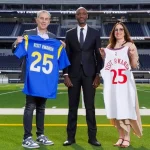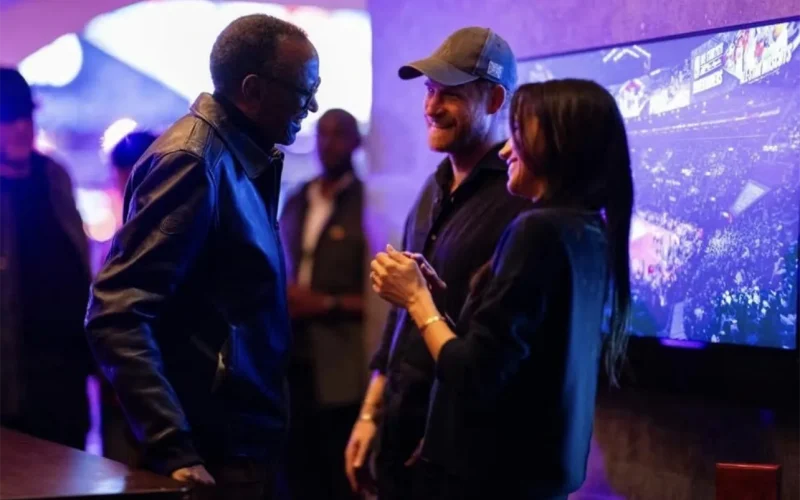
WHILE most heads of state spend their weekends navigating diplomatic corridors or presiding over state functions, President Paul Kagame was courtside at the Intuit Dome in Los Angeles this past weekend, watching LeBron James and the NBA’s finest at the 2026 All-Star Game. It wasn’t a vacation. It was business – the business of rebranding a nation through the universal language of sport.
The image is striking: the leader of a landlocked East African nation of 13 million people, sitting among Hollywood celebrities and Silicon Valley billionaires, discussing partnerships with LA Clippers owner Steve Ballmer and NBA Commissioner Adam Silver. But for those tracking Kagame’s systematic, almost obsessive campaign to position Rwanda as Africa’s premier sports destination, his presence in Los Angeles was entirely predictable—and entirely strategic.
From Genocide to Global Stages
Thirty years after the 1994 genocide that claimed an estimated 800,000 lives and left Rwanda synonymous with tragedy, Kagame is orchestrating one of the most ambitious nation-branding exercises in modern African history. His weapon of choice? Not minerals or manufacturing, but the magnetic power of global sports.
The evidence is everywhere—and impossible to ignore. Turn on a Premier League match featuring Arsenal or Paris Saint-Germain, and there it is: “Visit Rwanda” emblazoned across jerseys and LED boards, beaming into living rooms from London to Lagos, São Paulo to Sydney. The sponsorship deals—reportedly worth millions annually—have generated controversy over cost-effectiveness, but Kagame has never flinched. The return on investment, he argues, isn’t measured merely in tourist arrivals but in perception transformation.
“Rwanda understands what many African nations have yet to grasp,” says sports marketing analyst David Mukasa. “In the 21st century, a country’s brand is its competitive advantage. Sports is the fastest vehicle to global visibility.”
The Formula One Obsession
Kagame’s most audacious target remains Formula One. For years, he has pursued the sport’s glitterati with the determination of a prosecutor building a case. In December 2024, that persistence paid spectacular dividends when Kigali hosted the FIA Prize Giving Ceremony—the first time the motorsport world’s equivalent of the Oscars took place on African soil.
Max Verstappen, fresh from securing his championship crown, walked Kigali’s red carpets. Lewis Hamilton mingled at receptions. Team principals who had never set foot in East Africa suddenly found themselves praising Rwanda’s infrastructure, safety, and ambition. The message was clear: if Rwanda can host F1’s most prestigious gala, it can host a Grand Prix.
The technical hurdles remain formidable—building a circuit that meets F1’s exacting standards, negotiating the sport’s notoriously complex commercial agreements, and competing against established venues from Singapore to Saudi Arabia. But betting against Kagame’s ability to will a Formula One race into existence would be unwise. He has form.
Basketball’s African Home
While the F1 dream simmers, basketball has already arrived. Kigali is now the de facto capital of African basketball, home to the Basketball Africa League (BAL)—a joint venture between the NBA and FIBA that Kagame championed from inception.
The numbers tell the story: Rwanda has hosted BAL games consistently since the league’s 2021 launch. This May, Kigali will stage the entire BAL Finals—a full week of playoffs from May 22-31, 2026—at the 10,000-seat BK Arena, a gleaming facility that wouldn’t look out of place in Miami or Melbourne.
Kagame’s trip to the NBA All-Star Game wasn’t mere spectatorship—it was diplomacy with a bounce pass. His meetings with Adam Silver and Steve Ballmer cemented partnerships, including the Clippers’ sponsorship deal with Visit Rwanda, launched in 2025. Insiders whisper about future possibilities: NBA Africa expansion games, pre-season training camps in Kigali, perhaps even an Africa All-Star Game to mirror the continent’s rising basketball profile.
“President Kagame doesn’t just attend these events,” notes a Western diplomat based in Kigali, speaking on condition of anonymity. “He works them. He understands that relationships built over shared passion for sport can unlock doors that traditional diplomacy cannot.”
The Economic Equation
Critics question the economics. Rwanda remains one of the world’s poorest countries by GDP per capita, heavily dependent on foreign aid. Spending scarce resources on Arsenal sponsorships and Formula One courting strikes some observers—particularly donor nations—as misplaced priorities when rural infrastructure and healthcare demand investment.
Kagame has consistently rejected this framing. Tourism has become Rwanda’s leading foreign exchange earner, surpassing tea and coffee. International visitor arrivals have risen dramatically, driven partly by sports visibility but also by Rwanda’s reputation for safety, cleanliness, and efficiency—attributes reinforced by every glossy sports broadcast featuring Kigali.
“People who criticise the sports investments don’t understand modern economics,” argues Olivier Mugabo, an economist at the Kigali School of Economics. “A tourist who comes for gorilla trekking might book hotels, hire guides, eat at restaurants, buy crafts—multiplying their economic impact far beyond what aid delivers. Sports is the billboard that brings them here.”
The gorilla connection is crucial. Rwanda’s mountain gorilla conservation efforts—another Kagame priority—have become internationally renowned. Sports sponsorships amplify awareness of Rwanda as a tourism destination, funnelling visitors toward the country’s genuine natural treasures.
The Kagame Method
What distinguishes Rwanda’s approach is its systematic, top-down execution—a reflection of Kagame’s governance style more broadly. Where other African nations have dabbled in sports sponsorships or hosted one-off events, Rwanda has pursued a comprehensive, sustained strategy with presidential-level commitment.
When the FIA Prize Giving Ceremony came to Kigali, it wasn’t improvised. The city sparkled. Logistics ran smoothly. Security was seamless. Visiting journalists and officials departed impressed not just by the event but by Rwanda’s capacity—a narrative Kagame deliberately cultivates.
“Kagame sees sports as proof of concept,” explains a regional analyst. “Every successful event becomes evidence that Rwanda can compete with anyone, host anything, and deliver world-class experiences. It’s soft power with measurable metrics.”
The Continental Context
Rwanda’s sports ambitions unfold against a broader African backdrop where sports infrastructure and investment have historically lagged behind other continents. South Africa’s hosting of the 2010 FIFA World Cup remains Africa’s singular mega-event success story, but it proved difficult to replicate elsewhere due to cost and complexity.
Kagame is charting a different path—smaller, more frequent, commercially sustainable events that build brand recognition incrementally. BAL games, cycling’s Tour du Rwanda (sponsored by the UCI), the FIA ceremony, beach volleyball championships, cricket tournaments—a mosaic of sporting occasions that cumulatively position Rwanda at sport’s African vanguard.
Other nations are watching. Kenya, Nigeria, and Ghana have ramped up sports marketing efforts, but none with Rwanda’s presidential-level commitment or integrated strategy. Morocco’s successful 2030 World Cup bid (shared with Spain and Portugal) represents a different scale of ambition, but Rwanda’s model may prove more replicable for smaller economies.
Risks and Realities
The strategy carries risks. Sports sponsorships deliver visibility but don’t automatically translate to development outcomes. If tourism revenues plateau or global economic conditions shift, scrutiny of Rwanda’s sports spending will intensify.
Human rights organisations have criticised Western brands partnering with Rwanda, given concerns about political freedoms and Kagame’s authoritarian tendencies. Arsenal and PSG have faced protests from Rwandan dissidents who view the sponsorships as sportswashing—using sport to obscure political repression. Kagame dismisses such criticism as the agenda of hostile actors seeking to undermine Rwanda’s progress.
There’s also the question of succession and sustainability. At 68, Kagame has dominated Rwandan politics for three decades. If the sports strategy is fundamentally a presidential vanity project rather than an institutional policy, its future beyond Kagame’s tenure remains uncertain.
The Verdict: Walking the Walk
Whatever one’s political assessment of Kagame’s governance, his commitment to sports-driven development is undeniable. He doesn’t merely announce initiatives—he attends NBA All-Star Games, greets Formula One champions, and personally cultivates relationships with sports powerbrokers. He is Rwanda’s chief marketer, closer, and salesman, deploying his presidential platform to secure deals other officials couldn’t access.
The results speak volumes. A decade ago, few global sports executives could locate Rwanda on a map. Today, it’s a recognised player in international sports commerce, hosting major events and partnering with elite brands. Whether this translates to broad-based economic transformation or remains primarily a branding exercise, only time will reveal.
But as Kagame himself might argue, perception shapes reality. If the world sees Rwanda as safe, efficient, and capable—qualities reinforced by every smoothly executed sporting event—investors, tourists, and opportunities follow.
The president, who spent his weekend courtside in Los Angeles, isn’t gambling on sports. He’s calculated that in the attention economy, visibility equals viability. And right now, few African nations are more visible on the global sports stage than tiny Rwanda.
The race for Africa’s sports crown is on. Kagame intends to win it.