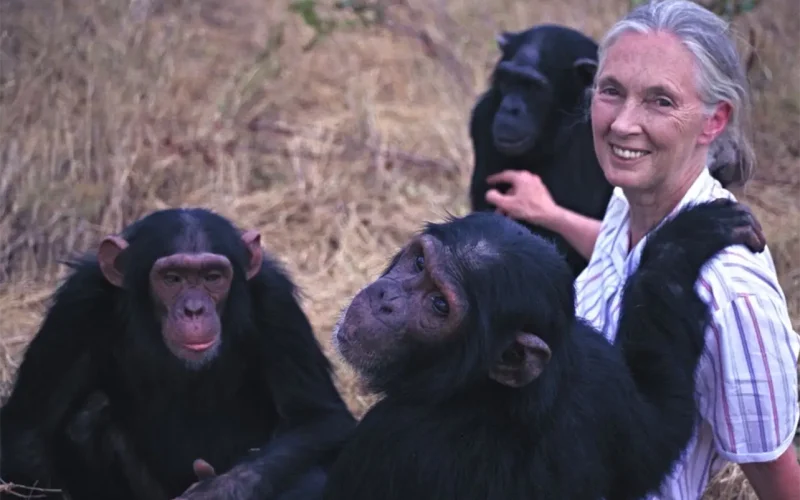
JANE Goodall, one of the most renowned woman scientists in the world, died at age 91 in Los Angeles, her namesake institute announced in a statement on Wednesday.
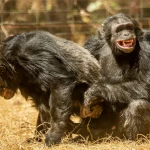
Goodall became famous for her work studying the behaviours of chimpanzees, capturing the attention of institutions like the National Geographic Society, which funded her research and featured an iconic cover image of Goodall observing a group of chimpanzees in the jungle. She would go on to earn a PhD despite never having received a bachelor’s degree.
It was a childhood dream fulfilled. As she told Time in 2018: “When I was a little girl, I used to dream as a man, because I wanted to do things that women didn’t do back then, such as travelling to Africa, living with wild animals and writing books.”
She had moved from London to Tanzania at age 26, initially working with paleoanthropologist Louis Leakey as a secretary. In 1960, he sent her to work at the Gombe Stream National Park to observe the chimpanzees. Her research revealed how the primates raised their young, established hierarchy in their familial groups and used tools — which up until that point scientists believed were exclusive to humans.
By 1977, Goodall had established the Jane Goodall Institute to promote conservation of the species and its habitats. Up until her death, she continued to uplift conservation work and became involved in the fight against climate change.
She became a role model for other women and girls who hoped to enter the field. As she told CBS News, “Since young girls began reading about my early life and my career with the chimps, many, many, many of them have told me that they went into conservation or animal behaviour because of me.” But she wasn’t the only one to break into that field at that time. Dian Fossey started studying gorillas in Rwanda in 1967, and Biruté Galdikas researched orangutans in Borneo.
Her groundbreaking findings did not buffer Goodall from the sexism of the time. She wrote in the piece for Time that “the media produced some rather sensational articles, emphasising my blond hair and referring to my legs.”
In that same article, she wrote that while she’s been described as a feminist role model, she never considered herself that way. “Although the feminist movement today is different, many women who have succeeded have done so by emphasising their masculine characteristics. But we need feminine qualities to be both accepted and respected.”