AFRICA Energy Week, the platform where governments and big business come together to discuss the pertinent agenda of electrification, industrialisation, and development for the continent, is currently underway in Cape Town. A few weeks ago, African leaders gathered in Addis Ababa for the Second Africa Climate Summit in September, and a bold and troubling idea is gaining momentum: the creation of an “African Energy Bank.” This idea is being fronted as a homegrown financing solution for the continent’s energy needs.
Last year in September, the AEB was inaugurated. There were hopes that the bank would be launched in the first quarter of 2025, and now, as the year draws to an end, nothing concrete has been said about the commencement of services, as was expected to be announced this week.. While some early announcements pointed to operations beginning as early as June 2025, this did not materialise, and a January 28, 2025, launch date was also cited by Nigeria’s Petroleum Ministry, though it was not confirmed. Most recently, APPO has indicated that the official launch date will be finalised at its next Council of Ministers meeting, and Afreximbank has outlined a roadmap for key preparatory steps, including a general meeting by September 18, 2025, with a formal launch on or before September 30, 2025.
In the current global political climate, where financing the energy transition is an imperative, as part of the African Union’s Agenda 2063 to prioritise an energy transition for sustainable development and inclusive growth, the African Energy Bank is a Trojan horse.
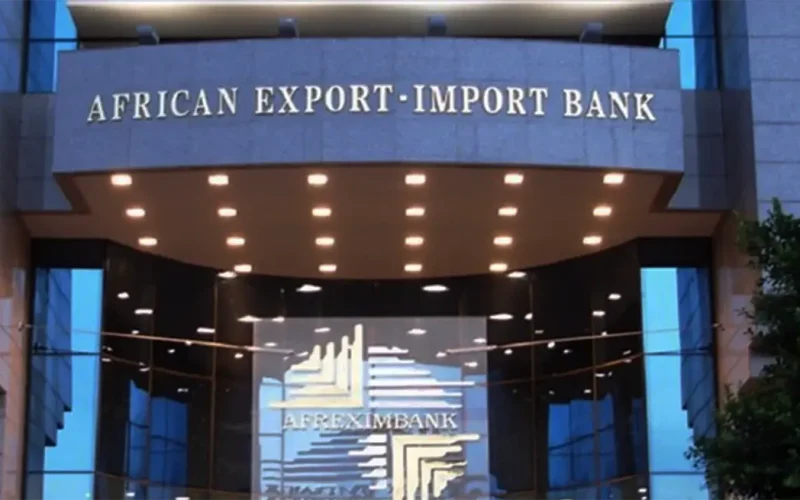
Beneath the rhetoric lies a far more dangerous reality. Such a bank, especially if shaped and funded in the image of existing lenders like the African Export-Import Bank (AFREXIM), risks locking Africa into a new cycle of debt, dependency and fossil fuel entrenchment.
AFREXIM’s record offers a cautionary tale. While it has championed green industrialisation in speeches, its lending patterns tell a different story. In 2023 alone, it channelled over $5.2 billion, nearly a fifth of its total loan portfolio, to oil and gas projects, outstripping its support for power generation, health, or agriculture.
This is not the financing blueprint of a climate-resilient future. In truth, it is to deepen the same extractive, carbon-heavy pathways that the continent should be moving away from.
Debt over Development
It is important to note that the risk is beyond environmental consideration, but also includes fiscal vulnerabilities. Debt service now consumes almost 14% of government budgets, double what is spent on health. External borrowing is rising, and aid flows are collapsing. Even more worryingly, climate finance accounts for less than 3% of Africa’s needs and mostly comes as debt.
An energy bank modelled on traditional capital-raising and debt-lending mechanisms will simply compound liabilities to already overstretched treasuries, all while handing creditors greater sway over national policy. This is precisely one of the structural traps that the continent must avoid.
Financing that prioritises debt over grants or concessional terms, and one that is concentrated in a few politically favoured countries, undermines equity, justice, and ultimately, a just transition.
Worse, if this energy bank prioritises fossil fuel projects, it will divert scarce capital away from Africa’s vast, untapped renewable potential. Today, less than 1% of this potential has been realised, despite the abundance of solar, wind, and geothermal power on the continent.
The illusion of sovereignty
The Africa Energy Bank claims it will boost Africa’s energy supply. The reality is, unless it is fundamentally reimagined and transformative in design, it will replicate the old logic of extraction, both of natural resources and of financial rents.
The political capital being invested in this institution could instead be channelled into scaling up community-based renewable projects, reforming tax regimes to plug illicit financial flows, and leveraging Africa’s mineral wealth for local benefit rather than export-only exploitation.
If the bank’s capital is raised primarily through international markets, its governance shaped by existing large shareholders like AFREXIM’s biggest state owners, and its loan book dominated by fossil fuel megaprojects, then the rhetoric of sovereignty would be hollow.
The result would be an institution bound by and trapped to the same forces that have long constrained Africa’s fiscal policy space, including global capital markets, commodity cycles and political patronage.
The path forward
As we look ahead to the Africa Climate Summit in Ethiopia, it must be a moment of clarity, not capitulation. African leaders have the chance to establish a common position to demand a financing architecture rooted in dignity and distributive justice, one that blends grants and local-currency financing. This financing model must treat Africa’s climate and energy transition as a public good, not just a private investment opportunity.
Africa’s path to energy sovereignty will be determined not only by how much capital it mobilises, but by the quality, purpose, and governance of that capital. An energy bank built on old rules will only deepen old problems. In Addis Ababa, we must have the courage to say ‘no’ to shortsighted and dangerous solutions.
This is not about rejecting the idea of African-owned financial institutions, far from it. It is about designing them to serve Africa’s long-term development agenda rather than short-term fossil fuel rents and the preferences of creditors.
The stakes are high. Africa must demand nothing less than its energy sovereignty, a secure climate future and economic independence.
- Bhekumuzi Dean Bhebhe is a PhD candidate at the University of the Witwatersrand and a 2018 Mandela Rhodes Scholar, with several years of experience designing and leading campaign strategies across Africa. In recognition of his work, he was named the 2025 Silver Award Winner of the Warrior for Good Award in the Climate Action and Environmental Conservation category. He is currently the Senior Advisor on Just Transitions at Power Shift Africa.