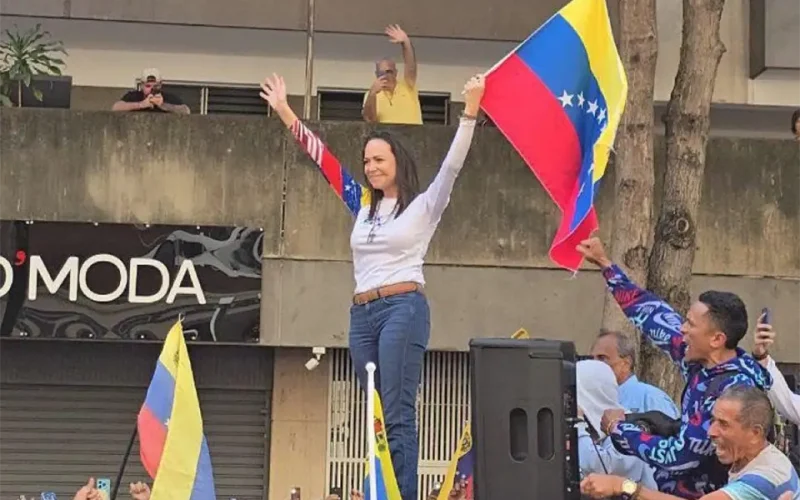
IN 2025, United States President Donald Trump made a concerted and high-profile push for the award to cement his dubious legacy. Although many people found his demands for the award laughable, there is precedent for politics overstepping the reality of an individual’s contribution.
U.S. President Barack Obama received the 2009 Nobel Peace Prize for “extraordinary efforts to strengthen international diplomacy and co-operation between peoples.” But in reality, Obama had accomplished little to justify the award at that point of his political career just a year into his historic presidency.
Instead, the best justification that the committee chairman could offer was “we want to embrace the message that he stands for.”
In the case of Machado, the Nobel Committee chose to endorse both a message as well as actions.
Declining democracy in Venezuela
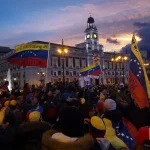
Democratic rights in Venezuela have declined significantly over the last two decades. Initially, people greeted the election of Hugo Chávez in 1998 as a significant break from the corruption and economic crisis that defined Venezuelan politics in the 1990s. They were wrong.
Once Chávez rose to power, his regime became increasingly authoritarian over time. The complete pivot to authoritarianism in Venezuela, however, happened after Chavez’s death under his successor, Nicolás Maduro, who assumed the presidency in 2013.
By 2016, outside observers argued that Maduro’s efforts to centralize power for himself constituted a “full-on dictatorship.” Despite several nominal elections since that time, Maduro has used a variety of tactics in order to guarantee he and his regime remain in power.
The Maduro regime’s tactics range from digital censorship to threats in the face of protests and outright violence. The people of Venezuela, in short, are far from free.
A champion for democracy
The tactics used by Maduro’s government to suppress the opposition means it requires considerable personal bravery and integrity to challenge the regime. Machado possesses such traits.
She’s faced considerable threats to her life throughout her political career. Starting in 2011, Machado was physically attacked by Chavez supporters. These attacks have escalated since Maduro assumed power.
While many of her fellow politicians have fled the country fearing such threats of violence, Machado has remained in the country and become a symbol of defiance and democracy for the opposition. Even though her centre-right views are not in alignment with much of the Venezuelan opposition’s political stances, she was nevertheless chosen to be the unity candidate in the 2024 Venezuelan presidential election.
Maduro’s government, fearing her appeal as a candidate, ultimately barred her from holding office.
Champion of a failing order
Machado’s personal bravery in the face of threats from the Maduro regime also highlights another matter the Nobel Prize committee seeks to highlight: the declining state of democracy at an international level.
Democracy is regarded by many as a foundational pillar for peace. The Nobel Prize committee is among them.
In awarding the 2025 Nobel Peace Prize, the committee noted:
“Democracy is a precondition for lasting peace. However, we live in a world where democracy is in retreat, where more and more authoritarian regimes are challenging norms and resorting to violence. The Venezuelan regime’s rigid hold on power and its repression of the population are not unique in the world.”
Most analyses suggest that liberal democracy is in decline at an international level. Whether through the development of hybrid regimes or outright authoritarian governments, democracy as both a concept and a practice is under threat.
Trump’s second stint in the Oval Office seems to vividly illustrate this decline. The U.S. president and his supporters have been quite explicit that their priority is “America First.” The U.S., which previously served as a champion of the liberal international order on the global stage, is anything but at the moment.
Furthermore, Trump’s domestic actions domestically that threaten the basis of democratic governance will undoubtedly embolden other politicians to pursue similar policies.
With the world’s traditional champion of democratic governance in retrenchment, other pro-democracy forces are stepping into the breach — including the Nobel Committee and its selection of Machado for the 2025 Nobel Peace Prize.
James Horncastle, Assistant Professor and Edward and Emily McWhinney Professor in International Relations, Simon Fraser University
- This article is republished from The Conversation under a Creative Commons license. Read the original article.