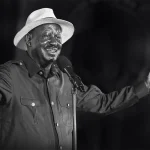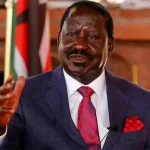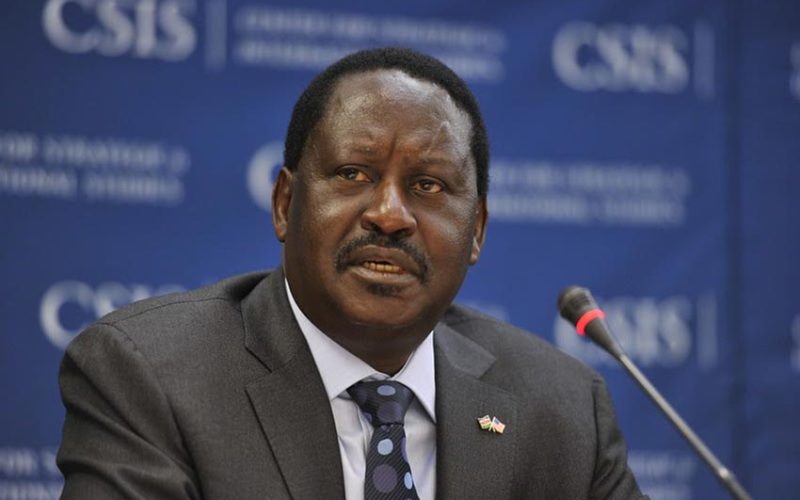
RAILA Amolo Odinga, Kenya’s former Prime Minister and the most persistent opposition voice in East African politics, has died in India at age 80, marking the end of an era that spanned Kenya’s entire post-independence democratic struggle.
Over five decades, Odinga embodied the contradictions and aspirations of modern Kenya—a son of privilege who championed the poor, an accused tribalist who preached national unity, and a perennial loser who never stopped fighting for what he believed was a stolen destiny.
Born January 7, 1945, into Kenya’s political aristocracy as the son of independence hero and first Vice President Jaramogi Oginga Odinga, the younger Odinga inherited both a legacy and a burden. His father’s break with founding President Jomo Kenyatta in 1966 set the family on a collision course with power that would define Raila’s entire career.
The Years of Struggle
Educated in East Germany as a mechanical engineer, Odinga returned to Kenya in the 1970s to a country sliding into authoritarian rule under President Daniel arap Moi. His involvement with underground movements led to detention without trial in 1982 following an attempted coup. He would spend nearly a decade in and out of prison and exile, emerging as a symbol of resistance to one-party rule.
The torture and isolation of those years—including months in solitary confinement—forged Odinga’s political identity. Associates recall him describing his time in Kamiti Maximum Security Prison as transformative, saying he emerged “with nothing left to fear.”
Architect of Democratic Reform
When Kenya’s multi-party system was restored in 1991, Odinga became a principal architect of opposition politics. He helped build coalitions that would eventually break the ruling party’s stranglehold, even as his own presidential ambitions repeatedly fell short.
His finest hour came in 2008. After a disputed election against Mwai Kibaki sparked violence that killed over 1,100 people and displaced 600,000, Odinga agreed to a power-sharing arrangement that made him Prime Minister—a position created specifically to end the bloodshed. Critics called it a compromise; Odinga called it statesmanship. The coalition government that followed helped write a new constitution and stabilised a nation on the brink.
“Some said I should have fought,” Odinga later reflected. “But I had seen enough of our people’s blood.”
Five Times Denied
Odinga contested Kenya’s presidency five times—in 1997, 2007, 2013, 2017, and 2022. Each time he claimed victory had been stolen through rigging, vote manipulation, or outright fraud. His supporters saw validation in international observers’ reports documenting irregularities. His detractors accused him of being a permanent opposition figure unable to accept defeat.
The 2017 election became a constitutional watershed when Kenya’s Supreme Court nullified the presidential results—an African first—citing irregularities. Yet Odinga boycotted the ordered re-run, and his rival Uhuru Kenyatta ultimately prevailed. The episode encapsulated Odinga’s career: a moral victor who nonetheless remained outside power.
Pan-African Statesman
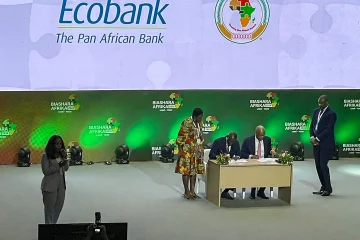
In his final years, Odinga pivoted toward continental leadership, becoming the African Union’s candidate for chairman of the African Union Commission—a position he sought in elections scheduled for early 2025. He championed African economic integration, infrastructure development, and a united voice against Western dominance of international institutions.
His admirers saw in him a modern Pan-Africanist; his critics noted he sought continental leadership after failing to win it at home.
Complex Legacy
Odinga leaves a complicated legacy. He was accused of fomenting ethnic divisions even as he preached unity, of inciting violence even as he called for peace, of corruption even as he campaigned against it. His political base in Nyanza Province remained fiercely loyal through every defeat, seeing in him a champion consistently denied his due.
Yet even opponents acknowledged his role in expanding Kenya’s democratic space. His willingness to challenge election results in court helped strengthen judicial independence. His coalition governments proved Kenya could share power across ethnic lines.
“History will judge whether I was right,” Odinga often said. “But it will know I never stopped fighting for ordinary Kenyans.”
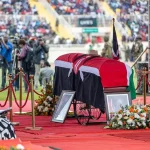
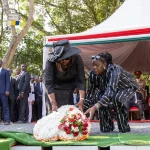
He is survived by his wife, Ida Odinga, four children, and a nation that will debate his legacy for generations.
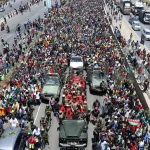
This obituary will be updated with official statements and funeral arrangements.