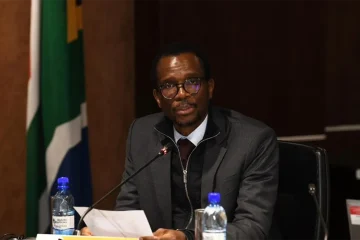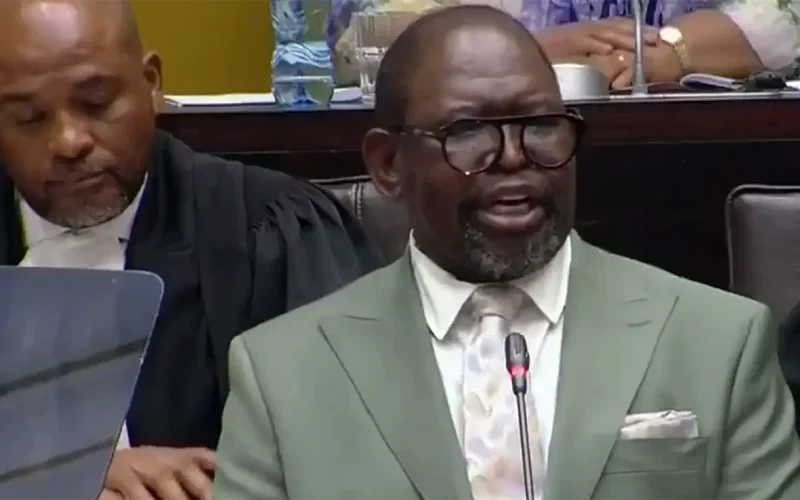
SOUTH Africa’s Finance Minister Enoch Godongwana has revealed medium-term savings of R6.7 billion through a new initiative targeting waste and fraud in government spending, as the country moves to stabilise public debt for the first time since the 2008 financial crisis.
The savings were achieved through a special programme, called the Targeted and Responsible Savings (TARS) programme, which closes or scales down low-priority and underperforming programmes, with more than half the savings coming from cracking down on social grants fraud and eliminating double-dipping beneficiaries.
The announcement was part of Godongwana’s Medium-Term Budget Policy Statement, which came amid ongoing global economic pressures and false genocide accusations that have threatened the country with punitive sanctions.
Godongwana said government debt would stabilise in 2025/26 at 77.9% of GDP, marking the first time since 2008 that public debt would not grow as a percentage of GDP. The country would achieve a primary budget surplus of R68.5 billion – or 0.9% of GDP – this year, growing to R224 billion by 2028/29.
The Finance Minister told Parliament that revenues will exceed budget estimates by R19.3 billion this year, while debt-service costs will be R4.8 billion lower than projected.
The TARS initiative systematically identifies duplication and waste across government programmes. Major cuts include scaling down the public transport network grant, which has failed to meet objectives with some cities unable to get projects off the ground.
Additional savings will come from eliminating approximately 9,000 high-risk “ghost worker” cases flagged through data integration across government departments. An Early Retirement Programme launched in October 2025 is expected to deliver long-term average savings of around R3.5 billion annually.
South Africa forecasts real GDP growth of 1.2% for 2025, more than double the 2024 growth rate, with an average of 1.8% projected between 2026 and 2028.
The Finance Minister announced a new inflation target of 3% with a 1 percentage point tolerance band, replacing the previous 3-6% range. The change, agreed between the Reserve Bank Governor and Cabinet, aims to lower interest rates over time to support household spending and business investment.
Capital payments will be the fastest-growing expenditure item at 7.5% over the medium term as the government shifts spending from consumption to investment. A new infrastructure bond will raise a minimum of R15 billion to fund projects through the reconfigured Budget Facility for Infrastructure.
The government will contribute R2 billion to capitalise a Credit Guarantee Vehicle to support electricity transmission expansion, enabling private investment in high-voltage transmission lines without state guarantees.
As South Africa’s G20 presidency nears conclusion, the country has successfully brokered consensus at finance ministers and central bank governors’ meetings ahead of the Leaders Summit in Johannesburg.
The Finance Minister emphasised continued implementation of the African Continental Free Trade Agreement and leveraging opportunities in the sub-Saharan region amid global trade tensions and geopolitical uncertainty.
Parliament received the Division of Revenue Amendment Bill, Adjustments Appropriation Bill, and taxation amendment bills alongside the Medium-Term Budget Policy Statement.