AFRICA has set an ambitious course toward regulatory self-sufficiency and transformed pharmaceutical manufacturing, with continental leaders unveiling sweeping reforms at a landmark health regulation summit that demands urgent government action and accelerated ratification of the African Medicines Agency (AMA).
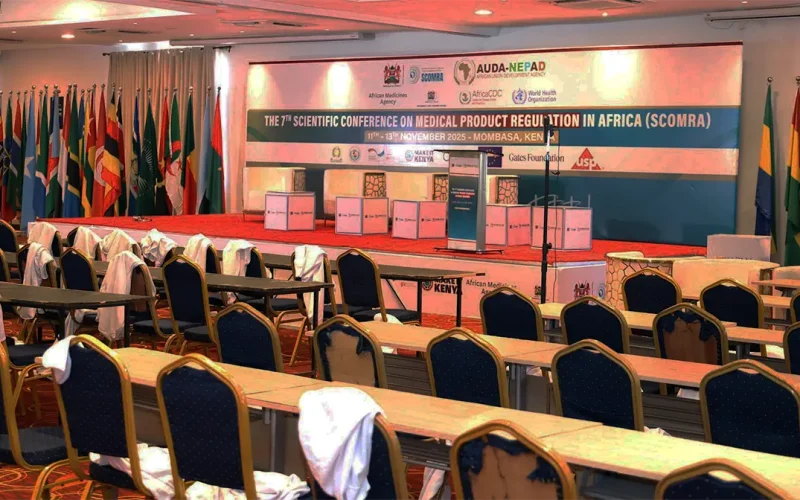
The 7th Scientific Conference on Medical Products Regulation in Africa (SCoMRA VII) produced hard-hitting recommendations calling on African governments to provide “necessary support” for the AMA to establish itself as an “internationally trusted regulatory agency,” while urging all 55 African Union member states to accelerate full ratification of the agency’s founding treaty.
Under the theme “Regulatory Harmonisation – Unlocking Africa’s Potential in Health Product Manufacturing and Trade,” delegates issued a comprehensive blueprint that places the AMA at the centre of continental pharmaceutical regulation, building on the African Medicines Regulatory Harmonization foundation as a science-based agency.
The conference stressed that the AMA’s effectiveness depends critically on empowered national regulatory authorities, calling for urgent prioritization of strengthening national regulatory capacity across the continent. This dual approach—strong continental oversight paired with robust national systems—represents Africa’s strategy to break decades of dependence on external regulators.
Manufacturing and Market Access
In a significant push for local pharmaceutical production, the summit called on governments to expand structured fiscal incentives to stimulate manufacturing capacity, while directing the AMA to strengthen regulatory industry mentorship programmes with harmonized guidance tailored to small and medium enterprises.
The Africa Pooled Procurement Mechanism received explicit instructions to adopt AMA product listings as part of supplier eligibility criteria, a move designed to reduce duplication and accelerate market access for locally manufactured medicines.
Delegates emphasized utilizing lessons from the continental listing pilot programme to inform the design of AMA’s approval processes, signaling determination to learn from early implementation challenges.
Combat Against Falsified Medicines
The conference took direct aim at the proliferation of substandard and falsified medical products, demanding enhanced coordination between national regulatory authorities, customs, law enforcement and procurement entities to close regulatory gaps.
Governments received pointed recommendations to strengthen national legal frameworks, harmonize penalties for falsified medicine offences across jurisdictions, and ensure effective prosecution of offenders as a deterrent. Countries were urged to accelerate adoption of traceable tools and information-sharing mechanisms.
Emergency Preparedness
Drawing lessons from the COVID-19 pandemic, delegates called for emergency preparedness and response to be integrated as a “central public health priority across sectors,” including regulatory systems. The recommendations stressed strengthening resilience by institutionalizing collaboration to eliminate silos in emergency response.
Harmonization and Standards
Countries received strong encouragement to actively participate in international platforms that approve pharmaceutical standards to ensure alignment and global recognition. National regulators were urged to adopt and implement scientific guidelines efficiently in a context-appropriate manner aligned with good regulatory practices.
A critical call emerged for countries to domesticate the AU model law on regulation of medical products, while acknowledging that further discussions under AMA are needed to strengthen harmonization efforts and adoption of international standards.
Digital Transformation
The summit embraced technological advancement, directing national regulatory authorities, regional economic communities, and the AMA to prioritize implementation of developed digital platforms. Regulators received instructions to actively promote peer learning and “digital twinning” among authorities to facilitate technology transfer.
Specific recommendations called for defining minimum requirements for publishing marketing authorization information to enhance development of regulatory information systems.
Bioequivalence Infrastructure
In a strategic move to support generic medicine development, the AMA received a mandate to establish a continental bioequivalence forum to strengthen regulatory cooperation infrastructure and capacity building. The recommendations emphasized crucial cooperation between regulators, academia, and industry at continental, regional and national levels to expand bioequivalence centres and achieve financial viability.
Capacity Building
The College of African Regulatory Science Professionals received direction to align with similar institutions on the continent and conform its competence framework with WHO’s Global Benchmarking Tool framework. Significantly, membership to the college should be opened to regulatory science professionals from other continents, while certification requirements must align with national standards.
Partnership Coordination
The AMA was advised to learn from the African Medicines Regulatory Harmonization Partnership Platform to build a coordination mechanism for partners aligned with AMA’s vision and goals. Delegates called for development of impact measurement instruments for partnerships.
The Mombasa recommendations represent the most comprehensive regulatory reform agenda Africa has produced, with implications for the continent’s 1.4 billion people who currently access fewer than 2% of medicines manufactured domestically. Implementation will test African governments’ commitment to pharmaceutical independence and their willingness to invest in regulatory infrastructure capable of protecting public health while fostering local industry growth.