A dispute over a spiked 60 Minutes investigation has exposed tensions within CBS News over editorial independence and the role of government cooperation in investigative journalism, raising broader questions about press freedom in an era of contentious executive-media relations.
Veteran CBS correspondent Sharyn Alfonsi circulated an internal memo protesting the decision by Editor-in-Chief Bari Weiss to pull a scheduled segment titled “Inside CECOT,” which examined conditions at El Salvador’s maximum-security prison and the deportation of individuals there by the Trump administration. The story was set to air but was removed from the broadcast schedule after clearing legal review and standards practices.
The Core Dispute: Government Silence as Editorial Veto
Alfonsi’s memo, which has been confirmed by multiple news outlets, centres on a fundamental question facing investigative journalism: whether government refusal to participate in a story constitutes grounds for killing it.
According to Alfonsi’s account, the investigation had been “screened five times and cleared by both CBS attorneys and Standards and Practices” and was “factually correct.” The correspondent and her producer requested interviews with the Department of Homeland Security, the White House, and the State Department, all of which declined to participate.
The crux of Alfonsi’s argument is that administrative silence represents a tactical choice rather than a journalistic obstacle. “Government silence is a statement, not a VETO,” she wrote. “Their refusal to be interviewed is a tactical manoeuvre designed to kill the story.”
She warned that accepting non-participation as grounds for pulling stories would establish a dangerous precedent: “If the administration’s refusal to participate becomes a valid reason to spike a story, we have effectively handed them a ‘kill switch’ for any reporting they find inconvenient.”
Historical Echoes and Institutional Memory
Alfonsi invoked one of CBS News’ most controversial moments: the 1995 decision to initially spike the Jeffrey Wigand tobacco whistleblower interview due to legal concerns, later dramatised in the film “The Insider.” That decision, ultimately reversed, became a defining crisis for 60 Minutes and took years to overcome in terms of public trust.
“CBS spiked the Jeffrey Wigand interview due to legal concerns, nearly destroying the credibility of this broadcast,” Alfonsi wrote. “By pulling this story to shield an administration, we are repeating that history, but for political optics rather than legal ones.”
The comparison is significant because the Wigand case centred on corporate pressure and legal liability, whereas the current controversy involves questions about political considerations and government relations.
The Broader Context: Media Under Pressure
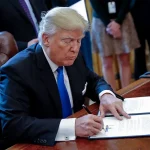
This internal clash occurs against a backdrop of increased tension between news organisations and the Trump administration. The president has repeatedly attacked mainstream media outlets as purveyors of “fake news” and has used his platform to delegitimise critical coverage. Media organisations face the challenge of maintaining investigative rigour while navigating an environment where confrontational reporting may result in reduced access.
The incident raises several critical questions for journalism in this political moment:
The Access Paradox: News organisations have long cultivated relationships with government sources to maintain access for future stories. But does protecting those relationships compromise the independence necessary for accountability journalism? When does prudent source management become self-censorship?
The Government Veto Problem: If administrative non-cooperation becomes sufficient grounds to kill thoroughly vetted stories, it establishes a mechanism for government control over coverage without explicit censorship. This represents a more subtle but potentially more effective form of press manipulation than direct legal action or public intimidation.
Institutional Credibility: Major news organisations have invested decades in building reputations for editorial independence. How much institutional capital should be risked on any single story, and who makes that determination? Alfonsi noted that CBS had been promoting the story on social media, creating public expectations that would make its absence conspicuous.
Source Protection: Investigative journalism depends on sources willing to take risks. Alfonsi emphasised that the individuals interviewed “risked their lives to speak with us” and argued that pulling the story constituted “a betrayal of the most basic tenet of journalism: giving voice to the voiceless.”
The CECOT Story Itself
The investigation concerned the Terrorism Confinement Centre (CECOT), El Salvador’s maximum-security facility built under President Nayib Bukele’s anti-gang crackdown. Human rights organisations have raised concerns about conditions at the facility and the lack of due process in mass detentions. The Trump administration’s deportation of individuals to CECOT has drawn scrutiny from human rights advocates.
The substance of what the CBS investigation found remains unknown to the public, though Alfonsi’s description suggests it contained information potentially damaging to the administration’s immigration enforcement narrative.
Editorial Independence vs. Editorial Judgment
CBS News has not provided a detailed public comment on the specific editorial rationale for pulling the story. In general, news organisations maintain that editorial decisions involve complex judgments about fairness, completeness, and the strength of sourcing—considerations that may not be fully visible in internal debates.
However, Alfonsi’s assertion that the decision was “political” rather than “editorial” strikes at a critical distinction. Editorial judgment involves an assessment of whether a story meets journalistic standards. Political calculation involves assessment of institutional consequences, government relations, or public reaction. When those considerations override editorial quality assessments, journalism’s independence is compromised.
Implications for the Fourth Estate
The controversy illuminates a defining challenge for American journalism in the current political environment. The traditional model of adversarial press relations assumed that news organisations would face pressure but resist it through institutional independence and professional norms. That model is under stress from multiple directions: economic pressures threatening newsroom resources, digital disruption changing business models, and political attacks undermining public trust.
When a correspondent of Alfonsi’s stature—a multiple Emmy winner with decades of experience—publicly challenges her own network’s editorial decision on grounds of political interference, it suggests deep concern about institutional courage in the face of government pressure.
The question is not whether news organisations should cooperate with government sources or seek official comment—these are standard journalistic practices. The question is whether the absence of that cooperation becomes grounds for self-censorship, and whether editorial decisions are made based on journalistic merit or political calculation.
Conclusion: The Test of Independence
Press freedom in democratic societies is ultimately tested not by formal legal restrictions but by the willingness of journalists and news organisations to pursue accountability reporting despite pressure and consequences. Internal debates like the one at CBS are where those tests occur—in editorial meetings and executive decisions that determine what the public learns about its government.
Alfonsi concluded her memo with a statement of institutional loyalty paired with unwillingness to remain silent: “I care too much about this broadcast to watch it be dismantled without a fight.”
Whether this represents an isolated editorial disagreement or a symptom of broader self-censorship under political pressure remains to be seen. What is clear is that the tension between maintaining access and maintaining independence—always present in political journalism—has reached a point where experienced journalists feel compelled to sound internal alarms about the direction of their institutions.
The outcome of this particular dispute matters less than the pattern it may represent. If government non-cooperation becomes an effective veto over investigative journalism, the practical effect would be to grant administrations significant control over their own accountability coverage—an outcome fundamentally at odds with the press’s constitutional role as a check on government power.