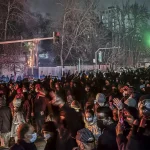
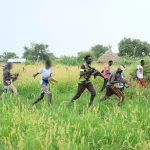
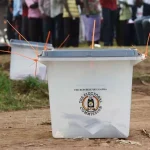
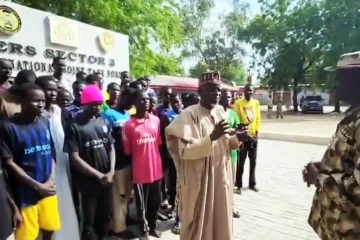
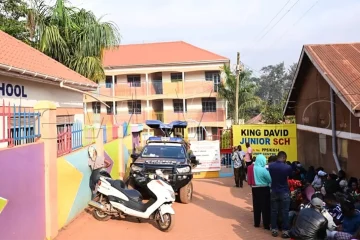
ARMED soldiers patrolled the streets of Uganda’s capital on Wednesday as the government intensified a sweeping crackdown on the eve of contentious elections, deploying military forces to intimidate opposition supporters while the country remained cut off from the internet.
The military deployment follows the government’s shutdown of internet services Tuesday evening and the banning of two prominent civil society organisations, marking an escalation in what human rights groups describe as an unprecedented assault on democratic freedoms in the East African nation.
The Uganda Communications Commission ordered mobile service providers to shut down public internet connections from 6 p.m. local time Tuesday to curb “misinformation, disinformation, electoral fraud and related risks,” according to a letter seen by Reuters. Internet monitor NetBlocks confirmed Wednesday that Uganda was “in the midst of a widespread internet shutdown.”
President Yoweri Museveni, 81, who has ruled Uganda since 1986, is seeking a seventh term in Thursday’s election after four decades in power. He faces his strongest challenge from pop star-turned-politician Bobi Wine, whose campaign rallies have been repeatedly disrupted by authorities firing live bullets and tear gas.
The government’s actions have drawn sharp international condemnation. The United Nations Human Rights Office called the restrictions “deeply worrying” and stressed Wednesday that “open access to communication & information is key to free & genuine elections.”
Hours before the internet blackout, the state-run National Bureau for NGOs ordered two leading rights organisations—Chapter Four Uganda and the Human Rights Network for Journalists-Uganda—to cease operations immediately. The groups had documented alleged arbitrary detention and torture of opposition supporters and journalists.
Stephen Okello, head of the state NGO bureau, confirmed to Reuters that he had written letters ordering both organisations to stop operating, citing activities “prejudicial” to Uganda’s security.
Security forces have detained hundreds of opposition supporters in recent weeks, according to the banned rights groups. The U.N. Human Rights Office reported Friday that Uganda’s police and military had used live ammunition to disperse peaceful rallies, carried out arbitrary detentions and abducted opposition supporters.
Tigere Chagutah, East and Southern Africa regional director at Amnesty International, condemned the internet shutdown as “a brazen attack on the right to freedom of expression.”
“It is especially alarming coming as it does just before a crucial election already marred by massive repression and an unprecedented crackdown on opposition parties and dissenting voices,” Chagutah said Wednesday.
NetBlocks warned that rather than preventing misinformation, the internet blackout was “likely to limit transparency and increase the risk of vote fraud.”
The U.N. Human Rights Office said last week that Ugandans would head to the polls amid “widespread repression and intimidation against the political opposition, human rights defenders, journalists and those with dissenting views.”
Museveni came to power in 1986 after leading a five-year rebellion and is now Africa’s third-longest ruling head of state. He has changed the constitution twice to remove age and term limits.
Political analysts say his dominance of Ugandan institutions means there is little prospect of an upset in the country of 46 million people.
Uganda’s last general election in 2021 was marked by widespread violence that left at least 54 people dead, according to Human Rights Watch. Authorities also cut social media and internet access during that vote.
A Ugandan government spokesperson did not respond to requests for comment on the U.N. report or the latest restrictions.