
FOUR years into a war that shows no sign of ending, the United Nations’ top refugee official arrived in Ukraine this week with a message both urgent and sobering: international solidarity is fraying precisely when it is needed most.
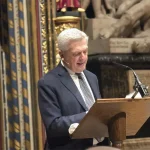
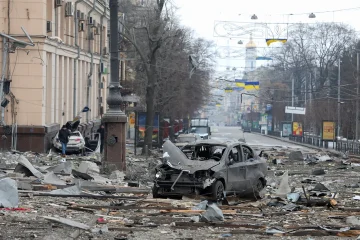
Barham Salih, the UN High Commissioner for Refugees, made his first visit to Ukraine as Russian strikes systematically dismantle the country’s energy grid, plunging millions of civilians into freezing darkness during what officials are calling the harshest winter of the entire conflict. He toured front-line cities — Dnipro, Zaporizhzhia, Kharkiv — meeting families whose homes had been gutted by glide bombs, speaking with newly displaced civilians evacuated from communities on the edge of the fighting.
What he saw was unambiguous. “The destruction I have witnessed is immense,” Salih said, “and the personal stories of loss and hardship are heart-wrenching.”
But his visit was about more than bearing witness. It was a deliberate signal — and an implicit warning.
The Numbers Tell a Brutal Story
Nearly 3.7 million Ukrainians remain internally displaced. Close to 5.9 million refugees are sheltered across Europe and beyond. In four years of war, UNHCR and its partners have reached approximately 10 million people inside Ukraine with some form of assistance — a staggering operational footprint that still cannot keep pace with the scale of destruction Russia continues to inflict.
For 2026 alone, UNHCR is appealing for $470 million to support more than 2 million people. That figure, significant as it is, represents just a fraction of Ukraine’s total humanitarian and reconstruction needs — needs that are compounding with every missile strike on a power station, every family forced from a front-line village, every winter night spent without heat.
Solidarity as Strategy — Not Sentiment
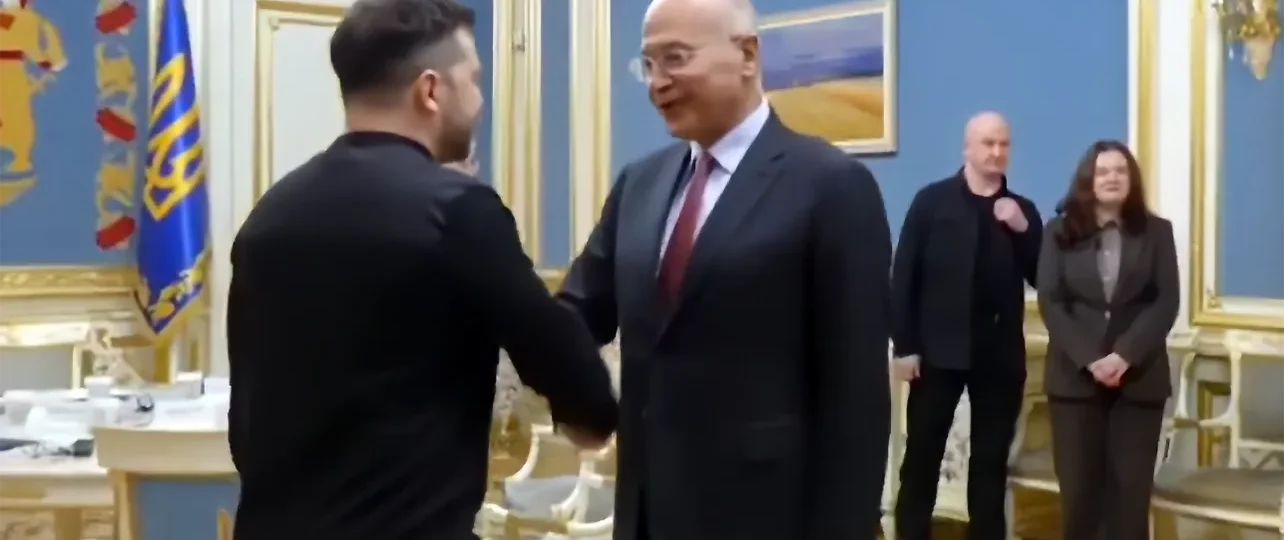
Salih’s meetings in Kyiv carried political weight that transcended diplomatic courtesy. Sitting down with President Volodymyr Zelenskyy, Foreign Minister Andrii Sybiha, and Deputy Prime Minister for Restoration Oleksii Kuleba, the High Commissioner was threading a critical needle: keeping Ukraine’s crisis visible to donor governments at a moment when war fatigue, shifting geopolitical priorities, and domestic pressures in key Western nations are quietly eroding the international commitment that has sustained Ukraine’s survival.
“Nothing can compensate the losses in this war, and the many lives lost,” Salih said pointedly, “but we can help Ukraine and its people recover and rebuild.”
The emphasis on recovery and rebuilding is deliberate. UNHCR is no longer simply in emergency mode — it is repairing war-damaged homes, providing legal aid to civilians who lost their documents, and working to create conditions under which displaced people can actually return. This is the long game, and it requires sustained funding and political will that cannot be taken for granted.
Ukrainians Are Holding. The Question Is Whether the World Will.
The most striking element of Salih’s account was not the destruction — catastrophic as it is — but the resilience he encountered. “Ukrainians continue to show extraordinary courage, compassion and hope,” he said. “Their strength should compel all of us to action.”
That word — compel — is pointed. Courage on the ground cannot substitute for resources, protection, and pressure from abroad. Ukraine is entering its fifth year of full-scale war not because its people have broken, but because the machinery of international response must continuously be rebuilt against the gravity of donor fatigue and geopolitical distraction.
Salih came to Kyiv to reaffirm a commitment. The harder question — the one his visit implicitly poses to every government that has supported Ukraine — is whether that commitment will hold through whatever this war’s sixth year demands.