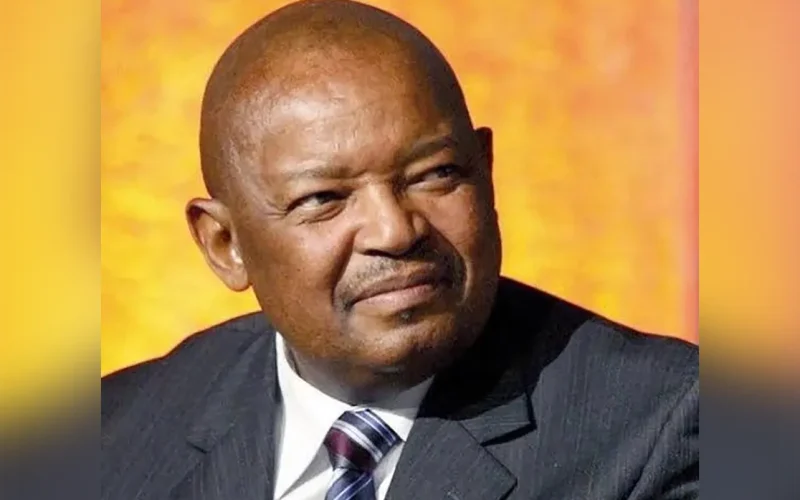
SOUTH Africa does not mourn an ordinary man today. It mourns a conscience. Mosiuoa “Terror” Lekota – whose fearsome nickname was earned on the football fields of the Free State but came, over decades, to describe something far more significant: the terrifying moral clarity with which he spoke truth to power, regardless of cost – was one of the last of a rare and vanishing breed.
Lekota was a South African who believed, completely and without reservation, that the freedom for which so many died was not a prize to be traded for patronage, looted of its meaning, or handed over to those who saw liberation as a licence to enrich themselves.
He is gone now. But the questions he asked, the warnings he sounded and the lonely stands he took did not die with him. They live, uncomfortably, in every empty classroom, every unlit street, every court judgment against a corrupt official, every ballot paper cast by a citizen wondering whether any party still remembers what the Struggle was actually for.
Terror Lekota was born in Kroonstad in the Free State, South Africa, on a continent that had not yet begun to imagine what liberation might look like. He grew up under apartheid – not as an abstraction, but as a daily, grinding, humiliating reality. And from that reality, he forged not bitterness, but purpose.
THE MAKING OF A REVOLUTIONARY
Lekota matriculated at St Francis College in Mariannhill, Durban, in 1969 and enrolled to study social science at the University of the North. But formal education, in apartheid South Africa, was never a purely academic exercise. By 1972, his activism within the South African Students Organisation (SASO) and the student representative council had made him a marked man. He was expelled.
Rather than retreat, he advanced. In 1974, a regime terrified of young Black men who could think and organise had him imprisoned for activities it characterised, with characteristic Orwellian inversion, as conspiring to endanger law and order. He was released in 1982 — but not diminished. Not quieted. Not broken.
Undeterred, Lekota channelled his energies into the United Democratic Front (UDF), the internal resistance movement that gave political expression to millions who had no other voice. He became its publicity secretary in 1983, helping to craft a message that resonated across races, languages, and ideological traditions: that apartheid was indefensible, that it would fall, and that what replaced it must be worthy of those who had sacrificed everything to bring it down.
He did not merely oppose apartheid from a safe distance. He paid for his convictions in years of his life, in the company of the men Nelson Mandela called his comrades on Robben Island.
Then came the Delmas Treason Trial of 1985 – one of the most consequential political trials of the resistance era. Lekota was among 22 activists prosecuted by a regime desperate to silence the UDF leadership. Eleven were convicted. Lekota received a sentence of twelve years. His initial conviction was later reviewed on appeal, and he was released in 1989 – but not before spending years as a political prisoner, a distinction he shared with the greatest of his generation.
During his imprisonment, he wrote letters to his eldest daughter, Masetjhaba, which he later published as Prison Letters to a Daughter in 1991 – a document of extraordinary tenderness from a man the state had tried to reduce to a number. It is a testament to the completeness of his humanity and to the truth that no prison – not even Robben Island – could imprison a conscience.
THE STATESMAN
When the new South Africa was born in April 1994, Terror Lekota moved seamlessly from resistance to governance. He was appointed the first premier of the Free State, taking charge of a province still deeply scarred by apartheid’s spatial and economic violence. His time there was not without turbulence – a fierce and corrosive factional battle with Ace Magashule, who would later go on to embody so much of what Lekota warned against, consumed significant political energy. But even then, his instincts were sound. He raised corruption concerns. He was isolated for it. He would later say, with characteristic understatement: “I think it was much later that the comrades realised I was right, but it was too late then.”
In 1997, Lekota was elected national chairperson of the ANC – a recognition of his standing within the movement and his credentials as an organiser and thinker. He served in that role until 2007. He also served as Defence Minister in the Thabo Mbeki administration, a role he took with characteristic seriousness, and he chaired the National Council of Provinces – making him, at the peak of his formal career, one of the most consequential figures in South African public life.
But posterity will remember him not for the offices he held, but for what he did when he was asked to hold his tongue.
THE PROPHET
What Thabo Mbeki recognised — and put on record in a remarkable letter to Jacob Zuma – was that when Lekota raised concerns about the direction of the ANC in the years after Polokwane, he was not, as his critics contemptuously alleged, engaged in the promotion of a personality cult or driven by factional loyalty. He was raising genuine political concerns, rooted in a lifetime of sacrifice and principled engagement, about the moral and institutional decay he could see consuming the liberation movement from within.
Mbeki’s defence of Lekota’s motivations was an act of political honesty of its own. It acknowledged what Lekota’s detractors refused to: that a man who had endured imprisonment, harassment, sacrifice and personal tragedy in the name of a democratic South Africa was owed the presumption of good faith when he stood up to say: something is wrong here. Something is being lost. Something must be done.
Lekota saw then what South Africa discovered later – that the ANC was losing direction, that its moral compass was being dismantled piece by piece, that the freight train of institutional capture was gathering speed on the tracks.
He was not wrong. The evidence of his correctness is visible in every percentage point by which the ANC’s support has declined in the years since; in the findings of the Zondo Commission of Inquiry into State Capture; in the billions of rands stolen from a state built by the sacrifices of people just like him; in the municipalities that cannot deliver water, the hospitals that cannot secure medicines, the schools that cannot retain teachers. The ANC that Lekota watched with growing alarm in the mid-2000s was already, in his diagnosis, terminally ill. The tragedy is that the patient survived long enough to infect the body politic of the nation itself.
In September 2008, Thabo Mbeki resigned as South Africa’s president under pressure from the ANC’s newly configured leadership. Lekota, as a matter of honour, resigned from the Cabinet days later. And then, in October of that year, alongside Mbhazima Shilowa and others who could no longer reconcile themselves to what the ANC had become, he did something that required both extraordinary courage and extraordinary pain: he left.
The Congress of the People (COPE) was born from that rupture. At its best, it was conceived as something more than a splinter party – it was an attempt to recover what the ANC had abandoned, to plant a flag on the terrain of the original liberation values and say: the movement lives here now, not there. In December 2008, Lekota was elected unopposed as its leader. In the 2009 elections, COPE won 7.42% of the national vote – a remarkable debut that suggested the public appetite for what Lekota was offering was real.
But politics, like football, has an unforgiving relationship with potential. COPE was consumed by internal divisions – the very factional pathologies that Lekota had left the ANC to escape appeared, with bitter irony, within his new home. Support collapsed: 0.67% in 2014, 0.27% in 2019. The project had failed. Not because Lekota’s diagnosis was wrong, but because the institutional scaffolding required to sustain an alternative was never properly built, and the leadership capable of building it never fully materialised.
It is one of the defining sadnesses of South Africa’s post-apartheid story: that the man who saw the crisis most clearly was unable, in the end, to provide the institutional answer that the crisis demanded. History is not always fair to its prophets.
To reduce Terror Lekota to his political career would be to misunderstand him. He was, above all, a human being of extraordinary depth – one who had loved and lost, endured and persevered in ways that few can comprehend. The death of his eldest daughter, Masetjhaba, in 1996, found dead on the campus of her university, was described by those who knew him as the most devastating moment of his life. One reads the prison letters he had written to her through that knowledge, and the tenderness of those pages becomes almost unbearable.
He was a man shaped by Steve Biko’s Black Consciousness Movement who nonetheless opposed Malema’s EFF on land expropriation – not out of inconsistency, but out of a considered political philosophy that could not be reduced to any faction’s slogan. He was seen as part of the Mbeki camp, but clashed with Mbeki himself over Zimbabwe. He aligned with AfriForum on property rights – a decision that cost him politically – because his commitment to constitutional values superseded his concern for political optics.
He shot from the hip and this was both his great strength and occasional weakness. But it was never dishonest. In a political culture that had perfected the art of carefully calibrated ambiguity, Terror Lekota was refreshingly, sometimes maddeningly, direct. He meant what he said. He said what he meant. He went to his grave a member of COPE, honouring the commitment he had made publicly – which is more than can be said of most who have held high office in this republic.
South Africa is now crying into an empty political bowl over what could have been, had it listened and properly reacted to Lekota.
The 2024 national and provincial elections told a story that would have confirmed Lekota’s worst fears: the ANC, for the first time since 1994, failed to secure a majority of the national vote. It now governs through a coalition arrangement, its moral authority spent, its institutional credibility in tatters, its capacity to deliver questioned by millions who once trusted it with their lives. The 2026 local government elections loom as an existential test. The party that brought liberation to South Africa faces the possibility of becoming a minority force in the very cities that were once its heartland.
This is not the ANC of Oliver Tambo, who built it from exile with discipline and moral clarity. It is not the ANC of Nelson Mandela, who emerged from 27 years of imprisonment and chose forgiveness over vengeance, nation-building over score-settling. It is the ANC that Lekota watched, with mounting anguish, drift from those foundations – and it is the ANC that, had it listened, might have found its way back before the damage became irreversible.
The irony is exquisite and painful in equal measure: the warnings were sounded. The evidence was assembled. The argument was made, not by hostile outsiders but by a man who had spent years in prison for the ANC’s ideals and who bore on his body and spirit the marks of what that commitment had cost him. And still, the warnings were dismissed. The messengers were attacked. The message was buried under accusations of faction and disloyalty – the oldest tools of political self-protection in any movement that has stopped being honest with itself.
What South Africa faces now – the governance failures, the crisis of public institutions, the erosion of the social compact between state and citizen – is not unforeseeable. It was foreseen. By Lekota. By Mbeki. By those who, in their different ways, tried to sound the alarm before the freight train hit.
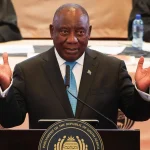
President Cyril Ramaphosa will, in all likelihood, preside over an official state funeral for Lekota. It will be a ceremony of appropriate solemnity, attended by dignitaries, punctuated by tributes, and broadcast to a nation that will, in the days following, return to its ordinary struggles. This is, of course, richly deserved. A man who endured what Lekota endured, who served as he served, who stood when standing was costly – such a man deserves the full honour of the republic he helped build.
But honour, if it is to be more than ceremony, must be more than a coffin draped in the colours of the flag. It must be a commitment. The correct tribute to Terror Lekota is not flowers at a graveside or words in a Parliament chamber. It is a return to the ideals for which he and his generation sacrificed – to constitutional democracy, to accountable governance, to the rule of law, to a South Africa where the proceeds of liberation flow to the people and not to the politically connected.
The ANC, if it is serious about honouring him, must ask itself the question that Lekota asked over and over again, at great personal cost, for decades: what are we here for? Not for power. Not for contracts. Not for tenderpreneurs and deployed cadres. For the people. For the South Africa that Mandela fought to see free. For the constitution that brilliant and committed people built on the foundations that Lekota and his comrades laid with their blood and years.
The truest monument to Terror Lekota would not be carved in stone. It would be built in the daily, disciplined work of governance done with integrity — in a South Africa that remembered why it fought.
If the ANC cannot make that commitment, then the most fitting tribute will come not from within it, but from outside: from the citizens who take Lekota’s warning seriously, who demand better, who refuse to accept that the promise of 1994 is permanently beyond reach. From those who, like Lekota, choose conscience over comfort, principle over position, the difficult truth over the easy lie.
Lekota was born in a country that told him he was less than human. He spent his life proving, with extraordinary force of character, that this was a lie. He was imprisoned for that proof. He was persecuted for it. He was sidelined and mischaracterised and, ultimately, found himself leading a political movement that never quite matched the size of what he had seen and understood.
But he did not bend. He did not return to the comfort of belonging at any cost. He remained, to the end, what he had always been: a man of conscience, in a political culture that punishes conscience, who decided that he could not live with himself if he chose silence.
South Africa needs many more like him. The tragedy is that we will mourn him, honour him briefly, and then return to the very conditions he spent his life trying to prevent. Unless – and this is the slender, vital hope – we choose differently this time. Unless we decide that the best memorial to a man who saw clearly and spoke plainly is a nation that finally listens.
Rest in power, Terror Lekota. The struggle, as they said in your time, continues. The question is whether those who follow will have your courage.
- Mosiuoa “Terror” Lekota | 1945 – 2026
- Survived by his wife, Cynthia and six children.