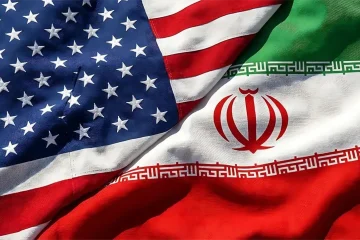
THE war the United States and Israel launched against Iran on 28 February has never been merely a Middle Eastern affair. From the first missile strike, its implications for global energy security, African economies, and the architecture of the postwar international order were obvious to anyone paying attention. Now, four weeks on, those implications have sharpened to a knife’s edge.
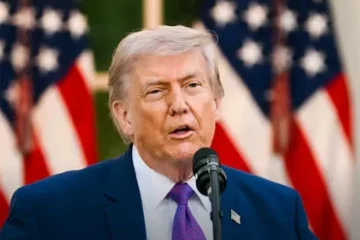
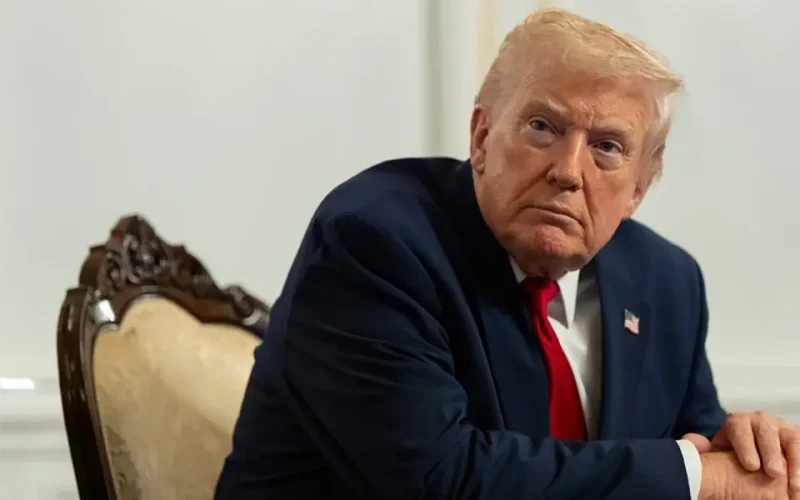
On Saturday, U.S. President Donald Trump issued what may be the most consequential ultimatum of the conflict to date, threatening to destroy Iran’s power plants – beginning with its largest – unless Tehran fully reopened the Strait of Hormuz within 48 hours. Iran’s response was immediate and unambiguous: any attack on its energy infrastructure would be met with strikes on all American energy, information technology, and desalination facilities across the Gulf region.
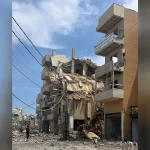
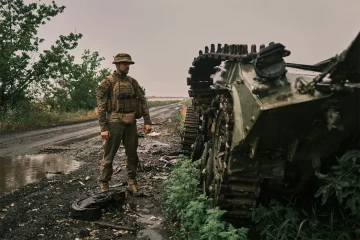
This is not a war of rhetoric. More than 2,000 people have already been killed. Iran has fired long-range ballistic missiles at the U.S.–British base at Diego Garcia — its first use of munitions with a 4,000-kilometre range — and struck within 13 kilometres of Israel’s secretive Dimona nuclear facility. Air raid sirens continued to sound across Israel into Sunday morning. On the Lebanese front, Hezbollah has opened a second theatre of hostilities. This conflict is widening, and widening fast.
A Choke Point That Strangles the World
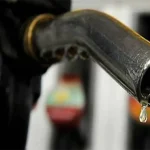
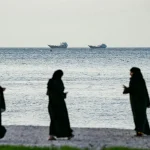
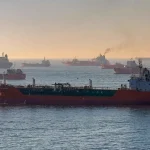
The Strait of Hormuz is not merely a maritime waterway. It is the economic jugular of the modern world, carrying roughly one-fifth of global oil and liquefied natural gas supplies. Iranian military operations have effectively sealed it. The consequences have already been felt globally: European gas prices surged as much as 35 percent in a single week, oil settled at its highest level in nearly four years, and Iraq declared force majeure on all oilfields developed by foreign firms after Israel attacked a major Iranian gas field and Tehran retaliated with strikes against Saudi Arabia, Qatar, and Kuwait.
Market analysts are unsparing in their assessment. IG market analyst Tony Sycamore described Trump’s 48-hour ultimatum as placing a “ticking time bomb of elevated uncertainty” over global equity markets, warning that a failure to walk back the threat could trigger a “Black Monday” market collapse alongside dramatically higher oil prices. Should Iran retaliate against Gulf energy infrastructure in Saudi Arabia, the UAE, and Qatar – as its military command has explicitly threatened – Sycamore warned this would “deepen and prolong the pain of higher energy prices” worldwide.
Africa Pays the Price for a War It Did Not Start
For Africa, the consequences are not abstract. The continent’s energy-import-dependent economies – from South Africa’s embattled power sector to the fuel-reliant logistics chains of East and West Africa – are acutely vulnerable to sustained oil price shocks. Inflation pressures already straining household budgets across the continent will deepen. Food systems dependent on fertilisers derived from natural gas face cascading disruptions. The African Development Bank’s projections for growth recovery across the continent were calibrated against an era of relative energy stability. That era is over, at least for now.
There is a bitter irony in this. The African Union and most of the continent’s governments have consistently called for diplomatic resolution to the conflict, recognising that a war between the world’s largest military power and a major oil-producing state holds no upside for developing economies. Yet Africa, once again, finds itself subject to the economic consequences of decisions taken in Washington, Tel Aviv, and Tehran — without meaningful consultation or consideration of its interests.
A Fracturing Alliance, a Retreating Consensus
The political fallout within the Western alliance is equally significant. Trump has accused NATO partners of cowardice over their refusal to assist in reopening the strait militarily. Most allies have been explicit: they will not join a war launched without consultation. A Reuters/Ipsos poll conducted last week found 59 percent of Americans themselves disapprove of the military strikes against Iran. The war has become a political liability for an administration already navigating a fraught electoral calendar ahead of November’s congressional elections.
Japan has signalled it could consider minesweeping operations in the strait — but only after a ceasefire. That conditional formulation speaks volumes. The international community is not rallying to Trump’s banner. It is waiting, warily, for a path out of a crisis that escalates by the hour.